Our country is mired in a swamp of poorly designed, increasingly huge new houses, and there is a growing debate in the architecture community over what to do about it. Most people assume that architects are responsible for the designs of all houses, a fact that shocks my professional colleagues. The reality is that architects design only about 2% to 3% of the new houses built each year in this country. The rest are produced from work by building designers, who create relatively simple sets of plans tailored to the needs of the builder for construction purposes; the plans then are minimally tweaked to meet the homebuyers’ wishes.
Architects, on the other hand, work for an extended period of time with a client to develop a personally tailored design. In general, the architecturally designed set of house plans contains many pages of detailed instructions on how the interior and exterior are to be made so that the client can achieve a specific look and feel.
Much of the pleasure of living in an architecturally designed home comes from having poured yourself into it, expressing your passions through the house’s form. But such a home requires many hours of careful communication, both with your family members and with your architect, to refine the design gradually into a house that is truly tailored to your needs.
This personalized service also comes with a price: Architect fees generally run from 5% to 15% of construction costs, depending on the amount of service involved. So although architects might wish that everyone would hire them when designing a new house, the reality is that not everyone can afford to hire an architect.
A lot of people, however, appreciate good design, and although their tastes are sophisticated, their needs can be met in more standardized ways. These people want the quality that comes with the Ralph Lauren or Liz Claiborne label without having to hire Ralph or Liz themselves. Unlike the fashion industry, though, the residential-housing market offers precious few intermediate options. Either you buy generic, or you hire the artist directly. This leaves a huge middle ground almost completely unserved in today’s marketplace.
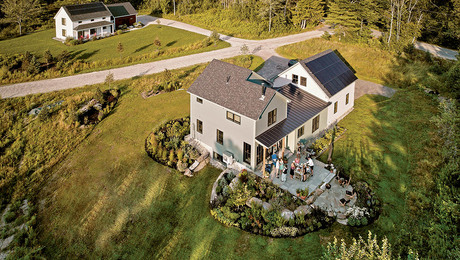
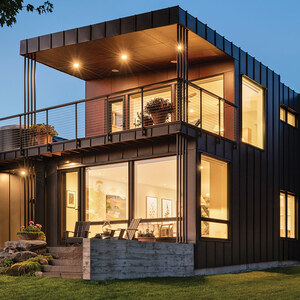
This unserved middle ground brings me to a modest proposal, which is surprisingly controversial in the architecture community: Architects need to get into the house-plans business. It is unethical for us turn our backs on a situation in desperate need of our help. We should serve the segment of the market that’s looking for a new home with character and detail. We could provide house plans that would be several cuts above the ones hawked at the supermarket.
There is ample precedence for such plans
This notion is hardly new in residential architecture. At the turn of the last century, Gustav Stickley spearheaded the Arts and Crafts movement in this country, making well-designed smaller homes available to the mass market through his magazine, The Craftsman. Each house was architecturally designed, and the interiors were as well conceived as the exteriors. The houses had an integrity that endeared them to their owners. Today, these houses are still much sought after, loved as much a century later as they were when they were first built. Frank Lloyd Wright was another architect who saw the need for a better-designed home for middle-class America. Although Wright was well known for designing exceptional homes for the wealthy, he knew that the skills he brought to these larger houses were just as applicable to smaller ones. He developed a house design that he named the Usonian for families of more average means.
In 1938, Life magazine picked up the same cause and hired Wright, along with four other architects of the day, each to design a house for the middle class. From 1994 to 1999, Life revived this story theme by selecting a well-known architect each year to design his or her vision for a house for the American family. The magazine made the plans for each home available, and the response was amazing. Life inadvertently had stepped into the hole in the marketplace and had found the unserved middle ground: those people who were looking for something between the standard home-plans market and full architectural services.
Why aren’t architect-designed plans readily available?
There is no simple answer to why architects are reluctant to sell plans, but here are the components as I see it. First, many architects are reluctant to sell off-the-shelf plans because they worry that the value of the architects’ services will be undermined. Architects are trained to develop designs directly from the qualities and characteristics of the site. It is every architect’s deep fear, including mine, that someone will buy a house design that has been carefully developed for a south-facing hill and place it on a flat piece of property facing north.
My suggested solution is that when we sell plans, we simply need to give information about the site characteristics best suited to each house. Although some people will ignore this information, the house they build will still, in all likelihood, be better designed than what they might otherwise have picked.
Architects want to have some control over modifications to their designs. Their designs are akin to their offspring, and architects want to approve the day-care arrangement. In the house-plans market, they have to let go of this desire for control and understand that their role is more analogous to sperm donor than parent.
Architects worry that by offering plans for sale, potential clients will buy plans rather than hire an architect for their own custom design. In my experience, this situation does not happen. My former firm offered plans for sale for the last ten years I was there, and we found that the audience for the two markets was different. Those who purchased our plans would not have considered an architect as an option. What did sometimes happen, though, was that people who initially bought architecturally designed plans gradually came to realize the benefit of having an architect design a custom house for them. As a result, we obtained quite a few clients who initially had bought plans. These folks would never have gone to an architect originally. They just didn’t understand the benefits until they had an architecturally designed set of plans in hand.
Client relations are another touchy issue. When clients commission a custom house, they get a one-of-a-kind home. But the architect still owns the copyright to the plans for that house and can sell them again. To do so without the full knowledge and permission of the client, however, runs the risk of generating significant ill will.
If you have commissioned a custom house and it is important that your house be one of a kind, never to be repeated, then making the plans available is clearly not something you’d want to support. But if you are willing to share the pleasure that your home brings to you with others interested in a similar look and feel, perhaps you’d consider it.
Over the past decade, many of my clients have allowed their plans to be made available for sale. It is surprisingly rare for a house to be built exactly as shown in the plans purchased. Many people use plans as points of departure, tailoring them to make their new homes better places to live than they would otherwise have been.
The last reason that such plans aren’t readily available is the catch-22 clause. People aren’t used to searching out such plans because there aren’t many available.
Architects have a responsibility to offer their skills to a marketplace desperately struggling to find a solution to a problem that we are trained to solve. The same skills we bring to the service of an individual family can be offered to the culture at large. Making good design available to a larger market is the best way to turn the tide away from ever larger and increasingly boring megahouses and toward homes with more style, character, integrity and soul.