What’s the Difference: Floor-Finish Applicators
The time you spent on your hardwood floors will be in vain if you don't choose the right finish applicator
Wood block, t-bar, or roller?
Applying finish to a wood floor is the final step in a long process. The application tools you use can either highlight your efforts or spoil them. Several types of floor-finish applicators are on the market, and each is used in a different manner. Whichever applicator you choose, select synthetic versions whenever possible (chart below). While 100% lambswool applicators work, they tend to shed. The resulting fibers might seem minute, but they’re often magnified by the finish.
Wood block
How it’s used: Either dip the block into a paint tray filled with finish and pull it across the floor, or pour the finish in a line and use the “snowplow” method. Always work with the grain, and start and stop at a wall. Never stop in the middle of a floor.
Best application: Residential floors.
Notes: Bare wood can tear up lambswool wood-block applicators. Pros have a method to get the best finish. They use new applicators—which have been defuzzed with a vacuum cleaner—for the second coat of finish. Only after several uses are they suitable for applying finish coats. When finally overworn, they’re used to apply first coats.
Cost: 12-in. lambswool refill, $10; 12-in. synthetic refill, $5.
T-bar
How it’s used: Pour a line of finish along the length of the floor. Pull the T-bar applicator down the length of the room at an angle, “snowplowing” extra finish onto the area that will be coated next.
Best application: Large residential floors, commercial spaces, and basketball courts.
Notes: T-bars come in different weights depending on the desired mil thickness of the finish. For example, a heavier bar creates a thinner finish.
Cost: 12-in. bar, $22; lambswool refill, $13; synthetic refill, $9.
Roller
How it’s used: Rolling a floor finish is similar to rolling paint on a wall. Take care not to overwork the finish, which can lead to unsightly air bubbles.
Best application: Works anywhere, but especially where wood grain goes in several directions, like on parquet floors. It’s best to work with the grain as much as possible, but rolled finishes don’t have to be applied in the direction of the grain.
Notes: A yoke roller frame (above) allows more-even pressure to be applied to the roller than a cage-style frame, resulting in a more-even finish.
Cost: 9-in. synthetic roller, yoke, and handle, $14; lambswool roller, $8.
Match the applicator to the finish
Choosing finishes and applicator materials that are incompatible can lead to ruined tools and floors. Follow the recommendations here to determine which finish works best with which type of applicator material.
 |
 |
 |
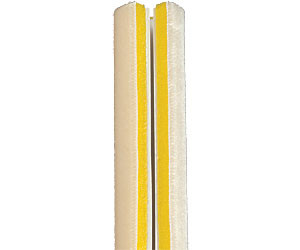
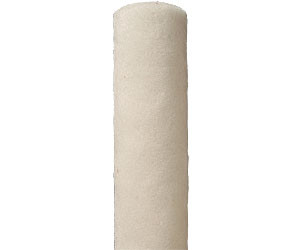
| Synthetic pad/sleeve
Stains; water-based urethane; bleach; conversion varnish |
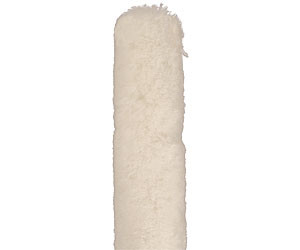
Synthetic Lambswool
• Stains; varnish; water-based urethane; varnish sealer; wax
|
100% Lambswool
Oil-modified urethane; lacquer sealer; moisture-cure polyurethane; shellac; varnish; stains; conversion varnish; varnish sealer; wax
|
RELATED LINKS
- Guide to Hardwood Floor Refinishing and Repair
- A Closer Look at Solid-Wood Flooring
- Choosing the Right Deck Finish