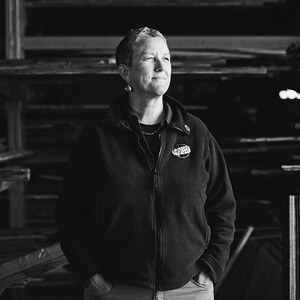
Tailgate: Joe Simon, Solar-Decathlon Organizer
The competition manager for this year’s event brings the perspective of a two-time competitor to the job.
What is the Solar Decathlon?
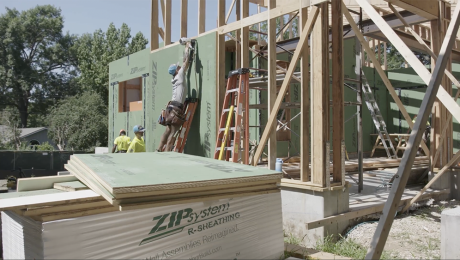
The U.S. Department of Energy Solar Decathlon is a competition that challenges collegiate teams to design, build, operate, and present a solar-powered, energy-efficient house. It’s held in West Potomac Park on the National Mall in Washington D.C., and the houses are open for public tours from September 23 through October 2. It’s called a decathlon for the 10 different contests used to assess the houses, from architecture and engineering to market appeal and affordability, as well as individual tests involving appliances, energy production, and hot water.
You’ve twice competed in the Solar Decathlon, and this year, you’re the competition manager. Which side of the event do you prefer bieng on?
I’m not sure that I have a favorite. Both are very exciting in their own way.
I started out with the Solar Decathlon in 2006. I was an architecture student at the University of Illinois and wanted to understand how a house comes together, from concept all the way through to completion. For 2009, I was the project manager while I was an architecture student and getting an MBA. Through the Solar Decathlon, I worked with people in engineering, industrial design, landscape architecture, business, marketing, architecture, communications, and advertising, and then worked with industry partners to get donations, to get sponsorships, to try new products.
Now, as the competition manager for the 2011 event, I’m the main liaison between all the students, all the universities, and the organization that runs the Solar Decathlon. It’s been exciting to see how everything comes together. You have a limited set of conditions and requirements, yet you have 20 solutions. No two houses are the same.
How has your experience as a competitor affected the way you’re managing the event this year?
It depends on the idea. Some products are in the mainstream already, like Energy Star appliances. The more innovative technologies— like a heat-pump water heater—are available, but manufacturers are looking at increasing the marketplace and increasing the penetration, so it could be from one to five years before they go mainstream.
Then there are teams that have innovative, brand-new ideas that are still in the conceptual design phase but are being tested and worked out. The Solar Decathlon houses serve as that test: These teams collect data for the inventor at the university or for the company that is helping to install the technology so that they can gain this knowledge.
You’ve got teams traveling long distances. How do they manage that?
The teams take different approaches. We have teams from across the United States as well as from New Zealand, China, and Belgium. Some teams that are closer to D.C. may have one oversize trailer that can pull the entire house. Team China is using modular shipping containers to form part of the structure of their house so that they can use that as part of their shipping method.
Through the Department of Energy, we fund each team with $100,000 to initiate the project, but often the costs to complete the project are well in excess of that. It’s up to teams to fund-raise either through university grant programs or sponsorships with industry partners.
Have sponsorships become more difficult to obtain in this economy?
We worried about that both in 2009 and in 2011, but we’ve seen great support from the event sponsors as a whole as well as for the teams, either through inkind donations or through cash support.
What advice do you have for participants in upcoming Solar Decathlons?
First, follow this year’s event online at SolarDecathlon.gov. Then go into it with an open mind and excitement. It’s a great competition that will challenge your thinking in terms of what you’ve learned in school and how things need to work together. The groups that do the best are the ones that work across fields and create a successful team. When everything is integrated and not treated as independent systems, you build a successful house.
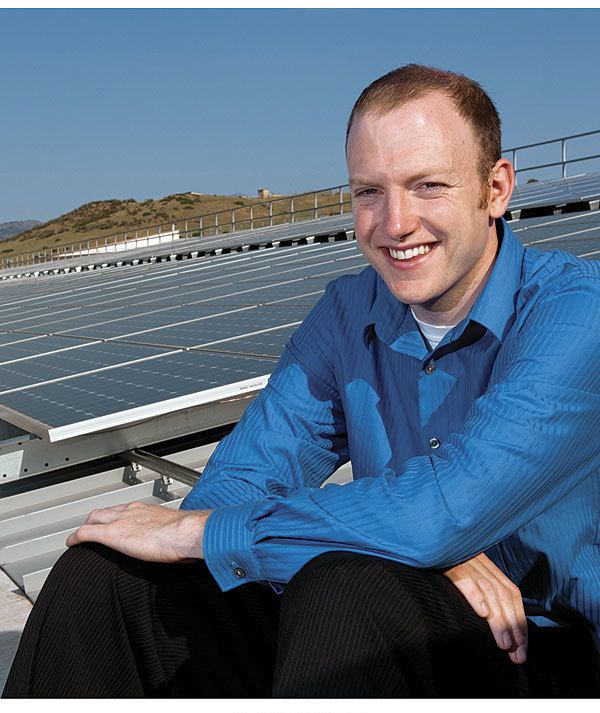
Photo: Dennis Schroeder, courtesy of National Renewable Energy Laboratory