previous
  • Buyer's Guide to Decking
    Buyer's Guide to Decking
  • Roofing articles, videos, tools, and materials
    Roofing articles, videos, tools, and materials
  • 9 Design Ideas & Tips for Concrete Countertops
    9 Design Ideas & Tips for Concrete Countertops
  • 10 Basement-Remodeling Tips and Techniques
    10 Basement-Remodeling Tips and Techniques
  • 12 Remodeling Secrets Revealed
    12 Remodeling Secrets Revealed
  • Deck Design & Construction Showcase
    Deck Design & Construction Showcase
  • 15 Coffered Ceiling Design Ideas and Tips
    15 Coffered Ceiling Design Ideas and Tips
  • 7 Small Bathroom Floorplan Layouts
    7 Small Bathroom Floorplan Layouts
  • The Inspector Game: Decking Dos and Don'ts
    The Inspector Game: Decking Dos and Don'ts
  • Outdoor Kitchen Design Inspiration
    Outdoor Kitchen Design Inspiration
  • How it Works
    How it Works
  • Energy-Smart Details
    Energy-Smart Details
  • Complete Kitchen and Bath Guide
    Complete Kitchen and Bath Guide
  • 13 Door Design and Installation Tips
    13 Door Design and Installation Tips
  • Fine Homebuilding: The Digital Issues
    Fine Homebuilding: The Digital Issues
  • 2012 HOUSES Awards
    2012 HOUSES Awards
  • 7 Solutions for Kitchen Layout and Design
    7 Solutions for Kitchen Layout and Design
  • Guide to Paperless Drywall
    Guide to Paperless Drywall
  • Meet the Fine Homebuilding Project House!
    Meet the Fine Homebuilding Project House!
  • Painting Ideas, Tips, and Techniques for a Professional Finish
    Painting Ideas, Tips, and Techniques for a Professional Finish
next
Pin It

Making Sense of Amp Hours in Cordless Batteries

Find out how these ratings affect the run time of your tools
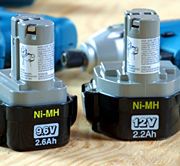
What's an amp-hour? It's a way to rate the amount of energy a battery can store, kind of like knowing the size of your fuel tank. And, like driving a car, the harder you drive your cordless tools, the quicker you run down the battery, regardless of its amp-hour rating. What's an amp-hour? It's a way to rate the amount of energy a battery can store, kind of like knowing the size of your fuel tank. And, like driving a car, the harder you drive your cordless tools, the quicker you run down the battery, regardless of its amp-hour rating.

Most manufacturers supply 2.0ah batteries with their tools, however several companies market batteries with a variety of amp-hour ratings. I was curious what difference these ratings had on run time (the length of time you can run the tool on a freshly charged battery) and if a 2.6ah 9.6v battery could outperform a 2.0ah 12v battery, so I called up a Makita rep.

According to Vince Caito at Makita, the more amp hours the more run time, like having a larger fuel tank; however, there's a big but: Run time is always dependent on work load and demand. Because most of us demand a lot from our cordless tools, a 12v tool will always outperform a 9.6v, regardless of the amp-hour rating. And there's a drawback to higher amp-hour batteries: the higher the amp hours, the shorter the life cycle (total amount of charges per battery) because there's less fluid in the cells.

I also tested the batteries. I found that 2.6ah 12v batteries didn't drive as many screws as 2.0 ah 12v batteries -- same size screws, same 2x4 studs. So much for higher technology.

Gary M. Katz is a carpenter and writer living in Reseda, California. For more on this topic, see Understanding cordless-tool batteries.

Photo: Roe Osborn
December 1, 2004