Less is More: An Interview with David Getts
The Seattle cabinetmaker and designer talks about his work
A designer and craftsman for nearly 30 years, David Getts has mastered the art of making custom woodwork look deceptively simple. In an interview with FineHomebuilding.com, David talks about the challenges 21st-century custom cabinetmakers face and the all-important lesson he learned from his mentor, Tage Frid.
What is your approach to cabinetmaking? What do you do first?
DG: My approach to cabinetmaking is centered on the design concept. When I first entered the field in 1979, most people in the market for cabinetry either hired a cabinet shop or a finish carpenter to build them. Today’s market is much different. The mass-production concept has forced custom shops to conduct business differently. The bulk of installed cabinetry is now fabricated by big-box shops that crank out cookie-cutter cabinets. To distinguish himself from this mass-production mentality, the 21st-century cabinetmaker must design details that set his work apart from standard construction.
Unfortunately, most design is heavily controlled by a client’s budget. This is where every job begins: We establish a realistic budget first, then create a design that is affordable, yet achieves a unique work that both the owner appreciates and the builder enjoys making. Although these parameters can have a negative impact on the overall concept, it does provide a boundary of palette choices that can evolve into interesting and creative designs.
Who or what are your design influences? Who inspires you?
DG: Tage Frid is the first person who comes to mind. It’s not his work so much, but rather his practical approach to the craft that has most inspired me. The Frid I knew taught me not only to get comfortable with technique, but also how to sell myself as a confident craftsman.
In design terms, the clean, straight, simple lines of the Craftsman era have influenced me most. Less is more; I believe that.
Do you have any signature design elements, things that really identify a piece as one only you could have made?
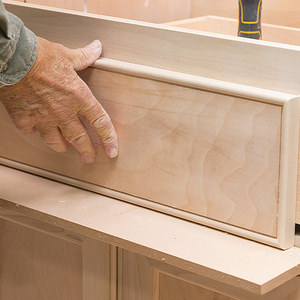
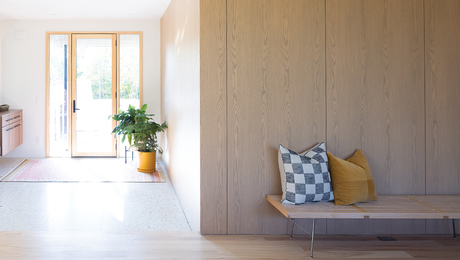
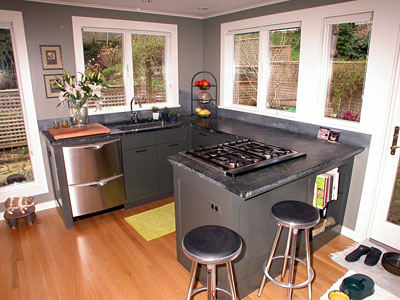
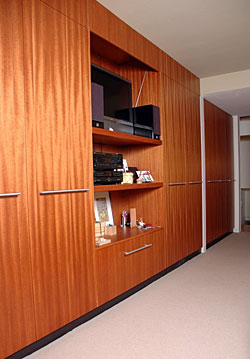
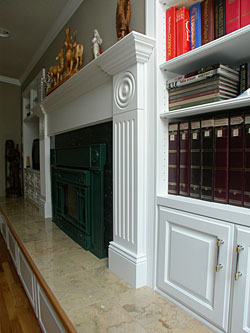
DG: Simple lines. Most of our contracted work is designer- or architect-driven and contemporary in nature. This usually means slab doors on frameless-box construction. That simplicity is also translated in my own designs but takes the form of more traditional details like inset frame-and-panel doors on face-frame cabinetry.
Reputation is the nunber one reason clients contract with us. Custom work demands personalized service, which is what people paying custom prices receive when they work with my company.
What tricks do you use for customization? How do you keep your designs diverse?
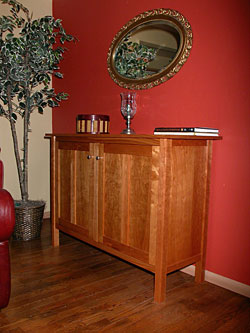
DG: Simplicity is key. Let the wood or simple lines speak for themselves. Diversity is achieved either through wood species, paint color, unique architectural features of the house, or elements important to the owner.
If you had to pick a first love, would it be designing or building?
DG: Design. I’ve built custom woodwork for nearly 30 years and can get exhausted at the prospect of each new job’s custom features. Design is less rigid than production, which makes it easier to flow from one project to the next.
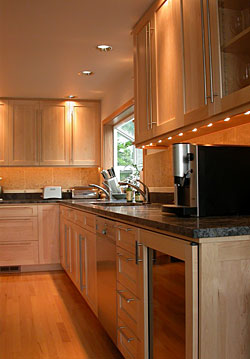
Do you have a favorite project? Material?
DG: Simple Craftsman-detailed projects are the most fun for me, and vertical-grain fir is, hands down, my favorite material. The grain pattern doesn’t beg for attention, and its natural color develops a rich patina over time that adds warmth to both simple and elegant settings.
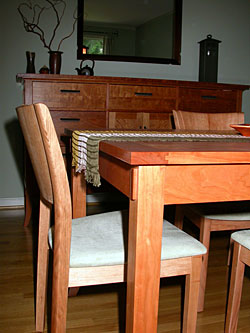
To learn more about David’s work, read Signature Details for Kitchen Cabinets from the August/September 2007 issue of Fine Homebuilding.
Photos by David Getts