previous
  • Painting Ideas, Tips, and Techniques for a Professional Finish
    Painting Ideas, Tips, and Techniques for a Professional Finish
  • 7 Solutions for Kitchen Layout and Design
    7 Solutions for Kitchen Layout and Design
  • Buyer's Guide to Decking
    Buyer's Guide to Decking
  • The Inspector Game: Decking Dos and Don'ts
    The Inspector Game: Decking Dos and Don'ts
  • How it Works
    How it Works
  • 13 Door Design and Installation Tips
    13 Door Design and Installation Tips
  • Energy-Smart Details
    Energy-Smart Details
  • Meet the Fine Homebuilding Project House!
    Meet the Fine Homebuilding Project House!
  • 9 Design Ideas & Tips for Concrete Countertops
    9 Design Ideas & Tips for Concrete Countertops
  • Outdoor Kitchen Design Inspiration
    Outdoor Kitchen Design Inspiration
  • 15 Coffered Ceiling Design Ideas and Tips
    15 Coffered Ceiling Design Ideas and Tips
  • Complete Kitchen and Bath Guide
    Complete Kitchen and Bath Guide
  • 2012 HOUSES Awards
    2012 HOUSES Awards
  • 12 Remodeling Secrets Revealed
    12 Remodeling Secrets Revealed
  • Guide to Paperless Drywall
    Guide to Paperless Drywall
  • Roofing articles, videos, tools, and materials
    Roofing articles, videos, tools, and materials
  • Deck Design & Construction Showcase
    Deck Design & Construction Showcase
  • 7 Small Bathroom Floorplan Layouts
    7 Small Bathroom Floorplan Layouts
  • 10 Basement-Remodeling Tips and Techniques
    10 Basement-Remodeling Tips and Techniques
  • Fine Homebuilding: The Digital Issues
    Fine Homebuilding: The Digital Issues
next
Pin It
continued 12next>VIEW ALL

How to Build an Arched Pocket Door

An arched opening, door, and drywall make an elegant (and space-saving) transition.

During a recent remodeling job, I had to reproduce several arched tops in plastered openings to match one existing opening. Each opening was slightly different. The arches’ radii were tighter than any arch-forming product I could find, so I made my own arched corners. I was even able to integrate an arched top into a pocket door. Although I did my first arched pocket door trimmed with arched wood casing a few years ago, this one was almost all drywall.

The house was built in the 1920s. I thought I’d have to demolish and reframe a wall to install the pocket-door track, but I lucked out. I mounted the track to one side of an existing wall and covered it with a new wall that was blocked out 3-1/2 in. from the original. I made the corners for both sides of the arch, then bent a double layer of 1/4-in. drywall to the arch. The door had to be modified before I could hang it on the track, and I made sure I could access the trolley adjustments.

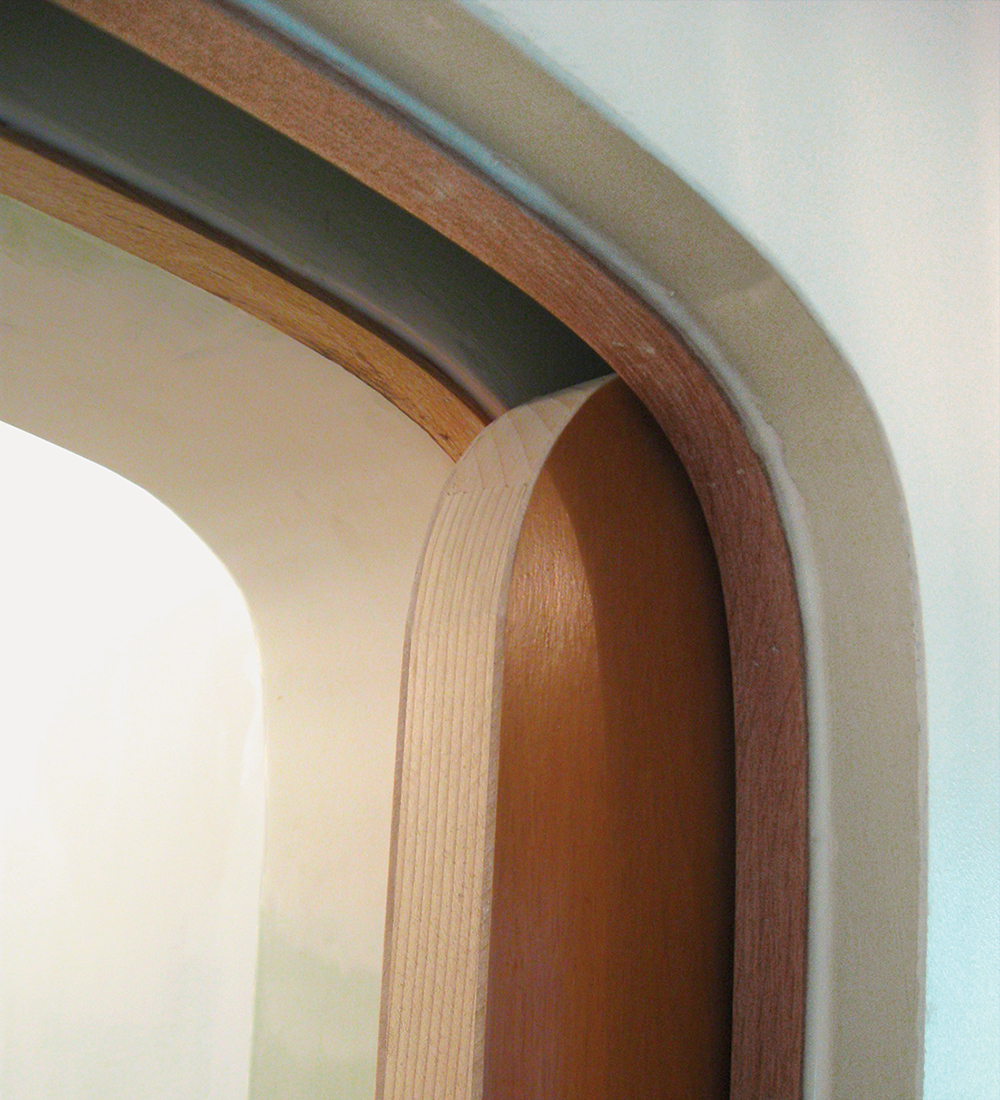
I cut plastic corner bead to conform to the arch, then taped and joined the entire doorway. I ripped and bent 3/32-in.-thick white-oak strips to act as stops on both sides of the door. After painting the jamb, I adjusted the door’s hang and cut the door for the recessed pull so that its position would match the other door hardware in the room.
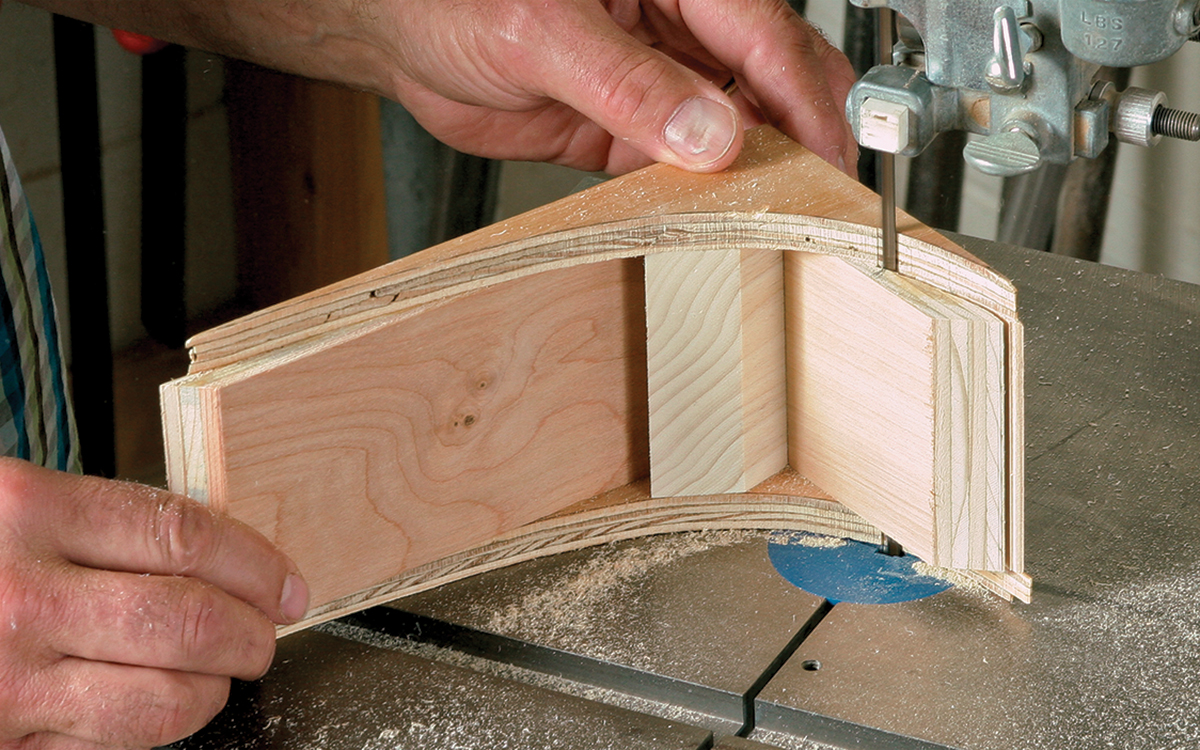
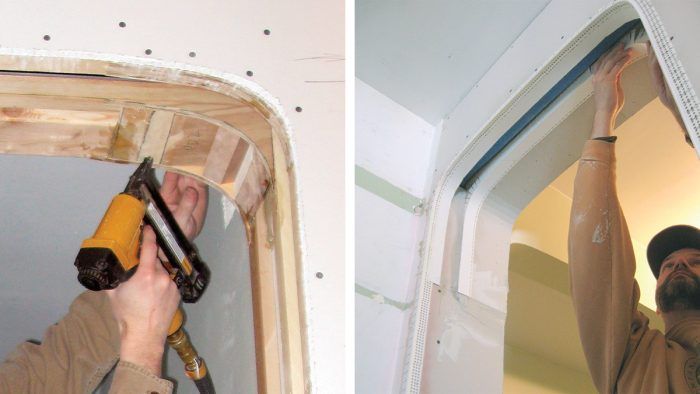
Create an “archwich.” To make the blocking for the arch, trace the pattern on 1/2-in. plywood, and rough-cut the curves on a bandsaw. The middle of the sandwich is an L-shaped frame of a vertical 3/4-in. ply and a horizontal 1/2-in. ply. Add an extra backing block in the middle that runs past the plywood curves and gets trimmed flush after the glue dries. The completed blocking is nailed in place.
Click to enlarge image
Closely spaced scoring encourages drywall and bead to bend. To make the drywall conform to the curve, score the back of each piece of 1/4-in. drywall on graduated intervals so that the scoring is about 1/4 in. apart. Moistening the drywall with water helps the process. Glue the strips to the blocking with construction adhesive, and tack with narrow-crown staples set at low pressure. Cut standard plastic corner bead at close intervals along the outer edge. Set the bead with spray adhesive, and add a few staples to keep it in place.
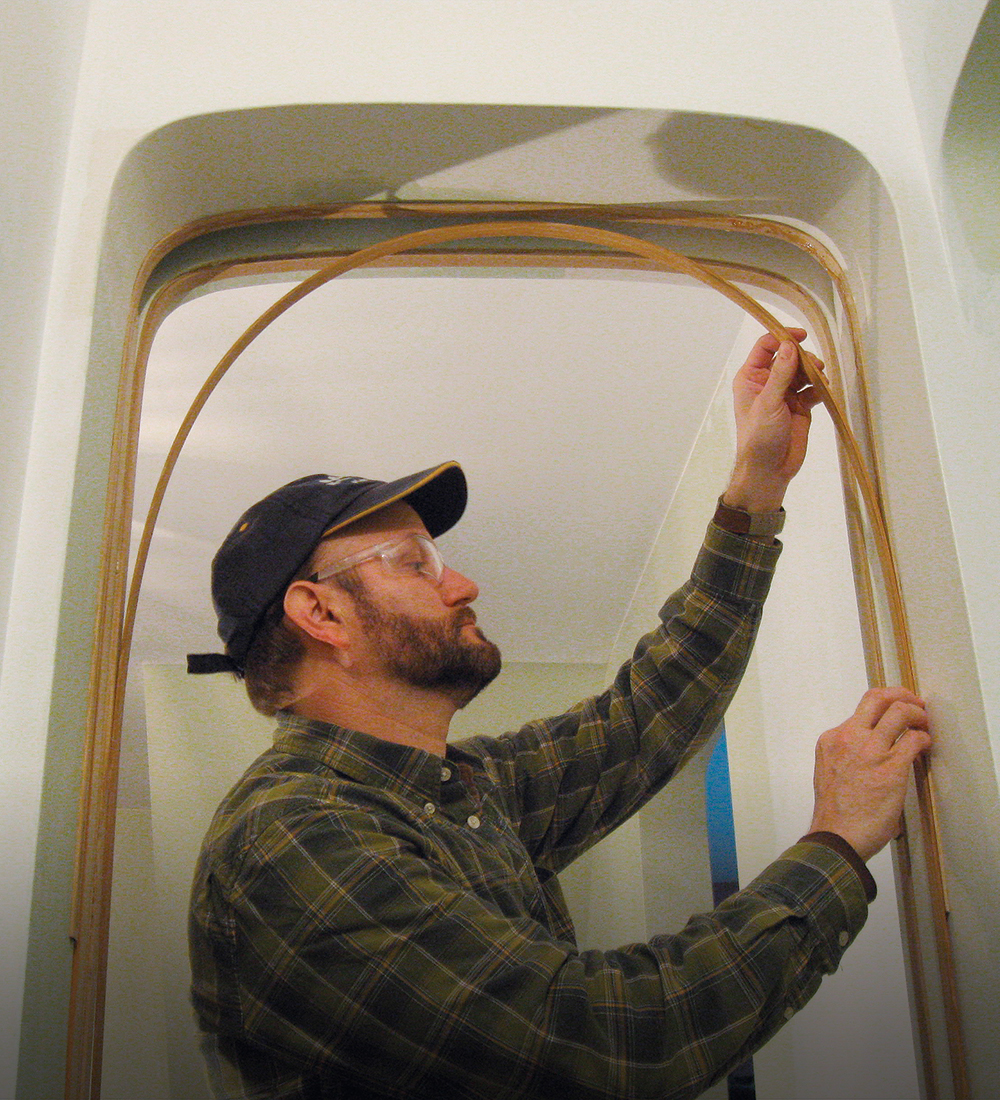
Bent stops keep the door on track. After soaking 3/32-in.-thick strips of white oak in hot water, laminate in place two strips on each side of the door opening. Polyurethane glue works best with wet wood. A few finish nails keep the stops in place.
No right angles, please. To fit the opening, trim the door blank to fit the arch. Painter’s tape keeps veneer splintering to a minimum.

Tool of the Trade

Holy Radius, Mudman
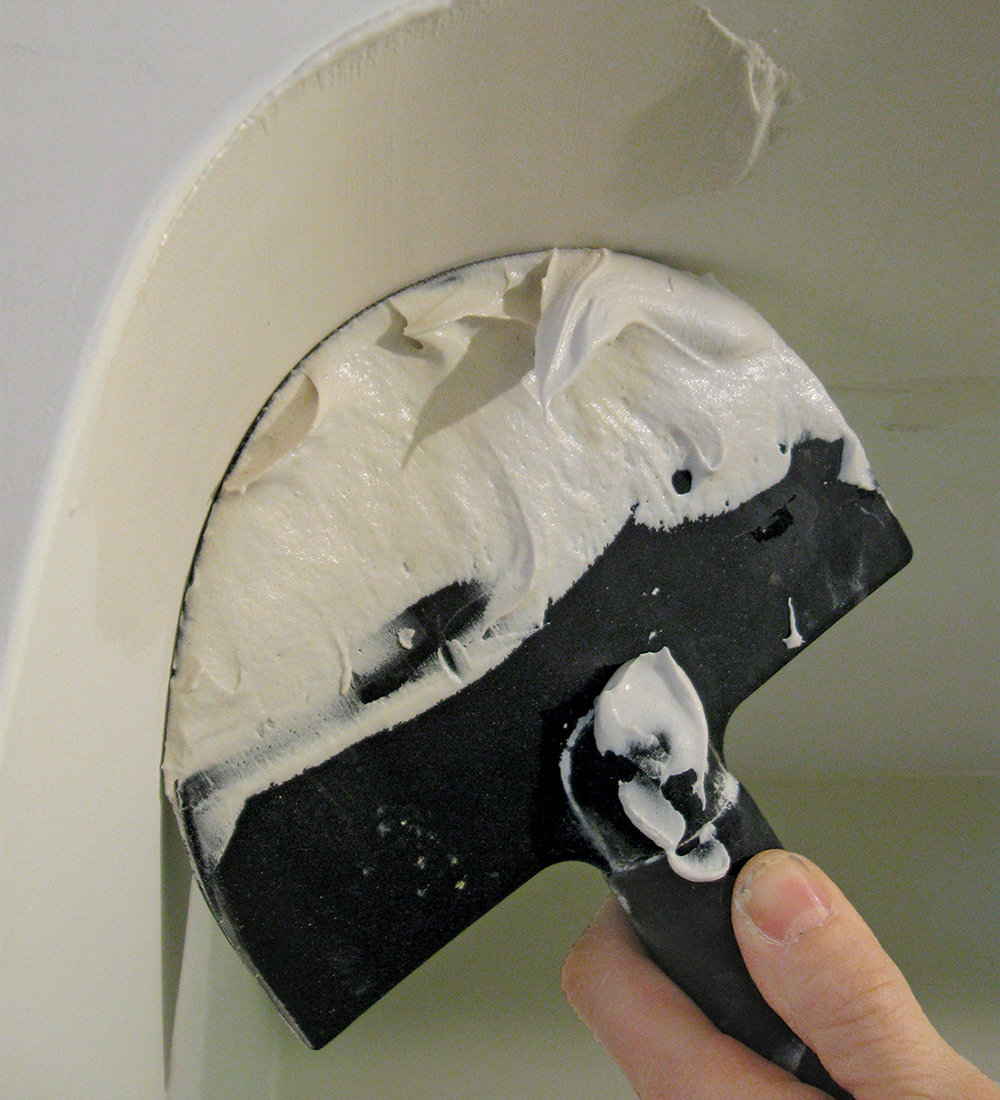
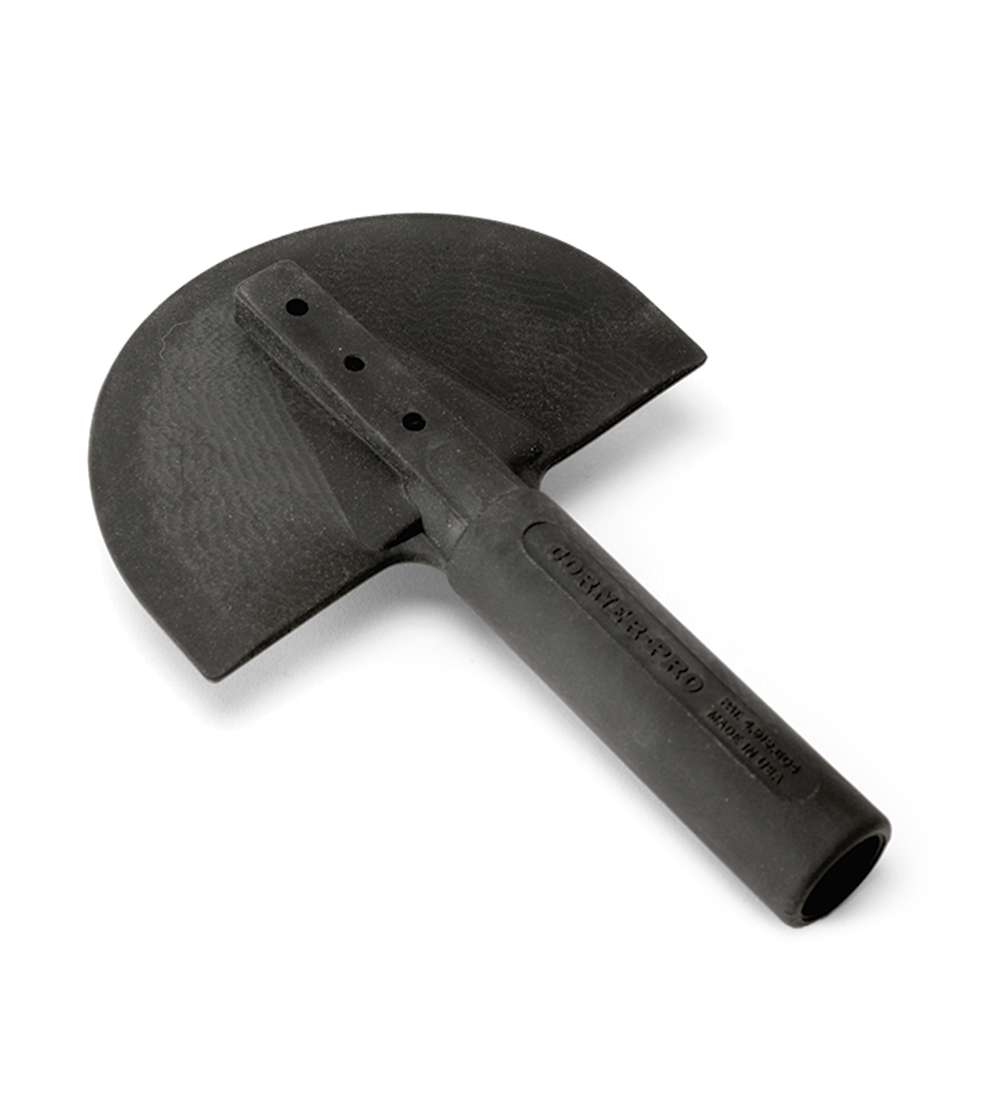
Even with laminations of scored drywall, when it comes time to apply joint compound, the surface tends to get lumpy when using a straight taping knife. The solution is to spend $20 online and get a Rubber Wipe-Down Knife, made by Diamond Wall. Known as a “bat knife,” the tool is perfect for curved corners.
From Fine Homebuilding213 , pp. 96-98 July 15, 2010
continued 12next>VIEW ALL