
How to Build a Temporary Brace Wall
Before tearing down a load-bearing wall during a remodeling project, you need to adequately support the structure. Here's how.
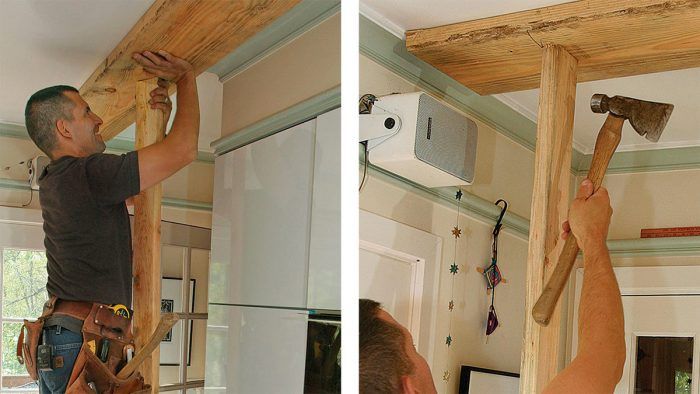
When I talk to my clients about improving sightlines and traffic patterns in their homes, the conversation often leads to somebody saying, “Well, let’s just tear out that wall,” followed by, “Can we do that?” As a remodeling contractor, I’ve learned that a simple “yes” is the best answer. When I get around to figuring out how to tear out that wall, things can get more complicated. The first step is to determine if the wall is load-bearing. If it is, I need to support the structure temporarily while the demolition and rebuilding work are done. There are different ways to provide support, but if the joists above are perpendicular to the wall, the easiest option is to build a temporary brace wall.
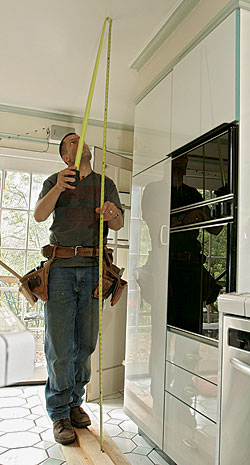
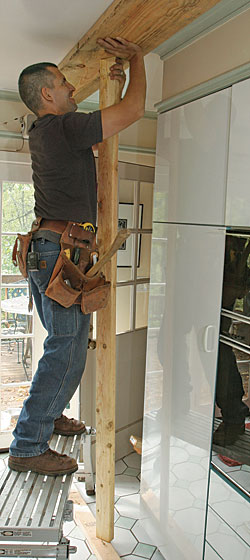
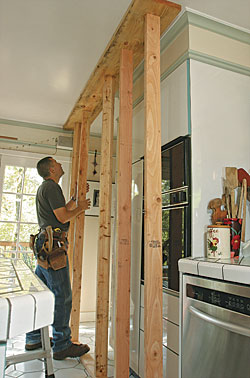
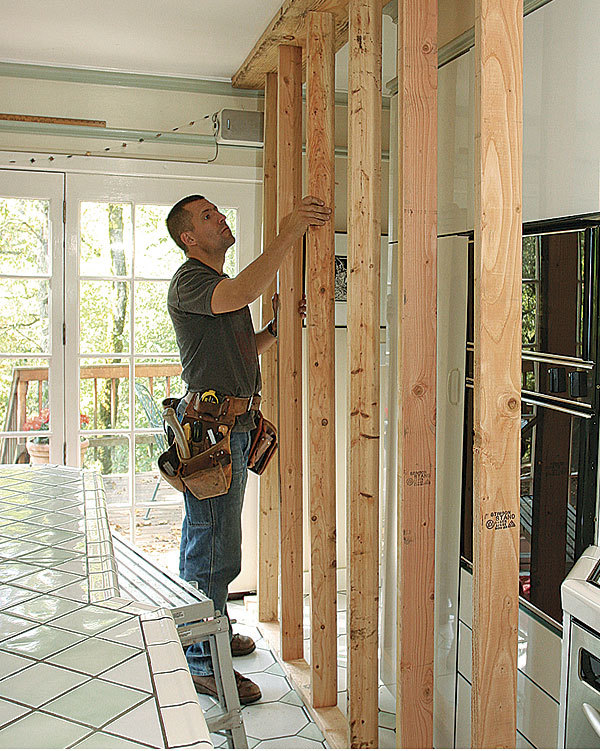
I use a 2×10 for the top plate to spread the weight over a large-enough area to avoid cracking the ceiling finish. For the bottom plate and studs, 2x4s are sufficient. If the brace wall needs to span a long distance, I break it up into 8-ft. or shorter sections to make it manageable for one person to build. I build the wall 3 ft. to 4 ft. from the opening—in this case, to enlarge the doorway beyond the cabinets. This distance is close enough to support the load adequately, yet it gives me enough room to work comfortably.
Place and plumb the middle stud first
|
|
|
|
|
|
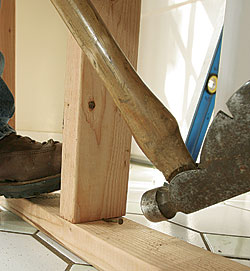
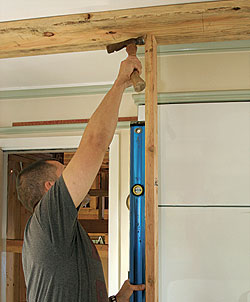
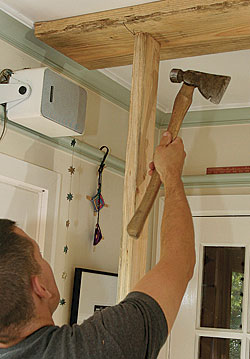
Friction-fit studs to complete the wall
|
|
|
If I’m dealing with a multistory structure or if I think there is a significant load, I consult an architect or an engineer. Also, when I’m working over a crawlspace or a basement, I build a secondary brace wall below if I need to continue the load path down.
|
—John Ross
Photos by: John Ross
