The next wave of home energy?
Micro-cogenerators, or combined heat and power (CHP) systems, are both environmentally friendly and a money saver
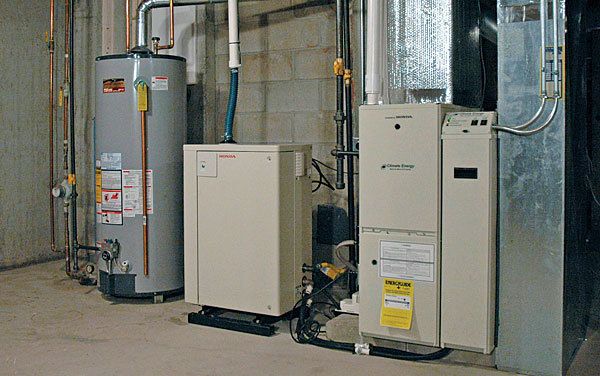
Imagine heat, air-conditioning, electricity, and hot water from a single source. Fairy tale? No, it’s called micro-cogeneration, or combined heat and power (CHP). By approaching 90% efficiency, micro-cogenerators reduce energy costs, dependence on foreign oil, carbon emissions, and greenhouse gases. These mini power plants are both environmentally friendly and a money saver.
Cogeneration is simply explained by considering how your car works. In addition to driving the car’s wheels, the engine’s mechanical force is simultaneously applied to generate electrical power for lights and the radio while also making the heat of combustion available as needed during cold weather. Micro-cogenerators are basically small internal-combustion engines equipped to generate electricity and to provide domestic hot water and heat. These devices can operate on natural gas, fuel oil, or biodiesel.
These systems are efficient, but not prolific
No mechanical device that converts fuel to usable energy does so with 100% efficiency. Cars are about 20% to 35% efficient. Electrical plants that burn coal are about 30% efficient. The key to boosting efficiency is to make use of the heat normally lost. In the case of an engine, this requires efficient, durable heat exchangers installed on the exhaust and engine block. This heat can be used in a variety of ways, such as space-heating or water-heating.
Micro-cogenerators run air-conditioning equipment efficiently because they use the engine’s mechanical energy to drive the refrigeration compressors directly. This saves the conversion from mechanical to electrical and then from electrical back to mechanical to drive the compressor.
Currently, large-scale CHP systems produce about 8% of the power in the United States. This is a small slice, but it represents billions of dollars in savings by reducing over a trillion Btus of yearly energy demand. Micro equipment is available for domestic use, but it is rare. Polar Power (www.polarpowerinc.com) makes a $15,000 (installed cost) micro-cogeneration unit that delivers 34,000 Btu/ hour of air-conditioning, up to 60,000 Btu/hour for space- or water-heating, and up to 6000w of electricity.
Popularity will increase
If CHP is so great, why aren’t these systems more popular? “The biggest problem is finding qualified parties who understand the technology and can successfully install the system according to the customer’s needs,” says Arthur Sams, president of Polar Power. The average homeowner needs professional installation and service, but to provide this service locally requires enough customers to make a local dealership worthwhile. Another impediment is product awareness and acceptance by local building departments. Because of this tenuous support system, Polar Power sells its systems only to hands-on homeowners who can install and service the equipment themselves.
This technology has a solid track record in Japan, Great Britain, and New Zealand. But as the cost of home-heating fuel rises and as environmental awareness gains momentum, micro-cogeneration is sure to become more popular in the U.S.
Photo: Courtesy of Climate-Energy