What’s the Difference: Wood stains
To get good finishing results, you need to understand the two main types of wood stain available and the way they perform
Many carpenters (me included) hate staining and finishing wood. All the effort put into proper wood selection, accurate and crisp cuts, and tight joinery can be ruined with the simple stroke of a brush or the swipe of a rag.
The stain used to adjust wood color, depth, tone, and visual texture is often to blame for results that are less than expected. To get good results, you first need to understand the two main types of wood stain available and the way they perform.
Think of pigment stains as thinned paint
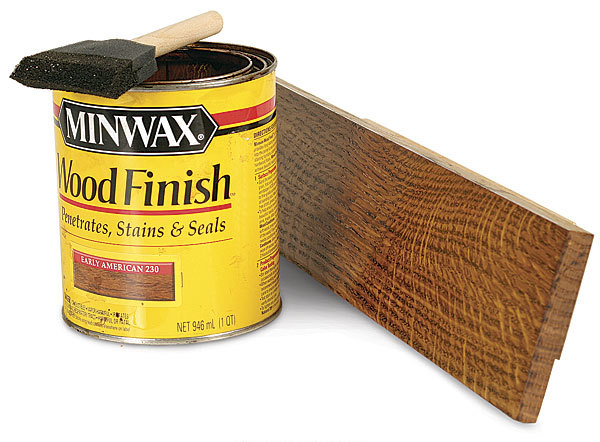 Quartersawn white oak with pigment stain. The dark pigment stain on this board settles only in the open-grain sections of wood and creates contrast in the grain and rays. The topcoat is shellac.
Pigment stains are available in water-, oil-, and solvent-based versions and come as either liquids or gels. These stains have large particles that don’t penetrate wood well and tend to rest on its surface, highlighting the wood’s texture and grain contrast, but masking its natural tones and figure.
Best use: On large-scale projects such as floors, trim, and wainscot, and when working with open-grain woods such as oak and mahogany, where you’d like to accentuate grain patterns.
Pros:
• Easier to apply than dye.
• Is considered colorfast, so it won’t fade over time.
• Highlights surface textures.
• Distinguishes species-specific grain patterns.
Cons:
• Obscures wood figure.
• Doesn’t color wood as evenly as dye.
• Not available in colors that are as deep or as vibrant as dye stains.
Dye stains demand experience
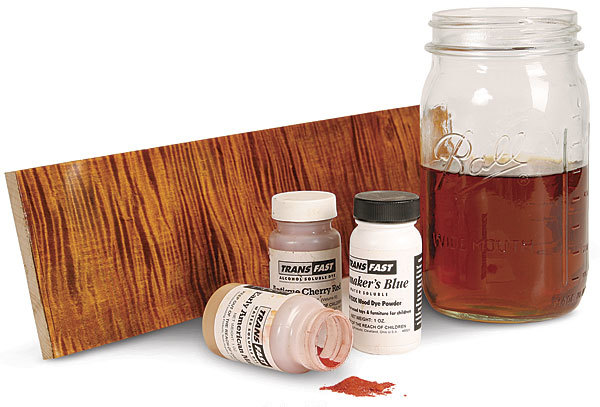 Figured maple with dye stain. Three different-colored dyes are used to get this effect, none of which obscure the natural figure in the wood. The topcoat is shellac.
Dyes come as either a factory-mixed product or as a powder that needs to be dissolved in alcohol, oil, or water. Many people shy away from wood dye because it’s easy to create a streaky, uneven surface when you don’t have experience with the product. However, dye penetrates wood more deeply than pigment stains, colors wood more evenly, and dries more clearly, so it renders the natural character of wood more accurately.
Best uses: On smaller, more manageable projects, such as furniture, and on wood such as figured maple, in which the tone, grain, and figure should be showcased.
Pros:
• Lends itself well to the creation of custom colors and tones.
• Highlights grain and makes wood figure pop.
• Helps to distinguish the inherent character of different wood species better than pigment stains.
Cons:
• Fades over time in direct sunlight.
• More difficult to apply evenly.
• Not well suited for larger applications.
Photos by: Krysta S. Doerfler