Q:
We live at a 2,300-ft. elevation and get a lot of strong winds. In the winter, our wall plugs and light-switch boxes leak ice-cold drafts into the house. Is this a poor insulating job? Will sealing these boxes stop the drafts?
Carl Heidbreder, Jasper, GA
A:
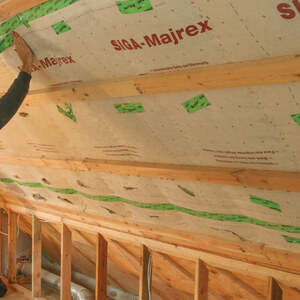
Fred Lugano, a writer and weatherization expert from Vermont, replies: Most insulation products are not designed to control drafts. The problem in your house is actually related to a generally ignored but critically important component of the house shell, the air barrier.
When there are cold drafts coming into the house, there also must be an equal amount of warm indoor air belching out. Oddly, most of this leaking happens in the attic. If you seal the cold-air leaks, such as your electrical boxes, the infiltration is simply diverted to the next-least-resistant hole in the air barrier. In the weatherization business, we call this “chasing air,” and it’s the most expensive and least effective way to increase the comfort level of a home’s indoor air.
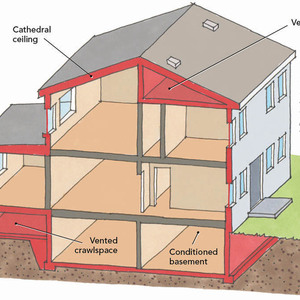
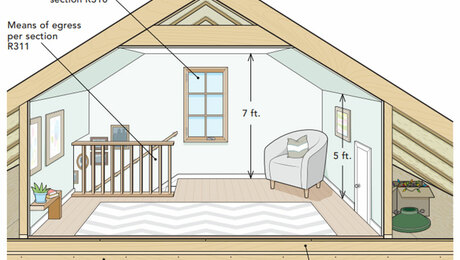
Far better opportunities to reduce air leaks in a house are found in the attic. First, look for big holes (large enough to put your fist through) under the attic insulation. Typical culprits are chimney and plumbing chases.They can actually have gaps that add up to several square feet.
Any kind of ceiling discontinuity is also suspect. Multilevel, sloped and plank ceilings can produce 4 sq. ft. to 10 sq. ft. of effective leakage area, which is worse than trying to live with an open window in winter. Recessed lighting can also spew huge volumes of warm air into the attic. Finally, smaller air-sealing opportunities, such as drywall gaps and wiring penetrations, lurk along the tops of every interior wall.
Seal every hole you find as tight as a tire. Use sheet metal, expandable foam and caulk. See my articles Fixing a Cold, Drafty House and Fixes for Damp, Moldy Houses for more air-sealing tips. And don’t forget to close the fireplace damper if you have one. Every bit of exfiltration you fix will produce an instant reduction of drafts throughout the living areas of your home.