previous
  • 13 Door Design and Installation Tips
    13 Door Design and Installation Tips
  • Buyer's Guide to Decking
    Buyer's Guide to Decking
  • 7 Small Bathroom Floorplan Layouts
    7 Small Bathroom Floorplan Layouts
  • Painting Ideas, Tips, and Techniques for a Professional Finish
    Painting Ideas, Tips, and Techniques for a Professional Finish
  • 15 Coffered Ceiling Design Ideas and Tips
    15 Coffered Ceiling Design Ideas and Tips
  • Roofing articles, videos, tools, and materials
    Roofing articles, videos, tools, and materials
  • 10 Basement-Remodeling Tips and Techniques
    10 Basement-Remodeling Tips and Techniques
  • Deck Design & Construction Showcase
    Deck Design & Construction Showcase
  • How it Works
    How it Works
  • Meet the Fine Homebuilding Project House!
    Meet the Fine Homebuilding Project House!
  • 12 Remodeling Secrets Revealed
    12 Remodeling Secrets Revealed
  • Complete Kitchen and Bath Guide
    Complete Kitchen and Bath Guide
  • Outdoor Kitchen Design Inspiration
    Outdoor Kitchen Design Inspiration
  • 2012 HOUSES Awards
    2012 HOUSES Awards
  • The Inspector Game: Decking Dos and Don'ts
    The Inspector Game: Decking Dos and Don'ts
  • Guide to Paperless Drywall
    Guide to Paperless Drywall
  • Energy-Smart Details
    Energy-Smart Details
  • Fine Homebuilding: The Digital Issues
    Fine Homebuilding: The Digital Issues
  • 9 Design Ideas & Tips for Concrete Countertops
    9 Design Ideas & Tips for Concrete Countertops
  • 7 Solutions for Kitchen Layout and Design
    7 Solutions for Kitchen Layout and Design
next

Fire-treating cedar shakes

Q: I have a low-cost source for heavy butt #1 red-cedar shakes. Is there some way I can treat the shakes with fire retardant before I apply them? If so, what retardant should I use, and where can I get it?


Randall J. Gerlach, Brookings, OR


A: Michael M. Westfall, president of the Cedar Shake & Shingle Bureau, replies: The only permanent fire-treating method that is recognized and approved by building codes (UBC standard 32-7) is the full-cell vacuum-pressure process. Shakes and shingles are locked inside a chamber where a vacuum is created, and fire-retardant chemicals are injected into the innermost layers of the cedar. Several treating companies have been authorized by the Cedar Shake & Shingle Bureau to perform this process. In your area, Cascade Pacific Industries (Jasper Treating Div., P. O. Box 1351, Eugene, Ore. 97440; 800-331-0656) treats shakes using the approved process.

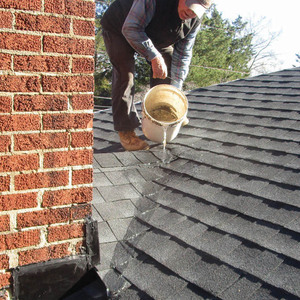
If you’re bent on doing it yourself, the Texas Forest Products Laboratory (P. O. Box 310, Lufkin, Texas 75901) has found that liberal applications of diammonium phosphate (a chemical fertilizer) dissolved in water achieve the UBC’s minimum fire-resistance rating. Unlike the full-cell vacuum-pressure process, this coating is not permanent. If the roof is in a fire-prone area, the researchers recommend monthly applications, especially during the fire season.
From Fine Homebuilding 77, pp. 16 November 1, 2002