Q:
The bathroom plumbing in my son’s 62-year-old house has sprung a leak. The water appears to be coming from the drain pipe when the toilet is flushed.
Anthony Ignasher, Mooresville, NC
A:
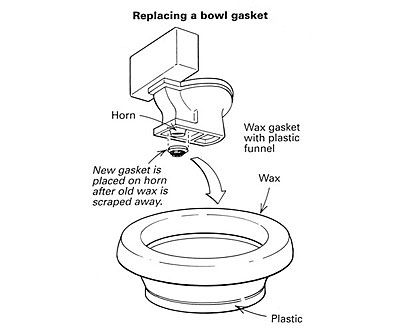
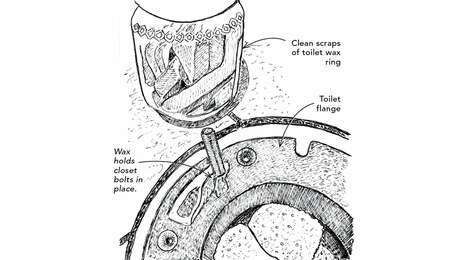
Rex Cauldwell, master plumber and electrician in Copper Hill, Virginia, replies: Before you start cutting concrete, be sure the leak isn’t around the gasket between the floor flange and the toilet horn, the most common area of leakage. Gaskets are of three types: wax ring, wax with a plastic funnel molded into it and rubber. I prefer plastic-funnel gaskets; I’ve seen many leaks with wax rings and only a few with the plastic- funnel type. If your toilet has a wax ring, replace it with a plastic-funnel type.
The floor flange is supposed to be on top of the flooring, not within or under it, which can place the gasket too deep in the flooring and prevent a proper seal, resulting in a leak. In this situation I occasionally have to install a gasket on top of a gasket so that I can get a good seal.
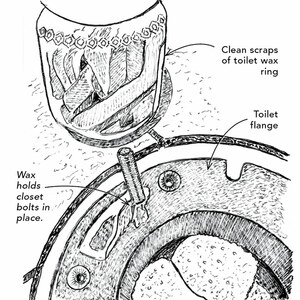
Also check that the floor is level and that the toilet is tightly sealed to the floor. Does the toilet rock back and forth? In an old installation, the bolt slots on the cast-iron flange may have rusted through, allowing the toilet to become loose. Or the closet bolts, which attach the toilet bowl to the floor flange and hold the toilet bowl to the floor, may have rusted through or may be loose. All of these problems cause the toilet to rock. Rocking compresses the wax gasket and leaves a gap as the toilet returns to its level position.
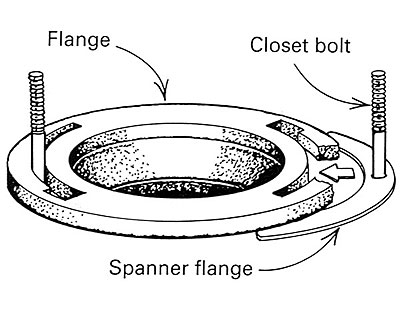
If part of the floor flange is rusted through, and there is no place to anchor a closet bolt, use a spanner flange—a semicircular strap that bolts across a damaged section of floor flange. If the flange is badly rusted, replace it with a solid brass closet floor flange (available at plumbing-supply houses) screwed directly to the floor. You can also attach the toilet bowl directly to the floor by running lag bolts or closet screws into the wood joists. Just be sure you’ve got a tight seal between the flange and the horn.
If, and only if, you are absolutely certain that the leak is in the pipe, then you have a major problem. You must cut the concrete back until you find the leak. Use a concrete-cutting blade on a circular saw, spray water on the work area to keep the dust down and be careful not to cut the pipe. A plumbing system as old as your son’s is most certainly cast iron and hard to work with; it takes a lot of specialized tools and a considerable amount of experience. If it’s impossible to get to the leaky area to cut out the pipe and replace it, I would recommend that you call a good licensed plumber with lots of experience (and lots of insurance).