previous
  • 13 Door Design and Installation Tips
    13 Door Design and Installation Tips
  • Buyer's Guide to Decking
    Buyer's Guide to Decking
  • 7 Small Bathroom Floorplan Layouts
    7 Small Bathroom Floorplan Layouts
  • Painting Ideas, Tips, and Techniques for a Professional Finish
    Painting Ideas, Tips, and Techniques for a Professional Finish
  • 15 Coffered Ceiling Design Ideas and Tips
    15 Coffered Ceiling Design Ideas and Tips
  • Roofing articles, videos, tools, and materials
    Roofing articles, videos, tools, and materials
  • 10 Basement-Remodeling Tips and Techniques
    10 Basement-Remodeling Tips and Techniques
  • Deck Design & Construction Showcase
    Deck Design & Construction Showcase
  • How it Works
    How it Works
  • Meet the Fine Homebuilding Project House!
    Meet the Fine Homebuilding Project House!
  • 12 Remodeling Secrets Revealed
    12 Remodeling Secrets Revealed
  • Complete Kitchen and Bath Guide
    Complete Kitchen and Bath Guide
  • Outdoor Kitchen Design Inspiration
    Outdoor Kitchen Design Inspiration
  • 2012 HOUSES Awards
    2012 HOUSES Awards
  • The Inspector Game: Decking Dos and Don'ts
    The Inspector Game: Decking Dos and Don'ts
  • Guide to Paperless Drywall
    Guide to Paperless Drywall
  • Energy-Smart Details
    Energy-Smart Details
  • Fine Homebuilding: The Digital Issues
    Fine Homebuilding: The Digital Issues
  • 9 Design Ideas & Tips for Concrete Countertops
    9 Design Ideas & Tips for Concrete Countertops
  • 7 Solutions for Kitchen Layout and Design
    7 Solutions for Kitchen Layout and Design
next

Hand vs. pneumatic flooring nailers

Q: I have installed many hardwood floors over the years and have always used a hand nailer. I have a large flooring job coming up and was wondering if there were any advantages to using a pneumatic flooring nailer vs. a hand nailer?


Alan Manuel, Calvert County, MD


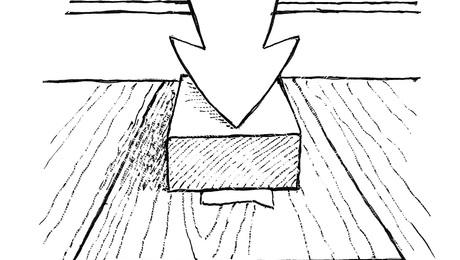
A: Charles Peterson, owner of Connecticut Premier Hardwood Floors in Gales Ferry, Connecticut, replies: A hand nailer is a tool that you strike with a hammer to drive flooring nails. The force you apply to the hammer translates directly to how hard and fast the fastener is driven and also to how tight the board is driven to its neighbor. A pneumatic nailer uses compressed air to set the fastener. Striking the pneumatic nailer with a hammer is more akin to depressing the trigger on a pneumatic nail gun than it is to driving the nail with a hammer. A pneumatic nailer lets you fasten floorboards with equal pressure throughout the day.

If you’re using a hand nailer and your strength starts to wane toward the end of the day, odds are that you won’t be getting the boards as tight as you were first thing in the morning. This variance can lead to problems matching up rows of flooring. With the consistent force of a pneumatic nailer, the boards stay consistently tight throughout the day. The biggest drawback to pneumatic nailers is being tethered to the air hose, but I think it’s worth the hassle.
From Fine Homebuilding 157, pp. 22 September 1, 2003