Q:
I’m adding a second-floor bathroom, and I need to tap into the cast-iron waste line in the basement to bring up a new 3-in. waste stack. Should I break the cast iron at the hub, or cut it and attach the drain line with a rubber fitting?
Dan Webb, via email, None
A:
Ed Cunha, a plumber in West Harwich, Mass., replies: Don’t bother trying to break the hubs. When you tie in the new pipe, you’ll need clean ends to work with, so breaking the hubs won’t help. Instead, cut into the cast iron with a ratcheting snap-ring cutter. Tie the new stack into the old with a no-hub coupling, which is commonly called by its brand name, Fernco.
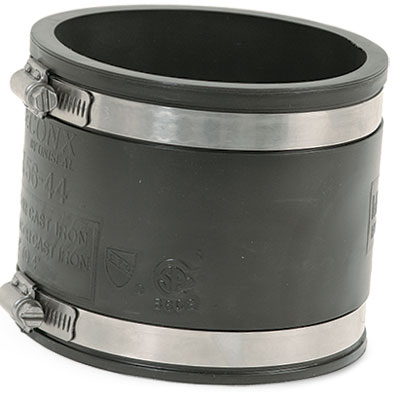
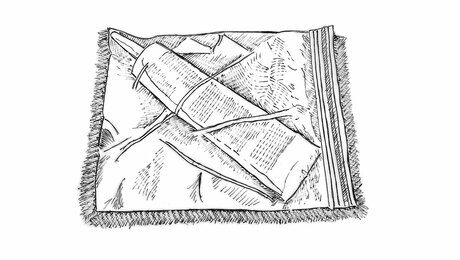
No-hub coupling makes a fast, trouble-free connection. This 4-in. rubber fitting provides remodeling options when tying in to different kinds of drainpipe. Cost: $6.Daniel S. Morrison
The trick to tying the two lines together is in placing the fitting over both pipes. The easiest way (if you’ve got enough room) is to push the coupling fully onto the existing (cast-iron) line, slide the new pipe into place, then push the coupling half onto the PVC and tighten the stainlesssteel clamps.
If you don’t have room to push the Fernco back out of the way fully, you’ll have to use a fourband clamp. With this clamp, you can put the rubber sleeve onto the cast-iron pipe and fold it back to slide the new pipe into place. Next, unfold the rubber sleeve, then put the fourband clamp over the rubber sleeve and tighten it down.
The cast-iron pipe most likely will have a thicker outside dimension than the PVC, so make sure to get a coupling with different thicknesses of rubber to accommodate it.
One tip: Smooth the inside of the cast-iron pipe with a half-round file to take off sharp edges that could catch anything.