
Electrical Outlets: Upside-Down or Right-Side-Up?
Master electrician Rex Cauldwell offers some insight into the controversial topic of which way you should orient wall receptacles when wiring a circuit in a house.
Q:
The outlets in my house are installed with the grounding prongs above the slots for the paired plug blades. Is this wrong?
Mary Walsh, Lawrence, KS
A:
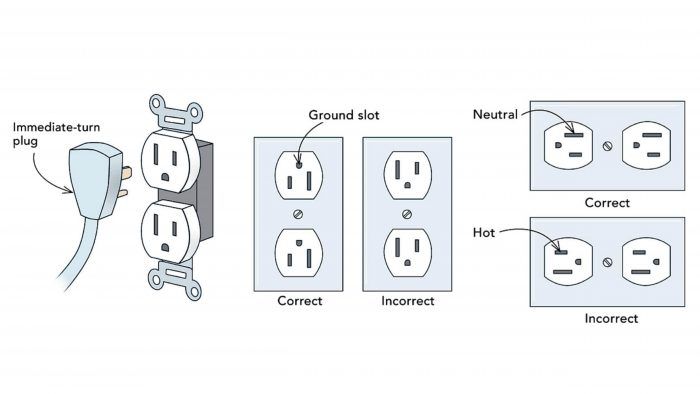
Rex Cauldwell, a master electrician in Rocky Mount, Va., replies: There is no official right or wrong way to orient a receptacle—the National Electrical Code doesn’t specify—but you can decide by using logic and common sense. Clothes washers, refrigerators, and window air conditioners typically have cords with immediate-turn plugs. For appliances with this type of plug, orient the receptacle so that the plug inserts without having to loop over itself. Otherwise, the downward pull of the cord tends to tug the plug from the receptacle.
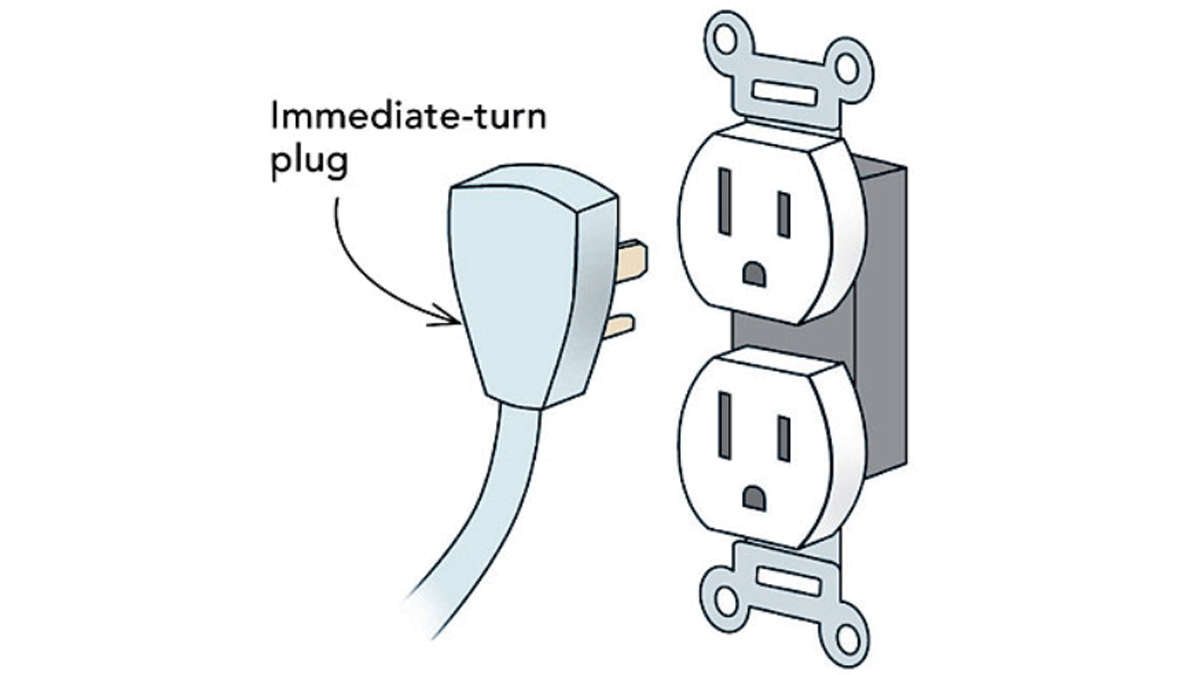
For immediate-turn plugs, orient the outlet with the ground slot on the bottom.
For all other plugs, I put the grounding slot on top. If a plug is partially pulled from the receptacle, exposing the hot and neutral blades, and something metal falls on it (like a knife or a picture frame), a direct short won’t occur because the grounding pin deflects the item from the terminals.
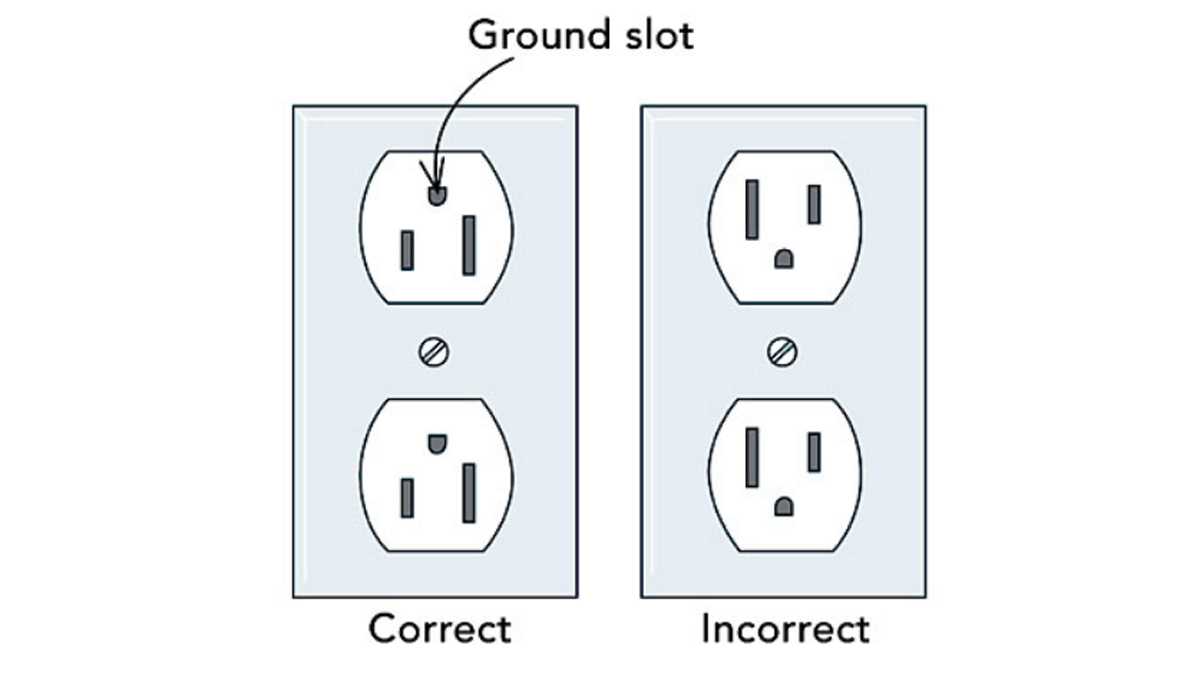
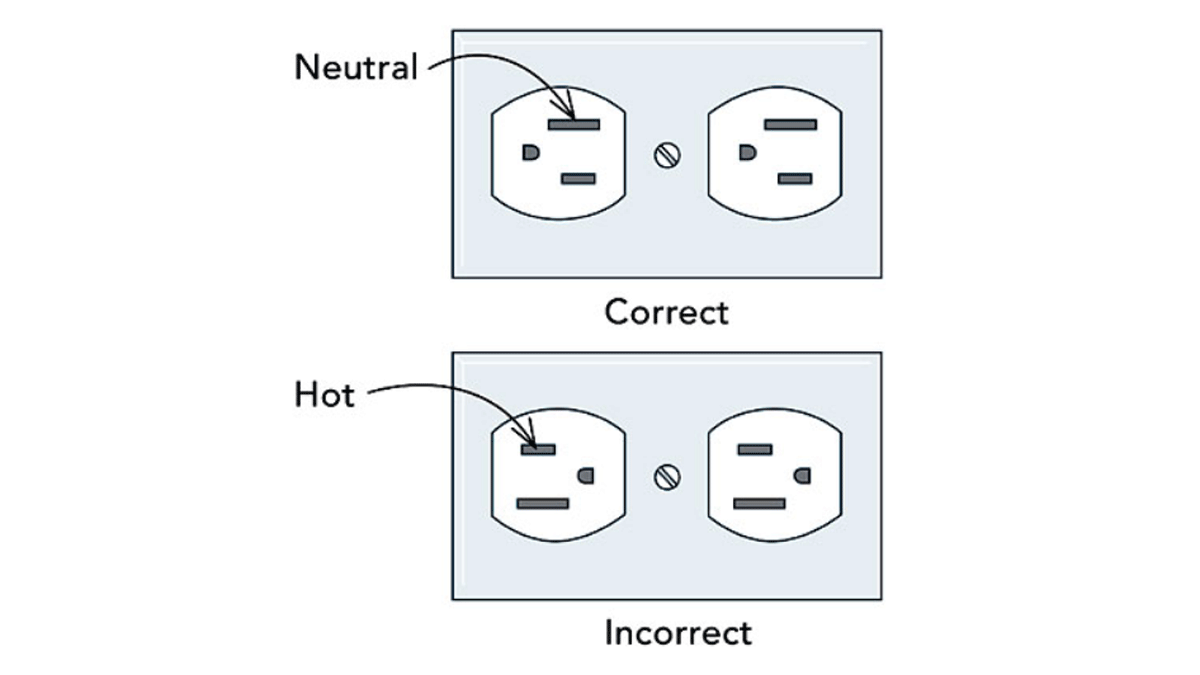
For horizontal receptacles, place the grounding slot to the left and the wide neutral slot on top. This way, if something metal falls on the partially exposed blades, the item will hit the grounded neutral blade instead of the hot blade.
More about residential wiring:
Electrical Outlets by the Numbers – Building codes dictate specific height and spacing measurements for receptacles and switches. Learn what the most common dimensions are and why.
9 Common Wiring Mistakes and Code Violations – Some are illegal, some are dangerous, and some are both—but all are simple to avoid.
Is Your Old Wiring Safe? – Inspect the electrical panel and exposed wiring throughout your house to identify safety risks, fire hazards, and upgrade options.
From Fine Homebuilding #193

View Comments
Ground pin down. The ground pin up were mainly installed in hospitals, as it was possible for a thin metallic object to fall on the live blades.
I'd be pissed if an electrician installed receptacles with the ground pin up. I would have to redo all of them.
Years ago I worked for two different cousins who were electrical contractors. One installed the ground up, one installed them down. Neither could say why they did it their preferred way.i think the idea that some “metal” thing falling on a plug is a long shot and an old electricians tale.
From personal experience I have seen dozens of outlets broken when cords were unplugged roughly and the ground prong was on the top. Try it. Plug a three prong plug into one mounted at 15 inches high and pull the cord in an upward direction. I would never install or recommend anyone put the ground prong up on normal lower level outlets. Plus, they look funny.
This article ignores the fact that in many new homes vertical receptacles that have the ground up are switch-controlled and receptacles with the ground down are not switch-controlled.
When I questioned the electrican at our world headquarters build why he installed all the outlets ground up, he jumped into a rant and spewed the line about metal object falling. In an office that might be more reasonable. I'm also wondering if babies/toddlers would be less enamored by that view rather than all the winking wide-mouth emoticons, right at their level, begging for something to be put into them. But then it might have taken another 100 years to come up with tamper proof outlets.
Nope, I will continue to put the ground down. Ive never seen a metal object fall and stay connected to the plug pins. Otherwise I agree with everything Rex writes.
The point of ground pin down is to minimize danger when plugging in or pulling out a cord. There's only one thumb on the top where you can see the dangerous prongs. But on the bottom of a plug, you have multiple fingers which are more likely to contact one of the two unseen positive prongs, and that are more likely to contract even tighter when shocked.
I have no logic for why I have ALWAYS installed ground pin down (but I was trained that way) but as a result of that practice I am annoyed when I walk in a house and see it on top. As a renovator of historic homes I am constantly changing out non-grounded outlets and I have NEVER had a client ask for ground up. One reasonable excuse I have heard from ground pin up folks is that the military does it that way so they do. I have never had the opportunity to investigate that but it would be interesting to know if it is true.
Rex,
Your answer is correct. The NEC does not specify directions. You picture labeling of "correct" or "incorrect" can be mis leading since either could be correct.
44 Years Electrician. 3 cycles CMP-18 dealing with Article 406. CMP-9 and 1CMP-8