Q:
I’m reroofing a small roof with a 6-in-12 pitch. The roof is sheathed with a single layer of 1/2-in. plywood and has no overhangs and hence no eaves for ventilation. I have two questions. First, can I add a second layer of 1/2-in. plywood over the existing layer to strengthen the roof before shingling? Second, what is the best way to add ventilation without changing the profile of the roof with an overhang?
Jack Laufer, Depauw, IN
A:
Rick Arnold and Mike Guertin of Midcor Construction in East Greenwich, Rhode Island, reply: Applying another layer of 1/2-in. sheathing would definitely strengthen your roof system. In fact, we often apply an extra layer of 1/2-in. sheathing (usually OSB) on top of old roof planking for the same reason. For the best results we recommend applying construction adhesive between the old and new layers, staggering both the horizontal and vertical seams, and screwing the layers together between the rafters to take any sag out of existing sheathing.
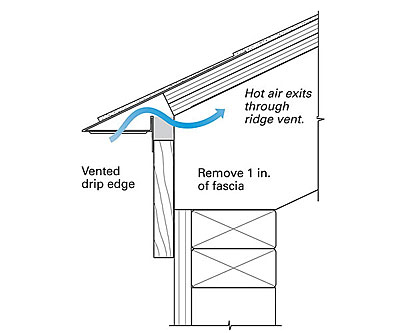
The easiest and best way to add ventilation to your roof without getting into the expense of a profile change is installing a venting drip edge. There are many such vents on the market, and they’re available at most lumber stores. Venting drip edge basically combines continuous soffit vent with an extended drip edge. In most cases all you have to do is trim a little (usually about an inch) off the top of the fascia to allow for airflow into the attic. Finish your roof off with a ridge vent, and your attic should be well-ventilated.