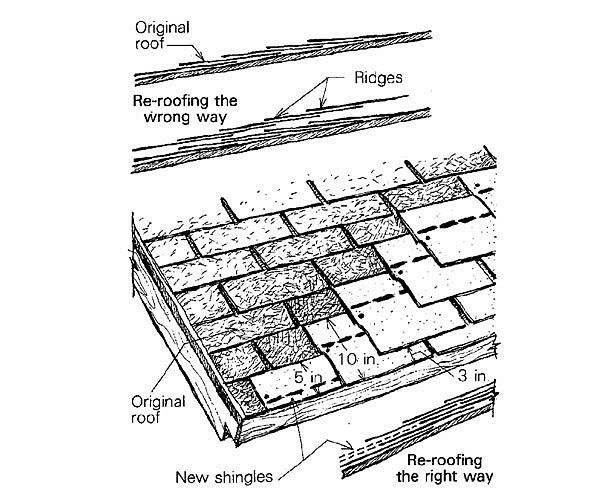
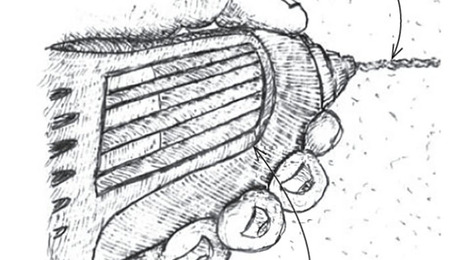
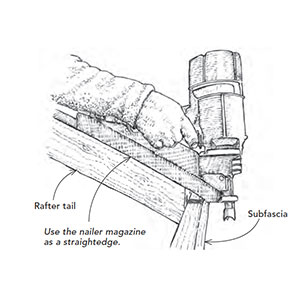
Have you ever noticed the wavy pattern on a roof with multiple layers of asphalt or fiberglass shingles? This is due to the uneven thickness of the shingles where they overlap, and it detracts from the appearance and life of the roofing. On a new roof, the overlap doesn’t cause a problem, but when a second roof is applied in the same manner as the first, the overlap creates as many as six thicknesses. This causes ridges that get larger as each new roof is applied, as shown in the drawing.
To prevent shingle buildup on the typical 5-in. exposure roof, trim the first row of new shingles to 5-in. and the second row to 10-in., and butt them against the bottom edge of the old courses above. These will work as spacers that allow the new roof to start a different overlap pattern that misses the old bumps, with a 3-in. exposure on the first row and a normal 5-in. exposure from there on. This method lets you butt the new shingles against the bottoms of the old. But first make sure the courses on the old roof are straight.
Your new roof will now lie flat, look great and last longer because the wind and water won’t have any bumpy ridges to erode.
—Jack McGhie, Tucson, AZ
Edited and illustrated by Charles Miller
From Fine Homebuilding #11











View Comments
Another point to note is that old and Eastern shingles are 3 feet by 1 foot and have a bit over 5" to weather, whereas new, Western shingles are 1 meter by 1/3 meter and have 5-5/8 to weather. (1/7th of a meter, 39.37") Coverage for metric shingles is figured based on 5-5/8 to weather, but if you lay them over old shingles with that exposure, you'll get an undulating pattern that repeats every 8 courses. To get a smooth roof, you have to decrease exposure to 5", butt the shingles as shown above and increase your quantities accordingly.