
As a construction coordinator for Habitat for Humanity, I’m always looking for ways to save resources on our home-building projects. Recently, a couple of windy days taught us a few things about how to conserve time and tar paper.
As we tacked down the tar paper on the roof of one house, we listened to a weather report that predicted high winds for the week. Because we had to leave the house until the next weekend, I asked the volunteers to nail down a bunch of 1x4s on the roof to keep the wind from picking off the tar paper. The next weekend, we had to remove all those 1x4s before we could start applying shingles. Some of the Ixs came up damaged, and we had to replace some of the tar paper as well. When the same situation arose again, I decided to try a different approach.
We had a pile of scrap vinyl siding that had landfill written all over it. Instead of throwing out the scrap, we used a circular saw with a plywood blade mounted in reverse to cut the siding into 1-1/2-in. wide strips.Then we gang-cut the strips into 1-1/2 in. squares.
As we put down the roof tar paper on the next house, we used our hammer tackers to affix the vinyl squares on 1-ft. centers (3/8-in. staples, two or three per square). That night, we had 25-mph gusts, and I expected to see the tar paper blown all over the neighborhood. But not a piece had blown off. And because the vinyl squares are so thin, we could shingle right over them.
John V. Cord, High Point, NC
Edited and Illustrated by Charles Miller
From Fine Homebuilding #130










View Comments
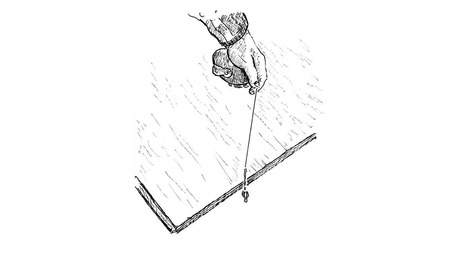
On a windy day, I was attempting to staple down tar paper on a woodshed roof. It kept ripping off. There was a pro roofer working on a roof next door. He saw what was happening and called over to me to run a line of string and staple over it. It worked. Basically rip stop tar paper.