previous
  • Roofing articles, videos, tools, and materials
    Roofing articles, videos, tools, and materials
  • Top 10 Videos of 2011
    Top 10 Videos of 2011
  • Replacing a Roof : Installing a Ridge Vent
    Replacing a Roof : Installing a Ridge Vent
  • How to Avoid Complicated Fractions
    How to Avoid Complicated Fractions
  • 7 Small Bathroom Layouts
    7 Small Bathroom Layouts
  • Tool Test Preview: Compact Compressors
    Tool Test Preview: Compact Compressors
  • Fine Homebuilding: The Digital Issues
    Fine Homebuilding: The Digital Issues
  • Your Guide to Energy Smart Homes
    Your Guide to Energy Smart Homes
  • Seven Steps to Choosing the Perfect Circular Saw
    Seven Steps to Choosing the Perfect Circular Saw
  • How To Make a Reciprocating-Saw Blade Guide Block
    How To Make a Reciprocating-Saw Blade Guide Block
  • 7 Solutions for Kitchen Layout and Design
    7 Solutions for Kitchen Layout and Design
  • The Inspector Game: Goofs on a Roof
    The Inspector Game: Goofs on a Roof
  • 10 Basement-Remodeling Tips and Techniques
    10 Basement-Remodeling Tips and Techniques
  • How to Figure Out Concrete Volume with Sketchup
    How to Figure Out Concrete Volume with Sketchup
  • VIDEO: Stop Paint from Bleeding
    VIDEO: Stop Paint from Bleeding
next

Working with airtight drywall boxes

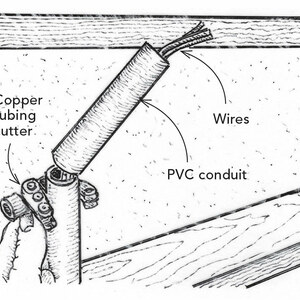
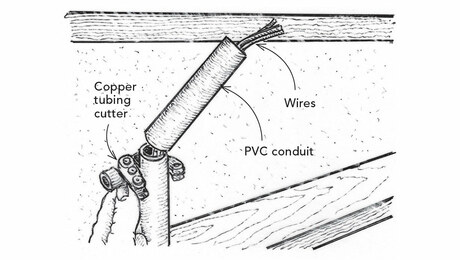
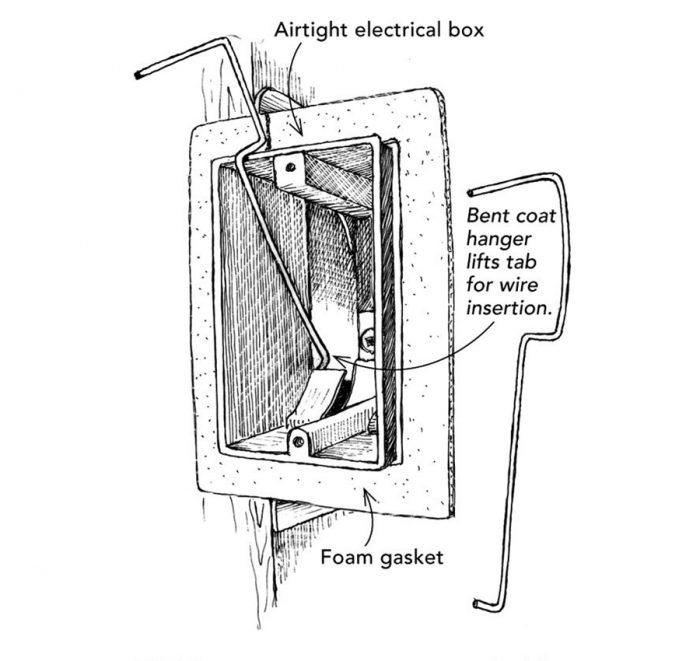
Running wires into airtight electrical boxes can be a pain. When the wires are stripped from their casing, one of them inevitably catches a rib on the back side of the wire-retention tab or bends off in a different direction than the rest of the wires because of the pressure required to lift the tab. I’ve even seen the foam gasket surrounding the box torn by an errant wire. My father, Tom, improvised a little tool that makes it easier to run the wires.

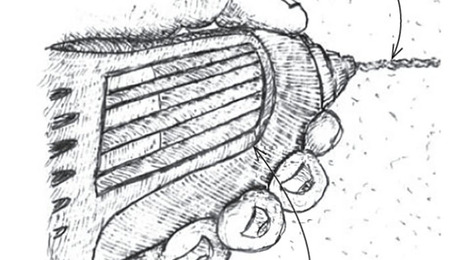
As shown in the drawing, my father bent a length of coat hanger into a hook shape that lifts the tab from the back of the box and locks it in place, allowing the wires to be inserted without damaging the seal. Even better, the hook allows the wires to be pulled back out. In cold weather, you won’t break as many tabs.


Ian McMurray, Gloucester, Ontario, ca
From Fine Homebuilding 184, pp. 26 January 1, 2007