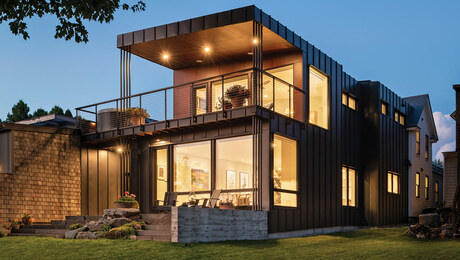
Builder Ed Welch writes about dipping his toe into the green building pool:
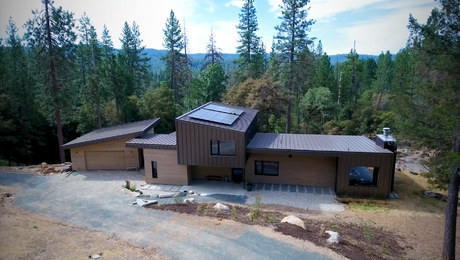
“Five years ago, I completed a green remodel of my family’s home. We included green features like solar electric panels, a solar hot water system, recycled lumber, Trex decking, and many other green products. But since the remodeling work was completed, we’ve had years of consistently high propane bills, and I began to question whether my house is actually any greener or more sustainable that the average home.”
Ed hired a home performance contractor to do an energy audit of the house and to get recommendations for fixes. Turns out it’s cheaper to do it right the first time.
Read the full article at GreenBuildingAdvisor.com
Have you got a story about misplaced effort in building?
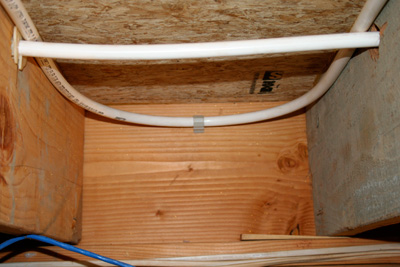
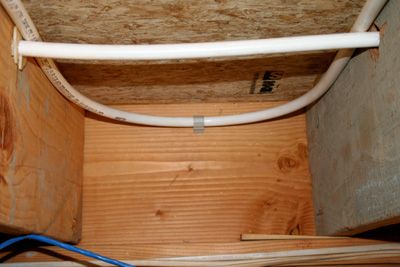
When you staple radiant tubing to an uninsulated rim joist, you're heating the outside.








View Comments
I wonder what was the Sq. footage of that new so called green home??
No matter what so called green materials you use if you use more then are needed and build larger then needed you still have a energy wasting home.
I often wonder about this green movement. How much if it is real and how much of it is marketing. After all if we sell people that they need a green home that reflects their values then it is just one more step to sell them they need to build a new home.
Many green builders still build the same home designs they always have just added better insulation and energy star windows and energy star rated heating systems and materials that use more recycled materials. But many so called green builders are still building large houses well at least much larger then the 800-900 sq. ft. 1950s capes and ranches with one bathroom and small efficiency kitchen our parents managed to raise a family of 5 in.
I know there is much more money to be made building luxury homes to people with money to burn then supplying the cheapest house possible marketed to the low income bottom of the market.
But why when the average family is getting smaller is the average house getting larger.
In fact there is data that the high the education and income the few kids people will have so that means the people building the largest houses have the least need for a large house.
If we truly want to be green then we need to also build smaller not larger homes
I am not the first the suggest this (the not so big house concept is not new) But is seems that is not the trend. To my eye the trend is still that if you are going to market to that high end luxury home buyer you also need to build large homes but doing it selling as a green builder.
I am not saying that we should tell people they can't build what ever they want after all it is their money. But maybe we do not have to if we can change peoples values so that luxury living does not have to mean wasteful consumption and living in huge homes. The added interest in living green among celebrities shows that people with money can be convinced they need to at least think about their impact what we need to do not is show that also mains that just because you have solar panels and geo-thermal heat the fact that your house is 3000 sq. feet larger then a person needs and your walk in closet is the size of a bedroom is not green.
I agree with the previous comment. There seems to be some who look to green building as a sort of excuse to not think about conserving resources or energy beyond the building process, but it's only part of the solution. Conservation means conserving first and foremost.
Less is more!