Where do you build cabinets?
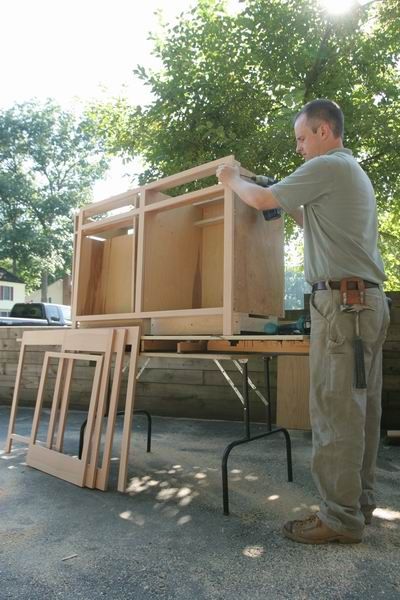
You may already have read about the Built-in Build Off. This week we had a home builder, Gary Streigler, and a wood worker, Tony O’Mally in our shop. We asked them each to outfit a mock mud-room with built-ins of their own design and using the respective tools of their trades. We shot photos for articles in both Fine Homebuilding and Fine Woodworking and we shot video for both websites. Over lunch on Wednesday we asked Gary, Tony and some of the editors and web producers from both magazines to discuss the difference between a trim carpenter and a cabinetmaker. One of the obvious differences is where the two work: A home builder works on-site and a cabinetmaker in a shop. Right?
At Fine Homebuilding, we’ve regularly published stories on how to build cabinets including kitchens, book cases, hutches, window seats and beds. We’ve also held an assumption about these projects, that they needed to be built or should be able to be built on-site, with portable tools, because that is where our readers work, and those are the tools they have. Of course, when we put these parameters on a project, we limit the type of construction. Mortise and tenon joinery is much more likely to be used in a shop setting. Biscuits are likely to be found on-site. Well, this assumption has never sat well with me for a few reasons.
Are cabinetmakers any less of a “home builder” than a framer, trim carpenter, or plumber? If the kitchen is one of the most important rooms in a house, the cabinets are surely one of the most important components. Just because cabinets can be built on site, does that mean that they should be? I’ve seen some very nice site-built cabinets (particularly while visiting Gary), but I have a tough time believing that a biscuited frame-and-panel door will last as long as one that is built with mortises and tenons.
This blog is not meant to be an opinion on the best type of cabinet construction or to stir the pot. I’m just curious: Do you build your own cabinets? If so, to what degree? Do you build complete kitchens or just smaller built-ins? Do you build them on-site or do you have a shop? What type of joinery do you prefer and why? Finally, what would you like to see us cover in our next story about building cabinets? And would you mind if they were built in a cabinet shop instead of on a job site?
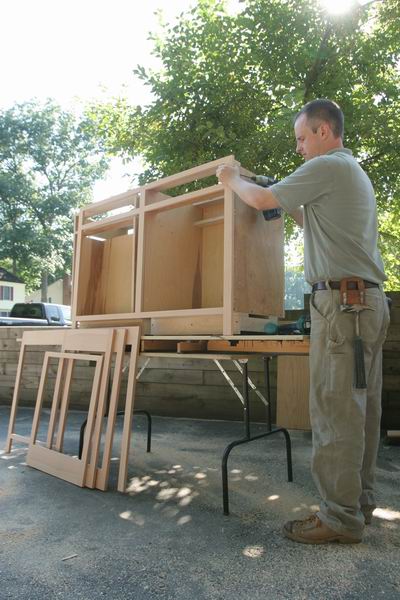
You can build cabinets anywhere from a fully outfitted woodshop to your driveway. But where will you get the best results?







View Comments
I like to build my built-ins at home in my shop. Not because The results are nacessarily better (I don't have any stationary equipment), but because I can work my own pace. My wife likes that I can run inside for five minutes to help with our two young children, and I like that I can get away after dinner to work a little. I can even work on the weekends for a few hours while my kids nap without feeling guilty for not being home. Because I work mostly alone I can do that, but that obviously wouldn't work for a larger company.
I think one of the biggest drawbacks to building cabinets on site is that it is more difficult to control the environment. If you're building nice kitchen cabinets, the assumption is that the materials are all at the proper moisture content, have been stored properly, and when mixed with a little magic and glue, become kitchen eye candy the homeowner will admire.If the job site is buttoned up and the HVAC is operational, and if you have a dedicated place to work where the electricians or rockers(no offense fellas) aren't using your carcasses as stepping stones, then great. But, as Nate points out, there are many advantages to being home, even when you want to work until the wee hours of the night, like a lot of us seem programmed to do. You can have your cake and eat it too.
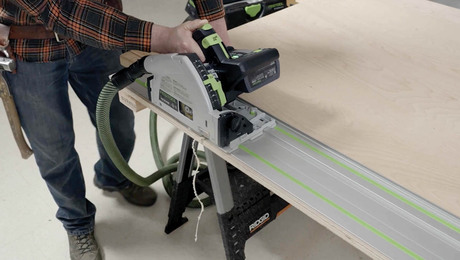
I am drawn to a field made cabinet project. Recently bought(used) Festool setup in anticipation of this venture. I can make all this at my shop and there I'll labor to make fine woodworking proud of every joint and grain lines of matching sets of rails and stiles. Still I am envious of the personalized cabinetry, site made, in many of the older homes here in Baltimore. Drawers and doors set in one long face frame, placements as random as wildflowers on a road bank. Will anybody want to pay for this? Remains to be seen.
When I am building items which are considered built-ins and as such are designed to fit within a specific space then I would prefer to build such a piece on site so it's easy to reference the area when needed. Many times though I do a good deal of the prep/cutting in my shop because that is where my stationary tools are located and there are no worries about having everything that I need on-hand. I also don't have to worry about not having an ideal place to set up shop. Most of us can't afford the nice set ups those "Made for T.V." carpenters have. And how many times have you seen those guys use finish guns and glue on a butt joint when building a carcass? Shame!
As far as considering where to build your cabinets and how that affects construction techniques it really doesn't change how I build my cabinets or built-in units. I still use pocket hole jigging and biscuits ( maybe one day I can move up to the Domino from Festool but until then my trusty PC plate joiner works great ) combined with glue and clamps. You're not going to find a great number of people willing to pay the extra money for older and stronger construction techniques like motrise and tenon. If all the pieces are prepped and jointed properly a stationary cabinet/built-in constructed with those techniques will hold up just fine IMO
I build them at home when I can. If I can keep on task and fit them in around other work, I feel I can be more efficient this way. Any project lag time (usually glue or finish drying) gets done while I'm sleeping or off at a job.
Cabinets and built-ins that are furniture grade need to be built where you have the stationary tools to do it right. Now of course you still need to account for the fact that a large cabinet might need to be assembled on site. My sprinter van has a lot of cargo space but I am still not going to fit a full wall of book cases or a 10ft high fireplace mantel and surround with built in panelling to inclose a flat screen assembled. So I may mill all the components in my shop build the draw boxes and doors but assemble it on site. I also use modern fasteners like cam locks so large case work can be disassembled and reassembled onsite easily.
Also a big part of what I do is paneling it is assembled on site but the panels and stiles and rails are all milled in the shop. Including Mortise and tenons. Unless you have a complete mobil work shop you simply can not mill all those parts on site. You need jointers, planers, shaper (or large router table) And you need to control all the saw dust those tool create. Now you could setup a onsite mill shop but most job sites do not have that kind of room. And you are not going to take the time to do it all by hand without any stationary tools
Also you have focused only on building the cabinetry but it is not done until the last coat of finish is applied and I get the best finish with furniture grade spray finishes and the best place to apply that type of finish is in a spray booth. No dust to mess it up and proper ventilation. Every piece including all the trim is pre-finished before it is installed.
Sure you can build somethings onsite but in my opinion is assembly can be done on site but anything that requires milling parts and finishing should be done in the shop.
Many builders also have their own mill shops. Or work with woodworking shops to supply them with what they need. No offense intended to the finish carpenters but the furniture grade finish you get on shop made cabinetry is hard to achieve on site. (many a nice built-in has been ruined by a bad on site finishing job)
You can do it but especially when it is a remodel or being installed in a home that people are already living in you can not spray post catalyzed lacquers. They require a spray booth with very good ventilation.
I have even gotten to he point I have all stain grade trim pre-finished before I install it.
But there are all different grades of cabinets. It really depends on the level of cabinetry you are talking about.
There is this level:
https://www.finehomebuilding.com/how-to/articles/site-built-kitchen.aspx?nterms=61656,61710&ac=ts&ra=fp
and then this level:
http://www.drdimeskitchens.com/
I have a complete setup to build cabinets on site, and have done so for years - but I really do wish I had the space for a shop!
What many of the comments regarding finishing is true - getting a good spray finish in the field is near impossible.
However this summer I worked on a volunteer project where we built a temporary shop and a spray booth inside a commercial building and fabricated all the cabinets and trim for that job right there in the building. If you didn't know, you wouldn't be able to tell where that woodwork came from.
As for my own projects, I know the limitations of my equipment for site use, an I build cabinets with that in mind. Much of it is simply paint grade, or will be stained and finished by hand, often duplicating old finishing techniques before spray booths. We use pocket joinery, biscuits, dowels; simpler than mortise & tenon. using router tables we can make just about any profile we need for a job,and all my clients have been very happy with the outcome.
Its fun.
but I still wanna shop!
I don't know but I tell you what.... I have a project I may attempt coming up for an entertainment center (STORE BOUGHT OR CUSTOM BUILT)that I've been lamenting over merely becuase I have the capablity to build the work on site BUT still wonder if its worth the value in TIME and especially the effort in design. Basically wich is a SMART BUSINESS CHIOCE? However I have yet to see Gary's performance in that mudroom and perhaps when I do it will help in making sense of the whole thing. I enjoy being creative and producing on site but try not to forget building in the field is more than just any uncontrollable environment. It's where you would usually only perform general carpentry and just install millwork but to do both simultaneously while having to be ready to what ever the needs of the client are during the process, plus while in -their space- is something admirable, when done well. Streigler seems to be one of the best published examples of this kind of building and a main source of inspiration. Having been through this process, I would say done unsuccessfully it's enough to send any sane man RUNNING FOR THE SHOP!
I two wrestle with this issue. I assemble on site. I build my cabinets on the computer and send them off to a CNC, and I order out my doors... I do some pre-assembly and send everything off to a finisher if it needs a custom finish. I've been wrestling with this if it's the best method...
Hi, l am just learning woodworking really want to learn to make good quality cabinets would take course if offered in Trenton, Ontario.
This is just my opinion not as a cabinet maker but as a woodworker l make to date mainly shelves, book cases, coffee table/end table sets, patio items.
But l would think cabinets if custom built be better built in a shop unless the cabinet maker had on site garage to use and had all machines he/she needed.
If your installing cabinets you assemble from a box store then l guess on site be ok but l like to think most strive for quality first priority is how l am anyway.
For your next issue, l would like to see detailed step by step kitchen cabinets being made with good text details beside each step by step process.
I am sure their are many readers like myself beginners who would like to see even a set of kitchen cabinets say 10 ft of uppers and 10 ft base kitchen cabinets layed out step by step.
As an example l myself need to urgently make a 36 inch base sink cabinet for my daughter living in front of my house presently no cabinets or kitchen sink above info be great.
Thanks
Jim
While working in Arizona the company I was working for had no shop, much less any tools for actual cabinetmaking. I site built kitchen cabinets, entertainment centers, and custom closets on site in the driveway with a worm drive Skilsaw and a hand held router. The work conditions were not great but the customers were always very pleased with the outcome.
I build in the shop in this order: carcase in units, face frames in separate units, shelves, drawers, then doors and drawer fronts. If bead is included in the design, it is installed in shop. I usually dry fit everything in shop, especially for the really picky design details. For really large units this is has to be done in sections.
Stain and finish is applied in shop, including white or black lacquer. Paint is usually applied after construction is complete, although I have sometimes applied primer and first coat and sanded it in the shop, and this makes for a much better paint job, especially if I'm not painting the finished product, which always makes for an extra trip after the painter is finished to install the doors, drawer fronts, and hardware.
Final assembly is in place: Hanging units first, then wiring, trim (cut in as necessary), and crown, then doors. Then base (if separate), level, install units, then face frames, and then top (if wood). Upper bookshelves or display units stack on next, followed by crown. I use jigs to install drawer glides, drawer fronts, and doors. Love the Kreg jig system. Last is hardware pulls. Integrated pulls are part of the door or drawer front and are made in shop.
Note that I like to get crown up as soon as possible so that I am not working over things that are expensive to damage.
Most of my work is in existing houses, while folks are living there, so speed of installation and cleanliness are very important.
My approach is to build according to what needs to happen. Sometimes, I do everything in my shop, other times I prep all the work in the shop and assemble at the jobsite and other times all the work is done at the shop and all we do is to install.
My preference is to do all the work at my shop but ... the customer is king.
I've been building custom cabinetry and furniture for over 35 years. Up til about 3 years ago I had a large shop in the San Fernando Valley area of Los Angeles. When the housing market fell through the floor at that time I lost the shop. I still build cabinets and furniture but now I'm forced to use whatever area I can to construct my jobs. This usually means the customer's garage and driveway. This doesn't mean that the quality is compromised. When building face framed units I will use anything from a pocket hole system to biscuits to on-site mortise & tenon to even doweling. But the point is that I never compromise the outcome of the project. On site construction isn't as clean and easy as shop built is but there is often a great advantage when building this way. The first thing that comes to mind is that changes can be made right away. There is no taking the cabinet back to the shop and then reworking it after discovering that something about it doesn't work properly. Generally speaking I have staved off many an argument between myself and the customer or even between the customers themselves. Colors can be checked, tested and approved by all parties concerned. Layouts and interior configurations can be modified if needed right away.There are often times when what looks great on paper just doesn't cut it in a real life install. In short, taking your time and applying skill will turn out a good high quality product making everyone happy, (both the builder and the customer), no matter where it's built.
As a footnote, I've moved to Ojai CA and am in the process of building a new shop. I still have to travel back to the valley for work. It takes time to build a local customer base so I have to go where the work is. It ain't easy but it's better than twittling my thumbs, complaining about the economy and arguing politics.
In 2005-6 a Bay Area custom homebuilder would pay upwards of $70K a year, all-in, for a lead carpenter, who would also be capable of building a set of cabinets onsite.
At the same time, the labor rate in a quality cabinet shop in my market was less than $40K, all-in, and the shop would install what they built. Let the shop fix the "measure once, cut it wrong the first time" errors and also let them pay for a $1,000+ of Grandma's china when the cabinet falls off the wall.
Just in time buying wood a hundred board feet is not the same as buying a thousand board feet ahead of production. A homebuilder can never compete material cost wise with a well financed cabinet shop.
Do the math.
Its is surely easier when you have a properly designed shop, and the conditions can be controlled. But I'd rather build/see something that was made by hand then something that was built with all computers and machines. If you are skilled and can do a good job and keep the customer happy, put some coin in your pocket and have a smile on your face. You are doing it for the right reason.
"I loved watching my grandfather work, and that's why I work with wood"
I'm in Michigan, our whether is all over the place so I like the controlled environment of a shop. I currently use my garage as my shop, its a two car which I park my truck outside for my half and the wife's car is inside on her side.When I have a big project her car moves to the drive next to mine. This is ok till the snow flies . Some day I will build my dream shop :)
The answer is very simple...if you have a shop equipped to do the work use it,the quality will be much better. I've been a journeyman joiner for some time now and would not have spent the time and money investing in my shop and tools if I could do the same job on site. Cheers to you guys who do everything on site because you have no choice...takes alot of skill!
Yes I build the kitchens in my shop, it a small shop but It produces a better product and faster as well..... the boxes I make always from plywood and most of the kitchens with solid wood doors. To do this on side would require far more time and the customer does not always like to see that, special when you finish the cabinets with stain and spray finish. So as for me I measure the space amke the cabinets, no fillers but perfect fits and quality. I buid about 4/6 kitchens a year and do the design as well..... and enjoyr the work.intsallation is quick with less time for the customer to be without a kitchen!!
Yes I agree that a shop is probably the best choice for cabinet construction, but if you have the room on a job to set up to build the cabinets on site you can save time and labor because your margin for error goes down because the area for the cabinet is on hand for referance (ie. measure for siight adjustments and also dry fits before finish is applied) I am a cabinet maker in Michigan and I do as much on the job fabrication as possible when the job permits.
I have been building site built cabinetry for about tens years now, oh how the world has changed. Back in the day before I knew any better, I screwed through cab sides, nailed face frames on and together, and pretty much left it to the painters to fix my problems.
Now I have a small shop and can, if need be build bigger furniture and larger sets of cabinetry, but I still build and finish most of my work on site. Kreg, Festool, ZipWall, and a HVLP gun goes a long way to refining work onsite.
Unfortunately cabinetmaking is not a red seal trade in Canada. Therefore being a registered cabinetmaker is optional here. That's a whole other discusion but tied to the article. Now having said that I strongly believe to get professional grade cabinets they have to be made by a profesional using professioal tools and techniques. You can get good results using a portable rigid tablesaw, but you'll get great results using an altendorf sliding tablesaw(not quite as portable). I've been a professional cabinetmaker for 18 years now, and I wouldn't feel right making my cabinets in the clients driveway/living room or spending days/weeks that it takes to do it. The same as I wouldn't try to cut,scribe,level trim in my shop or hang doors. Sorry for rambling on but I hope you see my point.
Thanks woodman72
I site build cabinetry in empty houses. If I were renovating while the client was living in the space (which I don't) then I would build most of the components in a shop.
Site building is equal in quality if you have the right tools (Festool has been mentioned many times here) and it eliminates the mistakes and damage that is part of building off-site and then moving and hanging heavy components.
I also think it costs far less to build on-site if you have good processes and the right tools. I mount the back panel square and plumb to the wall; pocket screw the shelves and ends to the back, and then pocket screw the face to the shelf fronts and the sides. I set-up a door manufacturing line and a drawer manufacturing line on-site and build those items very square, very accurate and very fast.
Three router tables and four routers help speed the process. I keep a separate router table for the cope bit, the stick bit, and a 1/4" drawer bottom bit. Tune the tools once, then let 'er rip!