Ask the EPA About the New Lead Paint Remodeling Law
By now many of you are aware of the EPA’s new certification requirement that mandates lead-safety training for contractors. If you’re not aware of it, you should be because not complying could have large financial implications (not to mention put your and your clients’ health at risk).
Some of you have written in or posted comments on my other blogs about this new rule. And several of our readers have called with concerns and questions. …A common complaint is that contractors who comply with the rule will lose jobs to those who don’t comply. The rationale here is that complying requires added time and materials which cost more, so potential clients will naturally go for the lesser expensive bid.
I called the EPA about this. They felt that contractors would do well to market themselves as people who not only do good work, but who do it safely. They offer materials on their site to help contractors communicate the risks associated with lead paint. And the EPA is developing resources to help contractors market themselves in a way that leverages their lead-safety training.
Additionally, the EPA is conducting widespread public outreach initiatives to increase public awareness of the risks of lead-based paint and the importance of hiring certified renovators. They’ve done this in two ways:
1. They’ve joined in a cooperative agreement with the Ad Council, HUD and the Coalition to End Childhood Lead Poisoning, to launch a national television, radio, web
and printed media campaign.
– The campaign launch is projected for April 20, 2010 and will be featured on Lead Free Kids
– The campaign will focus on lead poisoning prevention and alert parents on the hazards of lead in their homes.
2. For the Renovation, Repair, and Painting (RRP) Campaign, the EPA has hired
a marketing firm to develop renovator and consumer outreach materials such as:
– Trade print public service announcements are being placed in national
magazines, web banners, mailing cards, envelope stuffers, and press articles
– A Lead-Safe Certified logo available for certified professionals.
– Items in development include consumer outreach materials (i.e, print ads, fact sheets, etc.) and radio public service announcements (in English and Spanish).
Thanks to the kind folks at the EPA you can now get an answer to your questions regarding the new requirement directly from them (well, through me). So post your question in the comments section below and I’ll get a response from the EPA.
Fine Homebuilding and Green Building Advisor are in the process of developing a comprehensive guide to lead-safe remodeling including what the law really means, how to deal with lead paint on the job site, and what the legal implications are. You can help us guide the information by completing a short survey.
If you've got questions for the EPA concerning new regulations for remodelers, our editor may be able to get you answers.


















View Comments
Maybe I am just too old fashioned, but isn't lead bad if it is sanded or inhaled? If it is not disturbed, then what is the problem? I only see a new tax grab and that really bothers me. I get the idea of lead being bad in the water supply, but come on...It doesn't take a rocket scientest to figure out that lead exposure is LONG TERM accumulation, not just touching an item or items a couple of times. Is this another way for the start of lawsuits like asbestos? Is this going to make the trial lawyers happier than the contractors who have to put out more money and time just to be certified?
The last time I looked there weren't that many dead bodies at any remodeling site where painting was taking place. I'm for anything that helps keep this planet clean but the EPA over reacts to just about everything. Why doesn't the Gov subsidize contractors, after all they give money away to every study no matter how stupid it might be. How about helping the small business owner in addition to every type of animal that is going to be extinct because of us. And from what I understand the homeowner can do the work him or herself and not follow the guide lines. I'm a retired carpenter so I don't have an axe to grind. And just like painterkid said the lawyers are rubbing their hands with glee. It may not be long and the Gov will be regulating every part of your business. The Gov needs to regulate some things but not to this extent. I'm sure the world will be sunnier and a happier place the day this goes into effect.
Painterkid,
You're right that UNDISTRUBED lead paint doesn't pose a health risk. However, when you're painting windows or opening up walls or adding outlets (or on and on and on) in an old house you're bound to disturb lead paint.
What you are wrong about is that only LONG TERM accumulation is harmful. There are instances when this might be true for adults. But it's definitely not true for children. Children can get lead poisoning from inhaling small amounts of dust, ingesting paint chips, or objects covered in lead dust. So this regulation is meant to protect them.
I became a certified renovator last week and I just sent in my app. for a certified firm to the EPA. I am all for working clean and safe,and to protect the children, who isn't, I would be a fool to argue against it. From a contractor/buisness owner point of view there are two points that only briefly gets touched on. I have read most of the information in book form and the EPA web site(very helpfull.) There are temporary issues that will last a year or two after the 22nd. Like the other gut not being certified. Or, not understanding the requirements, or I'm working now on the job with lead.
But the two issues that I have a huge problem with is,
1)I do everything that I am required to do, fill out all my forms and get sign offs. Take photos of everything, every thing is right. Thank you very much. Three years later I get a phone call, my child has lead poisoning, see you in court...........I'll still need to defend myself,either though insurance or court. Who pays for that.
2)It will take a long time for this issue of lead to become a norm. Meaning, it will be a while for clients to releize that they are the one's paying for the clean up, and the higher cost is worth it. By that time, contractors like me will be done.
So in short, Can't sue the paint co. Gov. can't pay for the clean up, although there is plenty of bailout $. I got it, let's have the owner pay for it though higher contractor cost. and let's set up the requirments in a way that we can bang the contractor the moment he forgets to cross his T. Just think of all the new jobs we are creating in the law firms.
One last thing, where is the $75,000,000.00 sent to the EPA going. ($300. x 250,000 firms) Maybe it's going to help with the clean up cost................surrrrrre
Just took the course and between missing work, paying for the course and all of the new gear that I need I’m already out about $1500.00. Not like I’m complaining but they should at have it over the weekend.
8hr course to master the art of working in a bubble. So I did the math on how much more it will cost the consumer. I usually charge about $250-500 per window depending on sill, trim and quality of window and that went up $100 per window. Not a problem since I just bid a couple of jobs which are about that are about 75 windows so I could cut them a break, but the real problem is I’m in Philadelphia and which I am very limited to outdoor work space which complicates matters....an I mean complicate matters!
We also do a lot of complete gut/rehab’s. One is scheduled for this May. I’ll send you pictures of the bubble. I’m going to build 2-3story high partitions on either side of the house, out to the curb and around the dumpster with a laborer on the dumpster rim with hose spraying the demo as it comes down the shoot. Did anyone figure out how to work on a ladder outside as it sits on plastic?? Try explaining that one to OSHA as he hit’s you with $1700fine.
We will do what ever is required to keep compliant, but I wonder how long it will take before I get a letter in mail from an attorney stating there clients kid has lead poising and they where near my restricted, contained job site and by the way no one even saw the kid. Although I hope we all keep the job books up to par but we are still guilty until proven otherwise and that’s what pisses me off. We’re still out there with no support from the man.
Oh! Just one more for PA contractors, Make sure you get PA Cert but you have to have a HIPCA compliant contract as well or you will not be protected. The HICPA contract is part two of the cert that is not stated anywhere on the attorney generals web. I had to find that one out the $18,000 hard way.
Here is a Question.
Does the EPA or any big brother agency offer any vouchers or coupons for buying all the equipment and Hep. vacs. I would think someone is. But so far I have not found any.
AS far as cost, I estimated that a typical 20-30 total replacement window and trim job, spread out though the house. Incluing hallways, bedrooms, bathrooms and landings would require at least 4-8 seperate set ups and breakdowns with multible tests and cleanings. Without including the cost of the actual work that I was contracted for (windows). Just the cost of all the plastic and equipment and the labor of three men over the course of the job which I figured about to be an extra three days. The EPA requirments would cost roughly $4,500.00 . I would like to meet the EPA bean counter who figure $8.00-$137.00 per job added cost.
Give me a break.
For the most part, I agree with the previous comments. However, from personal experience, I can attest to the fact that without real precautions, children can succomb to lead paint poisoning. A number of years ago, I remodeled a master bathroom and bedroom for my sister. The house was built in 1927. There was one door leading from this area to the rest of the house; we sealed this door prior to starting any demo(we entered the house through a master bathroom door leading onto the deck). Shortly after the remodel, two members of the house (twin 6-year old girls) had to go the hospital for lead poisoning. Fortunately, everything turned out fine with the girls. But, the point is that even with the one door that was very well sealed, it still happened. Again, I am not saying I support the EPA requirements; but, lead poisoning is a risk that does not require long-term exposure.
Got certified last week. Have not shelled out the additional $300 yet to the EPA to allow me to use the certification. Actually thinking of avoiding pre-1978 housing.
I'm sure no one wants to poison children. So the intention of the new regulations seems to me an intention we all share. And the basic idea of Lead Safe Renovating is contain your dust and do an excellent clean up at the end of the job. That is all well and good and common sense.
What concerns me is that the EPA program encourages a "blame and litigate" model of dealing with the problem. "Hey, homeowner, if your kid get's lead poisoned sue the contractor who worked on you house." And to the contractor, "The only way to protect yourself from the litigation we are inciting is to take photos of your work, keep 'diapers' from your final cleanup as proof you did and good job, and basically get ready to be sued and hope that your attorney can find another potential source of your clients' kids' lead poisoning." As other posters have said, what's with the push for yet more litigation in this country????
So here is a question to the EPA: if lead is so dangerous in such small quantities to kids from 1 to 6, instead of a "sue your contractor/prepare for litigation" model, why not use all that advertising money and all that superbureaucracy power to prohibit homeowners and landlords from remodeling pre 1978 houses until the kids grow up a couple of years???? Why risk exposure to lead? Is a nasty litigation model of blame and defense really the best way to protect kids from lead dust???? Why not a campaign that says: "Protect your kids, Wait to Renovate"?
Here is another question for the EPA. If the danger of lead is mostly to kids from 1 to 6 why not have the lead safe rules apply to houses with kids in them? I have read that this was part of an earlier plan but after lawsuits from public interest/environmental groups the limitation of the program to houses with 1 to 6 year olds was expanded to all pre 1978 houses regardless of kids being present. What was the thinking here???? How did protecting vulnerable kids become such a broad curse on all pre-1978 housing????
Here's another question for the EPA. I have read this number of 120,000 kids have elevated levels of lead every year. First of all, how many of these kids got it from lead dust disturbed by renovations, repairs, and painting? What is the source of the lead expousure? Also, what kind of elevations are we talking about here? Is that 120,000 kids who are now Special Education kids? So here is the question: how much reduction in childhood lead exposure is the RRP program going to achieve? And since science doesn't like to be specific, let's ask the EPA what's the high estimate of reduction to lead exposure and the low estimate of reduction. What kind of impact is all this tyvek suit wearing and plastic sheet and bag use going to have on protecting kids 1 to 6?
Finally, I agree with the other posters about cost and want to know how in the heck the EPA came up with it's estimates of added costs. Tyvek suits, plastic, HEPA vacuums and filters, and the huge extra labor of bagging or encapsulating all waste in plastic, vacuuming the bags' exteriors and then passing the bag off to a non tyvek suit wearing laborer for transport to the dumpster. I don't see how the EPA numbers add up and would really like to know how they calculated materials and labor to come up with their comically low numbers.
Thank you, I look forward to hearing some answers!
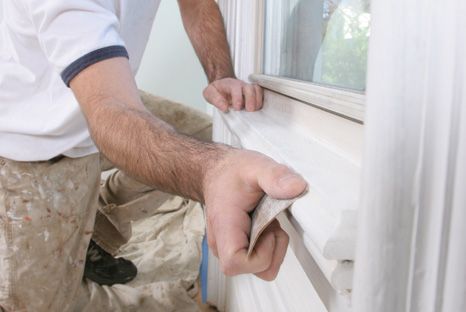
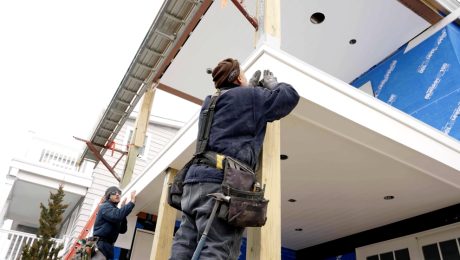
On and one more point: nice picture at the head of this blog, but if that was a pre 1978 house where is the plastic, the tyvek suit, the gloves, the booties, the painter's hats, and the sanding hood and HEPA vacuum????
How about some pictures of some of miserable renovators suited up and doing the work the way the new EPA regs require work to be done? I'd be willing to bet that any pictures will look more like a saturday night live skit than actual renovation!
When my children were at the tender age of three and six (fifteen years ago) our landlord decided to have the house we rented at the time painted. The home was built around 1928. At the time my wife and I both worked and had a nanny take care of our kids while at work. There was no caution taken during the prep work and our children and nanny became exposed to paint dust and chips. Of course we were furious with the painting contractor and the landlord. We had the kids and all exposed tested for lead contamination and found that they had above accepted exposure at the time. To this day we aren't sure if it had an effect on their development. So I'm for the certification and new standards. All contractors should be using safe and proper methods when renovating and remodeling older homes anyway. As a contractor do your homework, and make sure all issues of safety and exposure to toxic materials are addressed, before work begins. This will save you and your customer a lot of grief.
One question with regards to the EPA rule is,
How do you handle an antique home or pre 1978 that was completely gutted an renovated?
BASH, amen brother, very well said, lets see what the answers will be and when.
AHW, "most" of us here and the other blog will not agrue the fact about lead poisoning. I'm a carpenter by trade not an EPA scientist. I will be overstepping my qualification if I question their conclusions on lead poisoning. But, I am a buisness owner and a contractor, which does give me the qualification to comment on exactly how these rules will effect buisness. Every penny of expense that my company incurs as a result of following the EPA guidelines I will pass it on to my client, with profit. Any buisness owner who doesn't add profit will not be in buisness for long. So AHW, if you were ready to go into contract to replace, let say, 25 full replacement double hung windows with all the trimmings thoughout your entire home back in Nov. 09. For labor only cost of $7,000.00. But you waited until May 2010 to sign the contract. Guess what, that $7000.00 just became $11,000.00. Are you going to still do the work. If you answer yes, thank you. But my guess is that some of the people reading this will answer no. And that is the basis of almost all the blogs. It is the lost of buisness the increase cost of doing buisness and do not forget the huge liability of being sued. Being sued and taking the responsibility of this lead issue. The lead that for over 30 years prior to 1978 our Goverment dropped the ball and failed to act on their own studies.
Big brother gets the results they pay for. The result of these rules, are that alot of GOOD contractors will go out of buisness because of the lack of people who will say yes to the increase cost. The lawyers and insurance co. will do extremly well. But to place all the liability onto the contractors is wrong. I find it strange that you can't sue the paint co. you can't sue the gov. you can't sue anyone who was responsible for this mess in the first place. But it's OK to place the expense onto the home owner for the clean up and throw in a lawsuit for the contractor for good measure.
I almost forgot my question. Does the DEP or even the EPA understand the damage all of this one time use of the sheet plastic going to land fills has on our precious fragile envoriment.??? or does it matter. Just a thought,
Just finished my course 4 hrs ago. I agree that children must be protected from lead, but the only contractors you need to worry about are the ones that are not taking the course! We are the "good" guys. With no oversite (not that I am condoning it) we are the ones with our names on the line when the homeowner decides after our job is documented, to hire someone unqualified to remodel another part of their house. Guess who gets blamed for that contamination? Just another unjustified attempt by our "glorous leaders" to find another revenue source. The ambulance chasers are about to become the EPA chasers.
This seems like yet another attempt to put the small business out of business. instead of spending so much effort and expense telling the public what a horrible risk lead is, why not spend it giving FREE education to those in the remodeling business, and perhaps financial assistance or incentives to use the proper techniques and materials.
While I understand that lead in paint did pose a degree of exposure, the real culprit seems tobe kept hush~~. When lead was in gasoline, micro fine emissions that coated the entire city facades across America (city dirt)did the real damage. The worst type of contamination coated handrails,door knobs,window sills and virtually everything outside. When this was discovered almost overnight in the early seventies lead was taken out of gasoline. Problem solved so now lets shift all future blame to paint,this covers our ass and creates future opportunity for generating funds.
I resently completed a porch restoration project that included the installation and painting of brand new posts, railings and spindles. Several months after completion, the owner called me to ask for advice on how to go about cleaning the grey dirt off of the new paint. The State of Maryland had just milled up 14" of the old road as a part of "Main St. Revitalazation" project without any sort of dust collection equipment~ I don't think this sort of equipment exists. Dark grey dust landed on everything along Main St.I used my lead swab test kit on the new work and along 10 locations along Main St., all tested positive lead. Kids were coming home from school using handrails and doorknobs that had been contaminated by the State. I can only wonder if they washed their hands before eating milk and cookies. What's a contractor to do?
I second the previous questions. Especially the cogent questions from Bashnbuild.
My question is what if I'm hired to do a small part of a larger renovation. I do my part but lead is found after the job is completed. Am I now on the hook?
I'm working on an old home this week (before the deadline)installing double hung windows with all the trimmings. I decided to take one double- double hung which was in the living room and apply the EPA requirments to it. I am certified and I did teach my carpenter and helper the requirments. We started to set up at 8:30am by the time they started to demo it was 10:45am. The demo went basically the same, other then a dozen torn rubber gloves and a snapped zipper. One issue that came up was what to do with window sashes that were to big for a bag. The answer was more bags and plastic. The demo took about 30 min. longer then normal. When all of the window was out of the opening, we then proceeded to clean up. At first I wanted to install the new window, but I was concerned that it might get lead dust on it. So, we cleaned up all the plastic, baged it, vacumed, wipe down, so on and so on. An hour later we were ready to install the new window. We treated the new window install just like we normally would but then we had a problem. As we were install the window within the opening. leveling, plumbing, centering, nailing, and insulating there ended up to be small mess of more paint chips and plaster on the drop clothes.
I think that the new window will need to be in the room before demo, cover it and then install before clean up. My little experiment cost about 4 hours of time for 3 men for one window. Everyone cost/expenses is different, you do the math.
I hope as time goes on the routine will become second nature. But, I am still finding questionable mitre cuts from my carpenter of 15 years, go figure.
Here's a question, Why didn't the EPA put a clause into these rules saying the contractor is not at fault for lead poisoning ?. Why leave such a big door open for the contractor to be sued? He is not the one who allowed lead to be put into the paint, or used in homes. He is actully the good guy, he's removing it from the home, to protect the little one's. If it is such a big issue, Why the potential for allowing a lawsuit to happen. I suggest a clause exempting the contractor, building owner from being sued. Funding the contractor who is doing the work. And then You will see more contractors willing to work on homes pre 1978. Because at the moment, I do not see a sound reason why I should work on home's with lead, if I CAN be held responsilbe for lead poisoning of someone. Even if I can prove otherwise. It really does not make sense. If the EPA is concerned with lead. Why make it so expensive, and treatening to the contractors who will be doing the work. To the point that a high percentage of contracors will not work on homes pre 1978. The end result is Lead will remain in homes and children will still get poisoned.
When will we be getting our answers?
I was wondering who would be enforcing this law? I spoke to two building inspectors in Ma.and they said they were told not to enforce it. They are not planning at the moment to ask for certification when permits are applied for. IS the EPA going to have agents out enforcing? Environmental police? Just curious. Thanks
So, I called the instructor today, (I have his # on speed dail). And I asked him,"how could I find out if the home is contaminated with lead dust BEFORE I start any work".
I'm not referring to the paint test. I'm referring to just the dust on the floor or in the corner of the room, on the sill. He said the only "SURE" way to find out if the home has lead dust is to hire a certified lead inspector to test for lead. ($250.-$400.)
Doesn't that make sense, to test for contamination before any work begins. If it comes back positive, you now know that maybe you do not want to work in this house. Because no matter how clean you work, the owners have already been exposed before you started. So don't blame me.
Here's the question. Does the EPA offer an approved lead dust test kit that doesn't cost hundreds and that a certified renovator can use?
So, any word on the 75 mil? or the vouchers?
I have to say I am disappointed in FHB. The current (May) issue has 2 articles that showcase work that, based on the information provided in the article, should be performed using lead safe techniques. I don't see how you can repair a 100 year old porch with out assuming it has lead paint on it. The same goes for leaky, old wooden, double hung windows. Granted, the work was performed prior to the certification deadline but with all the mention of certification, you should have done better. This was an opportunity for you to walk the walk and show homeowners the way work NEEDS to be done to ensure compliance and most importantly, safety.
This is designed to create fear and distrust between us and our customers and add to the confusion that is affecting everybody everywhere in the country. Most of us don't have such an adversarial relationship between us and our great customers. This is the result of the government trying to destroy everything good in America - with a crazy captain and a rudderless ship. When you think about it there are any number of things we could all be sued for already. Pick a number and have at it. I plan to try to do what I can of their impossible dream I can and most of us will be able to see what part of it is possible. The ones that came up with all this wouldn't know which end of the hammer goes through the loop but they have a choir singing their praises right now as if they spoke it all into existence. We need to continue to man up and realize the mistake that's been made.
Thanks, everyone. I'm working on getting the questions answered. Hope to have them by the end of this week.
I just finished my certification course on April 12, and sent in my $$ to the EPA. As far as I know, no one here in Hawaii is set up to enforce all this, and where I am, most of the homes are pre-1978. All of this is really going to cost the customers a whole lot more, and most of them won't be able to afford it. My question is, How do we know which HEPA vacuums are approved for use, especially one that has a beater brush attachment for cleaning carpets? Until I know for sure, I'm gonna keep using my shop vacs which I've equipped with a drywall dust filter bag and a HEPA canister filter. I'm not planning on retooling until I get more information on what is good to use and what isn't.
I just took my certified renovator course today. And I've never seen so many eyes rolling toward the ceiling!
Every time our instructor presented another scenario.... What about setting up ladders on the plastic 10 feet from the house, how many holes will you have to tape up by lunch time? Pressure washing, containing and filtering the waste to 5 microns, who's going to come around and check on that? In California they don't allow you to use the EPA approved lead testing kits- WHAT- so every time you want to be sure you have to hire an expert $$$? He said the safest way is just to assume every single house before 1978 has lead and act accordingly. None of my subs have completed this training, don't know if they will even do so. Do I 'fire' all of them, even though we have a great working relationship, if they don't get this training. Does that make me an accomplice if some other contractor/sub works after me and someone gets lead poisoning/sick in a house that I have worked in? Who is the lawyer going to sue- probably both of us- even if I follow all the rules and have the paperwork to back it up. What is the biological/ecological cost of all this extra plastic- isn't that made out of OIL- how many humans die/are maimed to keep that flowing out of the ground, what the....?
You know there are a thousand other 'contractors' that will ignore or just plead ignorance about this. And you know its going to put pressure on some contractors to snitch on some one that isn't certified. Work is thin, allot of tradesmen are loosing their homes, trucks, bankruptcy. You bet people will do what's necessary to take care of themselves and their families.
I've been building for 27 years- I have never seen or heard from any of my building buddies, that they have ever encountered an OSHA or EPA inspector.
Who is going to enforce all of these rules? Like always- contractors with integrity will do the right thing- take action that makes sense, and those that play loose and free with their ethics.... well you know the rest....
We were sitting in a room with a large window, women and children coming and going. The guy teaching the certification class pointed right outside the window at a fairly fresh bright yellow stripe on the step and curb to indicate no parking and said he was sure if he tested that it he would find lead.....for durability. But that's ok?
I haven't taken the training yet because it took me this long to find a place to get the class (I go in on Monday.)Unforunately I'm going to have to scramble because I start a window job on Tuesday.
Any ideas where to find a HEPA vac small enough to fit inside this bubble? I was thinking of using one of those bucket vacs so I could close the bucket up without having to move it from one container to another, however shopvac doesn't make HEPA filters for there smaller models.
How do I break it to my customers that there windows are going to cost considerably more. Are they going to get a tax credit for this?
Question.........Do we need to wait several years, hundreds of lawsuits, countless contractors going out of buisness and turning the home renovation trade into a hazardous materail disposal unit. Until the EPA changes their position and regulations, at least to the point to where the contractor is exempt from being sued. There are way to many variables in lead dust poisoning to only place blame on the contractor. The Certified contractor who was the last one to work in the home. I am leaning toward the choice, that the only sure way to protect my company, myself and my family from a devastating lawsuit is to avoid pre 1978 homes.
The article at the top states that a company could do better if you market to your prospective client that you work cleaner and lead free. Let me tell you, once news gets out that someone just got a multimillion dollar settelment for lead poisoning, there will be crosshairs with dollar signs on every contractors head.
The backdoor is wide open for lawsuits, the EPA needs to close the door now. Do not wait for years.
I did a lot of work for a family and later their son too who became a lawyer whose specialty is federal regulations. He has offered to look the material over - my wife is taking it to him today.
Also I went and talked to 3 customers we have worked for for over 20 years, told them all I knew about it and encouraged them to look it up on the internet. They thought it all sounded bazaar, stupid, eye rolling and air sucking. I also told them I've raised my rate to get back some of this extortion - they were also ok with that. They said they'll sign whatever and they want this and that done when we get there - just like we've done it before. They don't want their grass killed. They don't want their place surrounded with caution tape. They don't want ET phoning home from their place. I think they would be pretty diligent about taking care of defending themselves from foreign threats.
The paper work is very confusing to me. I'm hoping to get it all on the tiniest font (like their book) all in order on both sides of the paper. The lawyer can maybe set this up. I'm planning to type up my notes and save them, because there were some interesting things said in the training.
I'll be surprised if the EPA manages to answer these questions.
Below is a link to a story about the Boston branch of NARI on a similar quest.
This whole thing is a ready, fire, aim operation.
http://www.shawnmccadden.com/news-and-past-events/bid/35023/Eastern-MA-NARI-Chapter-tries-to-get-their-questions-about-the-RRP-answered-by-the-EPA
Ok, I'm starting to get it now. There are some videos about it on you-tube, I have started downloading the info from the web. I think I have to overcome some of the gaps that were left in the training course. It was like the teacher thinking he was doing you a favor letting you out early in geometry. Once it's organized it won't be a problem.
I find that six feet out into the room is not enough protection with the plastic. Between movement of bodies and tools, debri ends up on the floor past the plastic. I install a plastic curtain at the end of the plastic on the floor. Taped along all edges. Even though this is not required by the Epa, it makes clean up less intense and less time consuming.
I've been searching for an available location to receive the training in Oklahoma and am coming up empty. Any suggestions?
ramblingroad, did you check this site?
http://cfpub.epa.gov/flpp/searchrrp_training.htm
QUESTION? when installing a kitchen in a pre 1978 house that is positive for lead and the homeowner has hired one contractor to remove the old cabinets and another contractor to install the new cabinets, who is responsible for lead dust containment? The old cabinets will be removed 6 to 8 days prior to the arrival of the new cabinets. The house is occupied.
Carl, whoever is disturbing the lead base paint, that's one who is responsilbe. It could verywell be everyone who is involved with the reno. Example, the old cabinets and related woodwork is lead base, so that contractor is responsilbe. Then the plumber comes in and demos some wall which might have lead, he's responsilbe. The electrician cuts in 10 recess lights in possilbe lead base paint cieling, he's responsilbe. It's endless. One contractor does not "cover" another.
This is one problem with these rules. I'm sure you have done a few kitchens. When was the last time a kitchen was demolish and back in working order within a week. Just think, you are now blocking off a hazards lead area within someone's home until your demo and subs are roughed in at a minimum. Night and day for lets say 6-7 working days with a weekend in the middle. Everyone who goes into the lead zone better be suited up. Have fun trying to swiffer mop a plywood subfloor, or vacuming a studded wall. I hope it is not ballon framed, cause the dust will be everywhere you are not. I hope I answered your question.
Any thoughts on the incredibly vague work practices that we are supposed to be carrying out. Keep in mind I do major renovations that effect the entire house.
Sec 745.85 (2) "the firm must isolate the work area so that no dust or debris leaves the work area"
I say close to impossible.
Sec 745.85 (D) " in certain situations the renovation firm must take extra precautions in containing the work area to ensure that dust and debris from the renovation does not contaminate other buildings..."
When? What are the extra precautions? Who decides if they are adequate?
745.85 4 ii " waste that has bee collected...must be stored under containment, in an enclosure, or behind a barrier that prevents access to dust and debris"
Anybody know where I can get sealed dumpsters?
This is my understanding from the instructor regarding the container disposal. It is much safer that all debri is placed in bags, vacume (hepa) out the air, then place bags gently into container, cover container with a tied down tarp. The tarp will need to be taken away with the debri. The area around the container will need to be taped off with caution tape. We read though the regs. everything revolves around containment, so having said that, a debri shoot or wheelbarrel full of debri would be a no no. The dust would be everywhere, spraying it down with water would now create another waste product full of lead (the water).
It's now May 18th, almost 1 month after deadline. Although my company has not, as of yet, set up for an actual lead job. I have several contracts verbally excepted. They are smaller in scope, but will help me refine the process. One thing that I see worth mentioning. On the projects that require a larger disturbance in the house, example would be a kitchen, bath and all the windows. In the past we would just go in and proceed with the work, and clean up at the end of the day. I think now, post deadline, it is time to request to the owner to vacate their home. I know this is not required by the EPA. But, I will not be comfortable working in a client's home for two months with them living there. There is just to many ways the dust can escape after 4:30pm.
Who decides? If you have not figured it out yet "peak". It's you. Again, the way it was taught. You need to contain the dust according the regulations. I set up a practice containment, let me be honest, it was not enough. I was not comfortable with just 6' of plastic on the floor. Dust and debri was beyond the plastic within the first 5 minutes of work. So up went the plastic curtain wall. Plastic path on the floor down the hall to the outside.
One last general comment. Take alot of photos, save them with the papers of the job. Word is getting out to the public, do not risk on getting caught trying to slip under the radar, I talk to every contractor that I come into contact with, I want all of them to know that if they are not cert. I will not be hiring them. We all need to get the word out. Maybe by doing that the client will see that this is what needs to be done. That's my HHO
A contractor just demo'ed my kitchen. Along with all the mess of the plaster and old cabanets there was also a painted brick wall that was behind a plaster wall. I was made aware by another contractor of the hazards of lead base paint because my house was built in 1952. I have 5 children and am annoyed that my contractor did not inform me of the hazards or take any precausions to protect my family. Do I have any recourse??
Hi there, I read some of these posts and found them to be really interesting...if you could prevent one child from blood lead exposure by taking these precautions would you? If you could prevent one family from the anguish of having a child that has lowered iq, learning delays would you? I thought the EPA was making progress when it instated these laws ,however, the enforcement they do is weak. My child was harmed by a landlord and contractors not sealing areas during demolition without permits, without any type of precaution and without notifying me of the the work and the dangers of lead dust. My landlord is a millionaire but cheap. she even went as far as to write emails to the contractors about our complaints that we could not breath and our coughing was getting worse from the dust and that I could not keep my unit clean from the extensive dust nevermind the noise, she wrote an email acknowledging the dangers of lead to the contractors and could they hurry and finish before I call the health department. My son was a newborn in this home, at the time of exposure was only 5 months old. He now has elevated blood lead levels and yes even a five is dangerous, lowers iq and creates neurological issues, my son startles frequently since the exposure and eats less. He now receives EI services. I paid $51k to this landlord in rent and had no recourse, I even filed a complaint with the EPA and they ignored the complaint stating that she only owned one building and that they have other landlords who have violated the law and contractors to go after that owned more units...I know these laws are inconveniencing, but for the sake of perhaps one child, follow the tips I read above they were so contructive, will help your business grow and most importantly, save childrens health. Children are innocent, as parents we need to be able to have the right informaton to protect them, these substances lead asbestos are toxic. I had no idea that lead was still an issue I never thought that in 2010 this could happen to any child especially in an affuent academic area.I wish you could see a picture of my son and how gorgeous he is I am heart broken and sick that in this country anyone can harm a child or place a child in harms way and walk away with no accountability. Please reconsider your resistance if you have any to these changes in the long term you are doing a service to the children and families of America.
I'm sorry to have to chime in here, but I find this law to be one of the most absurd, unsubstanciated, unresearched, and job killing requirements, that has ever been placed on a contractor, in my 40 years of restoration expertise. Not only is it impossible to contain dust generated from sanding, etc, no matter how much plastic you can manage to mummify a room in, but it opens a contractor up to the same bogus lawsuits that gave us this law to begin with. Case in point. I researched the data, and for some strange and unknown reason, the cases almost exclusively point to poor urban areas, with an emphasis on african american children. How can this be factual? I work for the wealtheist people in the northeast, in the Rye,Westchester, Greenwich, Conn. area, on huge turn of the century homes, the size of hotels, FULL of lead paint, for 40 years. Nobody EVER got sick including me, in which case I should be dead! Question? Did Benjimin Moore, Dutch boy, Sherwin williams, Pittsburg paint Etc, put out two kinds of lead based paint? One for poor people and one for wealthy people? Quite frankly, There should be thousands of documented cases of the RICHEST people in the country's children, with ton's of lead based paint maladies, not the poorest. Yes? These families live in their homes when massive amounts of renovation work is being preformed. Any contractor will verify that. Wealthy people are the primary group that are CONSTANTLY exposed to potential lead dust, simply because they can afford to have their houses renovated. Poor people can't. Yet few if any wealthy people seem to show up in the data. IT'S THE SAME DAMN PAINT! Puzzling? And if this WAS the case, you'd be reading about it in the paper EVERY DAY! This requirement is Alarmist nonsense futher designed to put people out of work, and scare the hell out of home owners, and make lawyers richer. It is as unlikely for a consientious contractor to stop dust particles in the construction invironment, as it would be to stop a fart from smelling in a perfume factory. I see lawsuits, bankrupt contractors, and no way to defend ourselves from such lawsuits, as it would be immposible to prove you prevented airborn particles from escaping your work area. It CANNOT be done. Use good common sense and fight to repeal this absurd law. It's not the fee, it's the futility of trying to defend ourselves in court that is at issue here. LEAD DUST CANNOT BE TOTALLY ISOLATED, PERIOD!