Build Tight, Ventilate Right.
That’s a motto I took from my favorite building science teacher Mark LaLiberte. This motto is important for energy efficiency & indoor air quality goals. In my houses I’m striving to build the tightest air envelope possible. Then, I’ll bring in the fresh air when it’s needed and send it through our HVAC system so it can be filtered and distributed on a regular basis. I’ve heard people say that modern houses are too tight. I say this argument is boloney. Why would we want our homes to be intentionally leaky? Do we want pollen-filled humid air to just leak in under walls/doors/windows/outlets any time the wind blows? No, we want a super-tight house that resists the forces of nature so we can let our HVAC system and our insulation systems work properly.
Better than spray foam?
In most of my homes over the last few years I’ve been using 100% spray foam for insulation which does a fantastic job of air sealing the stud cavities & attics. However, one area that can use improvement is the wood to wood connections & wood to concrete connections. In the past I’ve had my framing carpenters use Sill Sealer under bottom framing plates for air sealing along with a bead of construction adhesive but it’s not 100% foolproof. In this video you’ll see where Owens Corning’s new Energy Complete system has a leg up on spray foam.
– Matt Risinger




















View Comments
Hello,
Great video!
I have 2 questions:
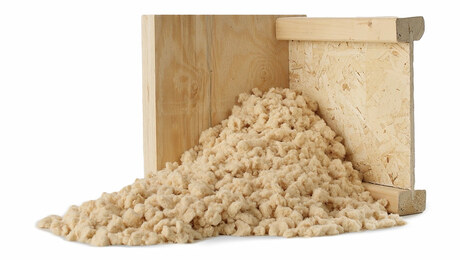
- Are there any concerns that the blown in blanket insulation will settle in the walls and leave an uninsulated gap at the top over time?
- You mention that you install 3/4'' rigid foam on the outside of the envelope. I live in a cold region (Canada) so I don't think that would be a good option here given that the rigid foam would limit the wall's ability to release humidity towards the outside. Am I missing something?
I don't like the way presentations like this begin - with the assurance that THIS is the final word. Maybe because I've witnessed far too many times that today's 'final word' is the exact opposite of yesterdays' advice.
Even taking this ads' claims at face value, the spray gasket is but a suppliment to spray foam.
Often overlooked is the second half of that catchy slogan: Ventilate. As our first sealing crusade in the 70's taught us, an airtight house is an unpleasant house. Stale air, cooking odors, and a mildew farm. Not to mention combustion problems with everything that burns gas.
Traditional designs assumed moisture would get in, and made sure there was a way for it to get out. Our quest to 'seal' does little, I fear, but create buckets out of every stud bay.
@ADupuis: Thanks for the comments. Good question on the settlement, my honest answer is I'm not 100% sure. It's packed in there so tightly I can't imagine it settling but I would need to ask my OC rep about testing. I would expect that they've done testing on that issue. Regarding the exterior rigid foam, I would consult the Builders Guide book for your climate by Joe Lstriburek. This method works for my Hot/Humid climate but I'm not sure if this is right for your climate. Remember that I'm in a Air Conditioning dominated climate. Thanks! Matt Risinger
So how DID the blower door test go ? and what was the cost/budget for the project (spray foam can be pricey and you used quite a bit of it?
What's the cost of the latex sealing material per ft?
Nice job optimizing types for specific needs!
What happens when you have a leak in the roof. I know that' not supposed to happen but if it does, you can never find the leak due to the foam layer that covers the interior joist. Also, what about fumes; are they toxic in case of fire?
Thanks//Jim Strotman;
Great video!
The install and cleanup is very simple and the savings is great. If any of you are interested in learning more about how EnergyComplete can help you, check out http://bit.ly/K9kvBP