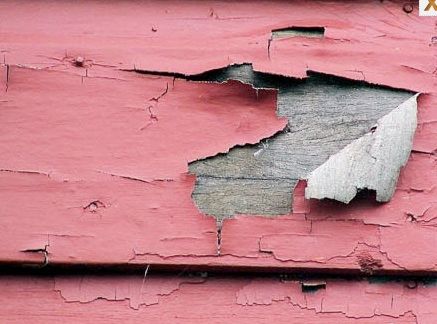
Even though full enforcement of the Environmental Protection Agency’s lead-safe rules for renovations and repairs has been in place for almost a year, many contractors are still grappling with how to remain competitive while following the rules, according to an online survey conducted by the National Association of the Remodeling Industry (NARI).
For those who do continue to work on buildings constructed before 1978 , the cost of compliance with the rules can boost bid prices significantly above those from noncompliant contractors, contractors responding to the survey said. And in comments in mid-May following the EPA’s first enforcement action regarding its lead-safe rules, some contractors worried that once they’ve completed a job on a pre-’78 building, its occupants could decide to sue later on, claiming illness due to lead exposure and contractor negligence.
The survey also fielded reactions to a proposed rule that would require contractors on pre-’78 projects to submit dust-wipe samples – after the work is finished but before the building is reoccupied – that would be tested for lead levels, adding an estimated $100 to $500 to the overall job cost. A recent Wall Street Journal story about the survey noted that, among its almost 1,500 respondents, 74% do not normally conduct dust-wipe sampling, while 26% say they do.
A hedge against future claims?
The majority of respondents said the added cost of dust-wipe testing would further encourage homeowners to do the repair or renovation work themselves or to hire noncompliant contractors to do it, thereby increasing the risk of occupant exposure to lead. It also could be argued, however, that tests verifying that lead and lead-dust levels are below hazardous thresholds might help defuse occupant complaints based on claims of lead exposure.
No question, compliance for some jobs could get expensive, because, as the EPA explains, “for a subset of jobs involving demolition or removal of plaster through destructive means or the disturbance of paint using machines designed to remove paint through high-speed operation, such as power sanders or abrasive blasters, this proposal would also require the renovation firm to demonstrate, through dust wipe testing, that dust-lead levels remaining in the work area are below regulatory levels.”
In describing the proposed new rule’s potential benefits, the EPA said it would “benefit 809,000 children under the age of 6 and 7,547,000 individuals age 6 and older (including 96,000 pregnant women) per year by minimizing their exposure to lead dust generated by renovations.” The EPA estimates annual compliance costs will range from $272 million to $336 million, depending on the lead-level threshold the agency adopts for dust-wipe results.
The comment period on the proposed rule ended July 6, 2010, and a final ruling is expected on July 15, so it remains to be seen whether documented compliance with the proposed new rule would give contractors a short-term headache but also, in a few cases, longer-term peace of mind.

















View Comments
The post work dust wipe test will not" prevent" a client from suing a contractor. Nothing will "prevent" a lawsuit from being filed. I don't understand how this brings peace of mind to a contractor. The contractor will still be dragged into court, guilty before proven innocent. He/she will still need to be represented to prove that all and I do mean all of the requirements was followed. It is still left to the judge or jury to decide the outcome.
This is just another hoop for the contractor to jump though. Another item that can be analyzed by the suits to find a mistake. If anything, this gives a false sense of security ,but in the end, it's the contractor who is held responsible. I hope that this doesn't go into affect. But, like I mentioned before, I am out of the pre 78's. And for those of you that choose to be in, God bless you, and prosper.
The flaws in the new rules are many, and this article hits on the biggest one: the new rules virtually guarantee that there will no longer be a 'legitimate' industry.
Instead, homeowners will have a very real incentive to go fishing in the day-labor pool, rent a pressure washer, and be done with it.
Let's look at ordinary preparation for a moment. Here's the choice: pay $80 for the Wagner paint-eater (non-complaint) or $800 for the Paint Shaver PLUS another $800 for a (certified) Fein vacuum. You can't even continue to use the $40 Shop-Vac with its' $13 HEPA bag - measures you took on your own initiative years before these rules - because they're not EPA certified. (One has to wonder just how much difference there is between an $80 HEPA vac and another $800 vac; to my eye, nothing that a 3" piece of duct tape won't address. (tape to close off the filled bag).
I'm in the midst of a complete-gut remodel of a house that was built before 1978. By the time I'm done, little of the original will be left but the frame and the face brick. Yet, it will still be a pre-1978 house, and the rules will still apply. Likewise, the rules make it much more difficult to live in the house while it is remodeled in stages.
The rules need to be removed, in their entirety, and the EPA needs to be reigned in.
I'm still waiting for someone from the EPA to explain how you are supposed to erect the outdoor barriers that are required when the adjacent houses are less than 10 - 15 feet apart? Not to mention being surrounded by shrubs and trees. I feel sorry for the owners of pre 78's. In my area (NC Triad) there are several neighbor hoods like this, all pre 70's. Barely enough room to put up a ten foot barrier much less an additional ten foot buffer. Any thought from those who have run into this and have complied with the EPA guidelines?
I live in Chattanooga, Tn. bid a project on a home that falls under the EPA's regulations for lead dust control and was out bid. I was very convinced I bid the job fairly and competitively so when I heard back from the HO that they had decided to go with someone else I was surprised. (surprised because I am a one man show that does very little subbing out so I know my cost are low) I was in the area of town a few weeks later and decided to drive by and see who had outbid me.
Exterior scraping, interior demo going on and not a SINGLE sign of compliance, or an attempt to comply. I email the local (or closest) EPA office and this was the reply I received: (i reported the address the work was preformed on)
Thank you for taking the time to report this, but unfortunately there is
not sufficient information for us to take action on this complaint. We
need the name and address of the contractor in order to pursue
enforcement.
Elizabeth Wilde
Regional Lead Coordinator
Air, Pesticides & Toxics Management Division
U.S. Environmental Protection Agency
Region 4, Atlanta GA
Phone: 404 562-8998
email: [email protected]
so this confirmed my gut feeling that these regulations are just another way this over grown government has found to dip a little further in my pocket.
I am all for working clean and cautious. I have always vacuumed during and after the project is completed. I didn't need for it to become a law. To be punished with a fine and potentially put out of business for not filling out a form or leaving a paint chip under a radiator or something. It is very frustrating to work and to keep compliant. I am trying to understand the whole punishment side of the regulation. I understand that with breaking of a law that there is punishment. But, where does the money go ? Most contractors that I know of are small 1-10 man operations. A $37,000. fine will put them out of business. So whats the point ? Does that money go back into the community, does it create jobs for the local people ? How does fining a company help?
There was a county near by that was fined 1.2 mil by the epa for a sewage problem a few years back. Today that same county is nearly bankrupt, the problem still persist and the epa has 1.2 mil. This has to stop. This doesn't make any sense. It is doing more harm then good. It may look good on paper, and the "intentions" are meaningful and understood. But, the repercussions are just now coming in view. And it does not look good for the local contractors or home owners.
No one ever mentions the repercussions of all that plastic that is now destined for our landfills. Wrap the house, 1000 square feet per side and a cost of at least $100+ for the sheeting. Take a lunch break, pack it all up and then wrap it again when you return. Do it all again until the prep is completed. That's a lot of plastic and a lot of added expense.
Is there anyone in the country still considering re-electing this three-ring circus of an administration next year?
after taking the 8-hour lead-safe renovator class recently, I decided that it would be prudent to have my own blood lead level checked, given the fact that I have worked on pre-1978 houses for the past 34 years without rubbers gloves or N-100 respirators or shoe covers or tyvek suits or worksites completely bathed in plastic sheeting or lead-rated vacuums.
I am 53 years old, and my Blood Lead Level is negative. so low that the test does not detect any Lead in my bloodstream. I have lived and worked in North Carolina, upstate New York, Maine, and Wisconsin during the past 34 years...you would think that I would have some lead in my body that could be detected by a blood test! My understanding of lead is that it doesn't go away on its own, that your body can't rid itself of heavy metal contamination.
I'm now thinking that we should ask the homeowners to submit themselves for pre-renovation and post-renovation blood tests to protect ourselves from future lawsuits....
We went to the classes, paid our license fee, trained our techs and to what end? The customers will not pay the cost of the lead containment. We have since gotten out of interior work when there is lead present and containment is required. It is time for all of us small guys to get together and just plain refuse to do the work if there is lead. The only way to get this silliness out of the system is to have a lot of homeowners complain to the media and the Feds that contractors refuse to work on their homes. I see no other way to protest or fight it until the EPA is disbanded (don't hold your breath). Passive resistance is all we have left.
Just to clarify: the dust sampling wipes, in the wording of the changes contained in the relevant federal register, indicate submiting to a dust wipe test, with the inferrence being that a Dust Sampling Technician, Lead Inspector or Risk Assessor administer the test. There is no indication that this wipe test can be administered by the Certified Renovator and the wipes submitted.
FYI- the testing for lead on the wipes is performed by a method called Flame Atomic Absorbtion; in this the wipes, collected by a technician under strict formats, are chemically digested and then analyzed by flame to detect and quantify heavy metals.
So, I think it may be misleading to think that contractors will be sending wipes in baggies to labs.