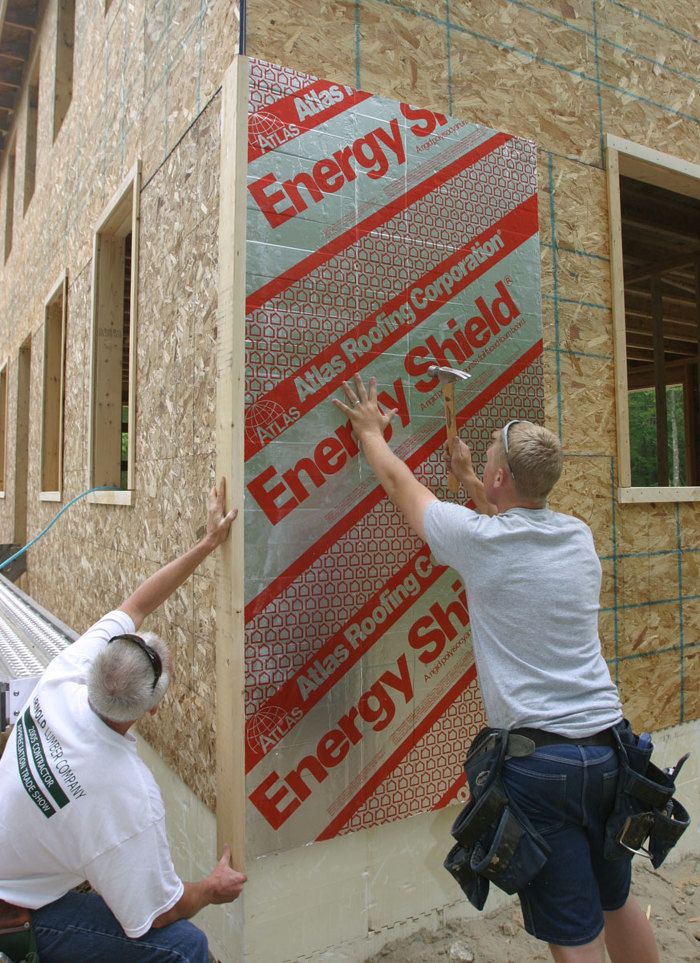
Andrew Homoly of Kansas City, MO, is planning to build a house that will include exterior rigid insulation and open-cell foam in the wall cavities. This frequently used strategy reduces heat losses through the framing, a phenomenon called thermal bridging. As long as the foam is thick enough for the climate, the exterior insulation also should reduce risk of condensation forming inside wall cavities during the winter.
While he’s nailed down his basic plan, Homoly isn’t sure about installing windows, nor is he clear on exactly how the housewrap should be detailed.
For answers to those questions, Homoly turns to the Q&A forum at GreenBuildingAdvisor.
But Homoly is challenged almost immediately by builders who argue that cellulose is a better choice than spray-foam insulation, not only because of its high recycled content and lower cost but also because it has the ability to absorb and release moisture with changes in humidity.
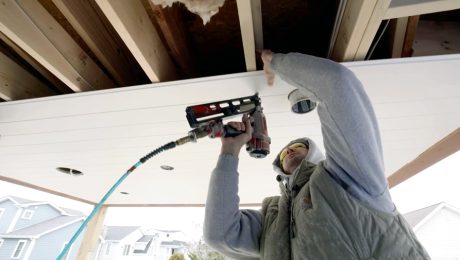
Oh, and how do you install windows over a llayer of foam? That’s a piece of cake.
That conversation is the subject of this week’s Q&A Spotlight.
Read the whole article at Green Building Advisor






















View Comments
Seems to me many of the problems/questions could be eliminated by just using a sips wall in the first place. If you want more insulation value than the stud cavity will allow than with sips you just order a thicker wall. In my opinion the order of construction methods by quality are stick and fluff (lowest), stick and spray foam, SIPS, ICF (highest).
I agree with Igryan's comment and can't understand why more builders are not using SIP above grade and ICF below. In my estimation, the cost is slightly higher (5 - 10%) but the labour savings are at least that if not more and the time savings are huge.
Hey thanks a lot (NOT!) for luring me in with this article six hours ago. One thing led to another and I must have read two dozen articles and studied another dozen websites referenced therein. Now it's late and my kids haven't had their dinner fixed.....
But hey, love the site and I'll be back for more.