** Cast your vote and join the discussion, below **
How we got here
Many of you will remember the heated debate when Carlos Osorio, a carpenter who injured himself using a jobsite tablesaw, was awarded $1.5 million from One World Technologies, maker of the Ryobi tablesaw he was using. Breathing new life into the flames of that debate, the Consumer Product Safety Commission (CPSC) voted unanimously on October 5 to propose a new tablesaw safety standard.
Why the CPSC made the move
Steve Gass, inventor of the SawStop flesh-detection technology, approached the CPSC in 2003, asking that they move toward a rule that would make tablesaws safer. At that time, the CPSC decided more research was necessary before coming to a decision on whether to move forward. Last week, they voted unanimously to move forward on an ANPR (“Advanced Notice of Proposed Rulemaking”), which outlines their intentions.
What would the proposed standard include?
The ANPR is a 222 page pdf document, which is open to the public. Here are the high points:
- Cited data:
– Of the 79,500 total emergency department-treated injuries associated with tablesaws in 2007 and 2008, an estimated 76,100 injuries were sustained by operators of the tablesaws.
– Of those injuries, 66,900 (88%) involved blade contact. 30% occurred on tablesaws where a blade guard was in use, and 66.5% occurred on tablesaws that did not have a blade guard attached.
– 35% of these injuries occurred as a result of kickback (typically the kickback pulling the operator’s hand into the blade), the balance being unrelated to kickback (i.e., riving knives and anti-kickback pawls wouldn’t have helped).
- Economic considerations:
– Assuming an average retail price of $500 per tablesaw, and average annual shipments of about 700,000 units, CPSC staff believe that annual retail sales may be in the range of $300 to $400 million.
– The cost of treatment of blade-contact injuries (and other associated costs) add up to approximately $2.36 billion per year, so the math is pretty cut and dry. We’re spending more on patching up tablesaw-related wounds than these companies are making selling the tools.
The proposed rule:
- The current voluntary safety regulations (i.e., riving knives) don’t address what the CPSC has found to be the majority of injuries. (Editor’s note: the CPSC’s research period ended in 2008, prior to the voluntary standard being put in place, so some question whether more testing is needed.)
- According to SawStop owner Steve Gass, the standard hasn’t been written yet, so we don’t know for sure what it will include. Gass’s best guess is that it will basically say that a person should not be cut more than 1/8th of an inch deep when contacting or approaching the blade at a speed of one foot per second. He goes on to note that a manufacturer may achieve that by stopping the blade, retracting the blade, covering the blade, blocking the hand, or in some other way. This is a so-called performance standard, not a design standard, as it doesn’t say how you have to achieve the result, just that it must provide the specified degree of safety performance.
What are the implications for the tablesaw market?
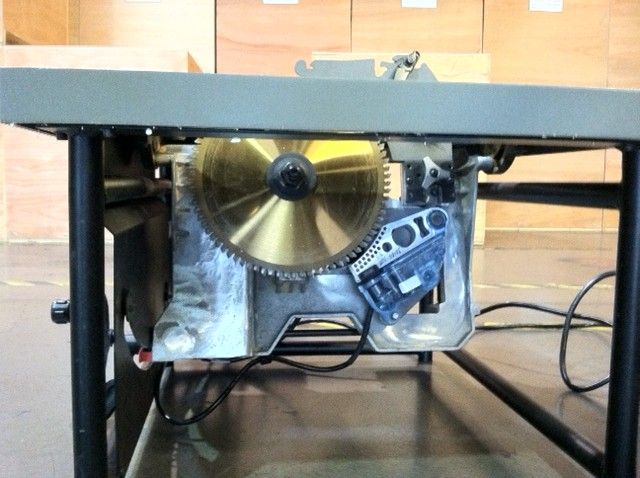
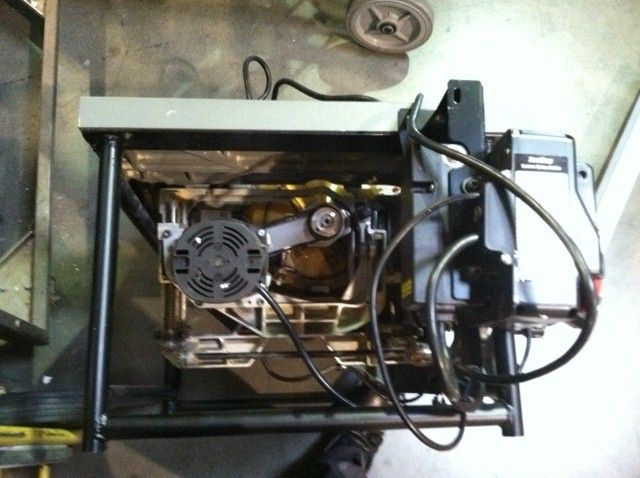
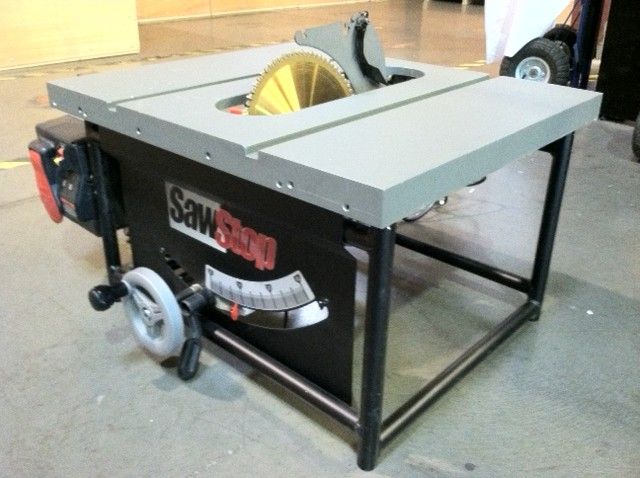
- Testimony in the Osorio case indicated that blade-brake technology would cost the manufacturer about $50 more. It’s not clear whether this is end-user cost, or just parts. Gass is working on a portable jobsite saw that includes his flesh-sensing technology (see pictures above). We’re told his early estimate is the saw would likely sell for under $1,000. How much less is yet to be determined.
- We’ve got calls in to major tablesaw manufacturers to get their take on how these changes might affect costs, but Gass’s experience as a patent attorney makes him a formidable roadblock if these other companies are determined to come up with their own solutions to the proposed rule.
What happens next?
It’s important to note that nothing is set in stone yet. The Consumer Product Safety Commission’s ANPR is an invitation for feedback. As written in the document, it “invites written comments from interested persons concerning […] the regulatory alternatives discussed in this notice, other possible means to address this risk, and the economic impacts of the various alternatives.”
There are two options: They can either issue a mandatory rule, which would be required of all tablesaw manufacturers, or they could issue a labeling rule, which would require manufacturers to increase awareness of potential dangers with more warning labels, etc.
Right now, Fine Homebuilding and our sister magazine, Fine Woodworking, are following this matter closely, and plan to offer an unbiased and comprehensive response to the CPSC. Our magazines are also discussing a trip to the SawStop offices in Oregon to see the prototype in person to see how well it will compete with other portable models in the field.
We want to know what you think. Cast your vote and join the discussion, below.
<script type=”text/javascript” charset=”utf-8″ src=”http://static.polldaddy.com/p/5581097.js”></script>
<noscript><a href=”http://polldaddy.com/poll/5581097/”>Do you think it’s time for some form of blade-brake technology to be mandated in all table saws?</a></noscript>
-
-
Side view of the prototype. Notice the blade brake to the right side of the assembly.
-
Opposite side view of the prototype. It appears to have a belt-driven motor.
-
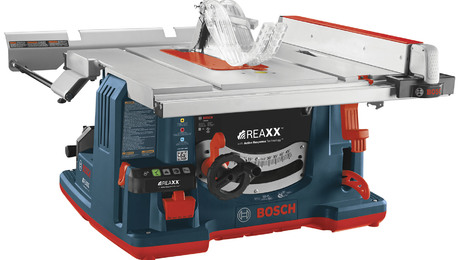
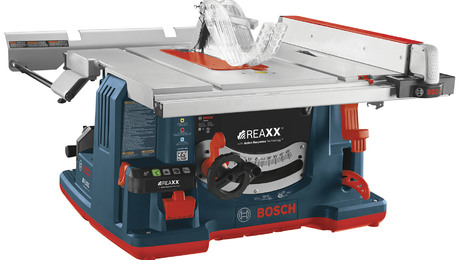
SawStop inventor Steve Gass agreed to let us share photos of his prototype jobsite saw, which he said would likely cost about $100 more than the Bosch 4100.










View Comments
I feel that it should be mandatory. All the safety guards in the world won't do any good if not in place, and lets face it you will find most removed rather than in place. I feel the manufacturers know this. Their concern is profit and not safety. A technology that can make their product safe out of the box without relying on the end user to follow all safe practices seems only reasonable. This also addresses providing a safe guard for those operations that can be accomplished that require the removal of all the other "safety" devices. I understand the argument of personal responsibility, but we all know that there are employers out there that care more about production and bottom line and less about safe practices, and will push employees to push the envelope of safety in order to get a little more production. If an employee is unwilling they find themselves in the unemployment line/been there done that. So why not take advantage of what is out there just to be safe. I bet if the manufacturers had come up with this technology and could make money off of it they would be clamoring for a law to have it included, but since they aren't going to make money on it they will oppose it.
Yes, almost all OEM guards are removed from table saws. But that is because until recently all of the supplied guards were absolutely unusable. The table saws were actually safer without the guards that the manufacturers supplied. Do the newer riving knives work any better? Have any of the saw manufacturers committed any resources to trying to educate the end users that these new guards actually work so that they might be left on the saw? How can the addition of SawStop technology only cost an additional $50 per machine when the cartridge itself costs $67 for a replacement?
Keep in mind we're talking politics here, rather than safety.
"Politics," as illustrated by the guy who sued, and won, after being injured on an entirely different sort of tool. He claimed that the tool maker should have applied table-saw tech to his miter saw - and he had gone out of his way to buy what was possibly the cheapest one available. (BTW, your column is incorrect. Osario was using a miter or chop saw, not a table saw ... the primary defense argument was that even SawStop saw no need to develop the technology for miter saws).
"Politics," as illustrated by the formation of a table-saw makers' trade group, and the sudden interest by UL in writing a 'standard' for table saw construction.
"Politics," as illustrated by an early OSHA trying to outlaw a certain brand of saw guard the first time they got into the saw design business. (OSHA was overruled).
"Politics," in that one of the reasons SawStop was not able to market its' product to other saw makers was a belief by the saw makers that adopting the product would open them to massively greater liability, in the 'looking glass' world of our legal system.
Amish Electrician,
I appreciate you taking time to join the discussion. I would like, though, to insist that the Osorio case was about a tablesaw injury, not a miter saw injury as you suggest.
From the court documents:
"The complaint alleged claims arising from a hand
injury suffered in a construction site accident involving one of Ryobi's table saws."
What a bunch of BS. This is just another way the federal government is trying to put pressure on small businesses. I have a table saw. It is not even a great one it is a 10" Dewalt but it cost $400+ I can't really afford to just replace it. I think the saw stop is a great idea but I don't think it should be imposed on people. We don't need a nany state, just use common sense.
Thank you for the correction ... it was indeed a table saw. I know not where I got the idea it was something else.
think adding this technology to all saws would make people feel to comfortable with the saw and not pay attention to what they are doing, 18 years of using a saw and not even a close call , pay attention to what you are doing you should be ok ,take your eyes off your work get a new trade.
they make push sticks use them , PAY ATTENTION
teach your apprentices to work safe ,
guess i may change my tune if i lost a finger or 2
i do know people who have lost fingers it was there fault ,
and will admitt it was ,
how many young guys on job sites are going to make the saw stop and need new parts i would say many
Let's face it -- Some people will always find a way to bypass a safety guard when pressed for time. When that happens, injury could result and any guard, with or without saw-stop technology becomes an unused accessory.
As a 40+ year woodworker, my solution to avoid becoming a statistic is:
Pay attention to what you are doing and respect the tool you are using to avoid "unwanted capabilities". Use basic the safety items you should already be using in the shop, with any power tool -- guards whenever possible, eye/ear protection, push sticks -- and above all -- use your Brain. Common sense should tell you that a performing a "risky" woodworking operation invites injury.
Why doesn't the government use our tax dollars for legislation to mandate the improvement on some of the existing "dollar store" saw guards, on saws sold in the United States?
I'm quite sure that would be more economical for everyone involved.
I applaud Steve Gass for his ingenuity in creating the SawStop technology. But it really irritates me that he then goes to the government to have his product imposed on all of us. We should have the freedom to decide whether we want to spend the extra $ for the safer product. This will price some lower income folks right out of the market and make it more difficult for a guy to start a small business if he wants.
There has to be reasonable approach to this. Its not like a 2 cent warning sticker or a $3 riving knife. This is an expensive mechanism that only one party has a patent for ... and it will only get more expensive when the goverment requires that it be included on all table saws (i.e. artificially increasing demand will increase the price).
I say make it mandatory. Whether people like it or not, we wouldn't have most of the successful safety measures included with tools and many other things if weren't for some government mandate originally requiring it.
As for the increased cost, that may be the case initially. But it wouldn't take long for prices to level out and for this tech to be an accepted standard.
I am a table saw statistic.
Now that the embarrassing confession is over, I'll state that the accident was MY fault. It was late, I was tired ( happened at my house after working all day as a carpenter I might add ), the list goes on.
You would think I would endorse a law that forced people to use products like the Saw Stop. I'm on the fence with this one. To the home owner, heck even the professional tradesman, the flesh sensing technology is great, but.....
You see, I ran a cabinet shop years later after my accident with a small table saw. In the shop I ran every piece of equipment in there including the the Saw Stop 10" table saw. I can give a good list of pro's and con's on it. The bottom line is the shop could run if we were limited to only the flesh sensing technology. Too many things that you can't do. Too many products that will relay the ever so small electrical current from hand to saw, that's right, 80$ for a cartridge and then 75$ for a new blade and down time just because the laminate had a foil in it.
Go ahead Saw Stop, shove it into the isles of America. People will get used to being coddled and chain saw injuries will go up, reciprocating saw users will think that tool is completely safe.
We all know the routine. Your reading this right now with your own opinion. You thing safer is better. Were does education come in? Will Saw Stop pay for the education needed for the new technology, or will the put it in the owners manual just like the table saw owners are doing now? Why are the masses going to read the owners manual and safety warnings on a Saw Stop product when they apparently don't do it now?
Like I said, on the fence about this one.
I also commend Mr Gass for the safety technology. That being said, if I lost any part of my hands due to an accident on a table saw- you coud bet I wish I had it then and forget how I got it. My problem is that Mr Gass created a cure and should be compensated for it- but how much? If he really cares about safety more than profit, then he would make every saw manufacturer a deal they could not refuse and in turn increase his bottom line and have a clean ungreedy conscience. Till then we press on with whatever safety items come our way till the patent on the Saw Stop ends and we see all table saw manufactures incorporate it. It is all up to Mr Gass as to when and how much.
I'm no expert, but EVERY home improvement show I see on TV has guards removed. Stupid comes in many forms, and I was given a wonderful demonstration in a shop class about 50 years ago when the instructor pushed a small piece of 2x4 into the blade and we all stood back to see that it flew back at a pretty good clip.
No matter WHAT the government does in requirements it will only add to the cost. Its benefit while noble is very short sighted. Accidents will still happen, and plaintiffs lawyers will make gobs of money suing those who make the tools. All this will cause is a proliferation of warning labels. If you want proof, look at any ladder for the labels. Rest assured that every one was the result of some lawsuit.
The only way to get rid of these it to do what the insecticide people did, when they passed a law. Its result is on every bug spray can (among others) that says:
"It is a violation of federal law to use this product in a manner inconsistent from its labeling". No lawsuits here, as if they try, they are violating the law, and ignorance of the law is no defense.
Simple sticker: "This product is dangerous and can injure you. Use with extreme caution".
Before I can even offer a vote on this report, I would have to see a list of every injury and a documented summary of what exactly happened and how. I know how these injury reports are documented by the health community, and they are not documented and accurate enough to base a proposed law on. How many of you have read medical reports on yourself about an accident that you were involved in years ago, and the report was either half wrong, missing details, or completely wrong. Come on, we got many foreign doctors (yes, these work in our emergency rooms) who have problems speaking the English language let alone writing it, the health community is overloaded with paperwork already, and to expect that we can somehow accurately document these tablesaw accidents and why they happened is BS! I don't buy it, and would want much more detailed documentation and testimony on a statistal analysis basis used and see what these percentages come out to then. Then I will cast my vote, as the CPSC should do. It's my best guess now that the majority of the time these accidents happen out of improper training, no training, or stupidity. I am not against safety, but would hate to see a monetary windfall gained by a patent holder who used these injury reports improperly. Then of course, where does all this government control stop? Maybe the best course of action is to make it an option left to the consumer. Isn't that what made this country great in the first place? Isn't government control one of the worst policies a country can impose upon itself and its economy when it cannot even run its Post Office profitably? Or Fannie Mae and Freddie Mac into disaster? Is this what we want? Keep government out!!! Keep politicians out!!! Why do we even need them? They are ruining this country now!!! "Let the consumer decide" would be my easiest and best solution to this at this time.
Most of the table saws that are sold to the home workshop and tradesman consumers are made in CHINA. Mr. Gass may desire a high royaly for the use of his patented invention, however the Chinese, once in posession of the technologies, walk all over US patents. The US government allows the import of their products regardless of patent violations. Mr. Gass will have to defend his patent in court and probably doesn't have the financial resources to do so. Even if he only licensed select companies, the Chinese manufacturers will steal the concept anyway. He is not going to see the desired rewards. It is a shame our government allows this type of intellectual theft.
Like anything else danger follows the tablesaw to any project. My job as a Pilot had risks as well but proper training and tons of planning we kept that risk manageable.
I do remodeling and home repair now where I have seen lots of stupid things in the trades. Shimming the blade guard on a circular saw is one. The other is a rip cut on some blind stops for a door where the operator straddled the blade on the table saw with his index and middle finger. Get a push stick and stand to the side my friend. Use your head and cut the risks not the appendages. If the saw stop is activated the saw is down for serious repair costing a good bit of money and as I understand it only works once. I injured my arm with a saw but it was keeping it from falling off a tailgate that tore tendons (forever) not even plugged in. I was a Safety officer in aviation and will say you can't legislate ignorance and stupidity out of the equation.
I've been remodeling houses for many years and still have all my fingers. I have a great respect for spinning blades and always use a push stick and featherboards. Sawstop technology is not failsafe and a misfire will ruin a blade costing over $100. This is a perfect example of the "nanny state" out of control.As "39er" stated, the government cannot legislate stupidity. There is risk involved in all aspects of life. An adult should be able to choose between saws with or without sawstop features.I wonder how many tablesaw injuries involve drugs or alcohol?Did the government include that factor in their stats? Adults need to be responsible for their own actions.If they were we would not need so many lawyers and insurance companies would be much less profitable. I have written to the Consumer Product Safety Comm., and I urge others to do the same.
A few points:
The saw stop is an interesting product I would consider purchasing for our projects. Though I am more likely to purchase it for my home shop, where my children often work as they are learning woodworking. As I expect my carpenters to be experienced enough to own their own tools.
It is likely that much of the billions spent each year on medical bills come from our tax dollars rather than patients (who have no insurance) or insurance companies (who only insure the relatively wealthy and healthy); government has a roll.
To my way of thinking we (builders and society at large) are at fault. We used to have apprentices. Being a carpenter was a trade, not a job. Our society's greed and consumerism has allowed the trade to become the cheapest group of folks who can lift and hold lumber while swinging a hammer. There are too few Carpenters today. We must return to educating our young workers to have the skill and mind set to become a carpenter.
ok..after reading all the data on the number of injuries its got me concerned that my own table saw safety knowledge is lacking. Its very easy to find stories on the web about injuries, how about a dedicated website with videos showing proper use of a table saw to help prevent injuries? I've got common sense but I'm self taught on the table saw so i always have some doubt about the techniques i use with the table saw. Yes i've read the manual and even read an article or two about proper table saw use with nice photos.. but a how-to video would go a long way in teaching folks and/or reassuring (or correcting a bad habit) self taught people like me that have been using a table saw for years. How about the CPSC and the manufactures fund the project and the writers at the major magazines contribute content? I know this wouldn't stop all injuries but at least it would help anyone that is interested enough about their own safety to get professional table saw training for free on their computer or smart phone.
I'm just a homeowner who enjoys home projects. I can't afford any additional costs to my equipment. Send me stickers and I'll gladly put them on my machines, but they won't make me a safer worker -- I have a healthy respect for things that potentially can hurt me, and already practice "safe woodworking." Higher costs will simply eliminate me from enjoying something that's become very important in my retired life. Another consideration: Out of all of my 9-fingered carpentry friends, not one has blamed their equipment for the injury. Instead, each one sites "Operator Stupidity" or momentary distraction as the cause. Just my 2 cents, which is about all I have left.
Great post, CNCKEITH. I'd fully back your proposal.
In just the USA, How many homes have a table saw? and out of all those homes, how many accidents required going to the emergency room for treatment? All I see is how many went to the emergency room for saw injuries, what about all the other tools used by woodworker’s? Now, if we compare the injuries to say something like dog bites, how many emergency room visits were for dog bites? Would our law makers pass a law requiring "BITE-STOP"? Or "CAR-STOP"? Or "GUN-STOP"? Will "Saw Stop" be our next Ma Bell? Where will it end?
~~~ From the CDC website (http://www.cdc.gov/nchs/fastats/ervisits.htm)
Emergency Department Visits
(Data are for the U.S. in 2007)
•Number of visits: 123.8 million
•Number of injury-related visits: 42.4 million
•Number of visits per 100 persons: 41.4
•Percent of visits with patient seen in fewer than 15 minutes: 18%
•Percent of visits resulting in hospital admission: 13%
•Percent of visits resulting in transfer to a different hospital: 1.7% ~~~
Based on that info (79,500/42,400,000), only 0.19% of the injury-related visits to ER's were for table saws.
We need to get all the facts, not what they want us to see.
Idiot proofing is impossible, as soon as you think you have it figured out along comes a better idiot. My 2¢.
I'm really surprized that the automotive companies (among many others)haven't involved themselves in this case. The philosophy behind the case and apparently current regulators is that if something safer exists and is not included in the product, the the company that made the product is partially responsible for any accident. So, because there are interlocks available that won't let you start a car if your intoxicated and somebody drives drunk in car without one, the the car companies are responsible for not including interlocks on every vehicle. There are a number of electronic crash protection devices available in top-end cars (like the one that automatically stops the car if it's about to hit something), then all cars must have them. etc., etc.
Without looking for the figures there must be many times more injuries and deaths from the lack of these devices in every car than there are injuries from (or even owners of) table saws, why aren't companies in other industries like this supporting the tablesaw manufacturers and pointing out the ultimate cost of applying this philosophy to other products. I'm sure the lawyers are already preparing cases against auto manufacturers once the dust settles on this case.
I am a retired Industrial Arts teacher and I have several friends who are retired Industrial Arts teachers. NONE (as in zero, zip, zilch, nada) of us in all our years of teaching woodworking, from fine woodworking to rough construction, have had a table saw blade contact injury in our schools. WHY? Because we compelled the students to learn and abide by all safety procedures. And these students were teenagers. If these teenagers can do it right, what's wrong with adults on the job in industry?
And having taught Industrial Safety at the University level, I can tell you that it is incumbent upon an employer to insure employees are properly trained, and the equipment is functioning properly (guards included). And if an employee disregards safety procedures and or disables safety guards, that is grounds for dismissal in all 50 states. The vast majority of all injuries involve machines where the guards were not in place, and the operators were violating important and reasonable safety procedures.
Two great responses worth calling out as a concise, non political pieces of food for thought:
KamraKid: "Out of all of my 9-fingered carpentry friends, not one has blamed their equipment for the injury. Instead, each one sites 'Operator Stupidity' or momentary distraction as the cause."
Lawrence: "Anyone that has endured this type of injury now knows how many nerves are in the digits. It is not just stupidity that leads to these injuries--more often than not it is due to personal events taking your mind off your work, or exhaustion trying to finish up an important job. We all are at times elated or down... that's when it happens."
It's great to see so many well-argued points of view. Thanks everybody, keep em coming.
Not instituting a mandate that improves the safety of people in general means a higher cost - whether in terms of injury or fiscal makes no difference. Imagine cars without seat belts, airbags, anti-lock breaks, stability control and tyre pressure sensors...
I guess that all the people who answered no to this question have not been impacted either directly or indirectly by a tablesaw injury - as steve jobs suggested way back - "think different(ly)":
What if it was your daughter or son or spouse/x-friend using the saw when an accident happened would you still answer the same way?
Think about it again - the statistics are immaterial if it happens to you....... all for a few dollars saved.
Let the market decide this issue. I'm a retired airline pilot where safety is always #1. I had a choice when it came to buying my saw. For me it was a no-brainer. The extra cost for a SawStop was worth it. But, we don't need more regulations. As more people see the benefit of owning protective devices they will force the market to produce them. Would you consider buying a car without airbags or seatbelts to save a few dollars?
In my shop, I have enough sharp, fast and unforgiving tools imaginable, any of which can hurt me. I still have ten fingers and two eyes after 50 years.
You can't legislate experience, common sense or sobriety. New laws have lots of unintended consequences as well. When the sawstop or whatever is recalled for a design or other defect, do I put a stamp on the saw and send it back?
Safety is a good thing. People should practice it. No one should legislate it.
Oh, how I long for the good old days. When seat belts in cars were a communist plot to rob us of our freedom or a Swedish socialist agenda. I long for the days when cars had plate glass and turn signals were for sissy's.
The problem with the Osario v Ryobi et al case was the lame defense that Ryobi and Home Depot presented. Their appeal was even worse and the federal judge told them so in his decision. The good news is that there hasn't been much other legal activity in the area of table saw injuries. So the case that gave rise to all this activity and gnashing of teeth probably isn't very important in the larger scheme of things related to woodworker power tool safety.
The CPSC proposed rule suggests that table saws could be made safer. I don't think anyone disagrees with that. Most improvements to table saws are actually aftermarket items, many designed and installed by hobbyists. Better ways to turn off a table saw, multiple riving knives for different cuts and other great ideas are being developed by users, not the manufacturers.
Festool has certainly shown the US manufacturers that they guessed wrong when it came to high quality, dust controlling and safety engineered powered hand tools.
I think it is great that we live in a country that allows citizens to petition its government to make changes or conversely, not make changes. The argument shouldn't be about who makes money, but is the industry serving the needs of its customers.
The best contribution that Fine Woodworking can make to this issue is to keep on top of the industry and the television shows that are supported by the industry. I find it amazing that from PBS to DIY and HGTV, there are home improvement shows that continue to show unsafe use of the table saw. As an example, Woodsmith is a nice show, but they use the table saw all the time without a splitter. I can understand removing the saw blade guard for television clarity, but no splitter? Ever?
These television shows are marketing vehicles for the tools we all love. Lets hold them to a higher standard and start ranking their safe use of table saws.
Skysailor - I generally agree with the idea of letting the market drive product but the examples you use of seat belts and airbags are precisely the examples that show when this doesn't work. It took, and takes, many years of effort, law and fines to achieve the change in habit of wearing a seat belt. Without regulation it would never have happened, at least not at this pace. In the 70's in the US there were about 45,000 vehicle related deaths, now, even with increased vehicle miles and drivers we have about 33,000. Would not have happened if we just let the market decide. This required regulation, law and consequences to change behavior to use seat belts primarily and airbags as not optional. I think table saw safety is in the same arena. I know the first thing I did was remove the guard on the last one I bought.
JFink,
I think full disclosure is required. To the best of my knowledge, the Osorio case was initiated by his workmans comp. insurance in Carlos Osorio's name. Mr Osorio was not a carpenter, infact Mr Osorio's knowledge of table saws was next to nothing. Because of workmans comp.,the company he worked for is insulated from legal harm even though they did not provide training in the use of table saws. What can be gleamed from the court proceedings is that Mr Osorio was not the sharpest tool in the shed. That being said, the courts decision was that the technology exists to drasticly reduce the likelyhood of this type of harm despite the operators incompetance.
As I have writen in other postings, It is the insurance companies that are pushing for this type of legislation since they are footing the bill for careless individuals. And it makes for common sense, why should "ABC" insurance pay medical bills for "Mr. careless" when the tech exists to drasticly reduce harm while the manufactures refuse to impliment it or provide the option to do so. Tablesaw manufactures got very poor legal advise early on; in short, their crack legal teams said to stick your head in the sand not realizing that huge legal liability existed the longer time went bye and the tech proved reliable. The bottom line now is one buisness sector will be going after anougher to ofset their monitary burden; we are all sitting on the sidelines watching it unfold.
I don't like regulations like this, but I like my monthly health insurance bill even less. There is a technology which can prevent most table saw injuries. If a saw company chooses not to use it and the consumer chooses not to buy it then cuts his fingers off on a table saw, then either they or the table saw manufacturer should pay the bill, not me. Accidents will happen to all of us and that's what insurance is for, but a stupid choice is not an accident. We can't force rational thought, but we can remove the alternatives.
cnckeith: I can't make a website about saw safety, but I can give you one suggestion to prevent injury around table saws - or any other kinds of tools. Don't ever put any of your body weight onto the workpiece. Keep as much of your weight as possible on your own two feet (or knees as sometimes happens on construction sites) and if you need to lean on something lean on something solid, not the workpiece, not even just a little bit for balance. Because if something goes wrong and the piece moves in a way you do not expect it to, you will find yourself off-balance. You could then fall into the tool or you could move your hand into the tool while intuitively trying to support yourself.
I would add that the same holds true for hand-held tools. Don't use them to support your weight.
Guys, I hate to say this but not everyone is smart enough or as safe as us when using any saw in general. My friend cut his index finger off with radial arm saw and the only "safety" mechanism on it was a bungee chord to hold the saw back. So I say again NOT SMART! Unfortunately this happens all too often. I think this type of system needs to be installed on ALL type of saws. Or at least have the option to either have them installed. I personally would replace all my tools with safety stop tools as I am a musician and cannot afford to loose any of my fingers.
I have refused to buy a table saw because I know no one to teach me proper use, and its capabilities are not worth the danger to my hands, whose ten fingers are all necessary to my career. I have seen flimsy jobsite saws with plastic fittings for $500 at the big box stores, and I can't believe that there isn't room for tightening some margins to allow safety improvements.
These lawyers would love to find a way to sue the makers of hammers too but they can't, at least so far they haven't been able to. Lots of folks hit their fingers and thumbs pounding nails with a hammer. And a lot of them wind up in the EM center. You just can't legislate carelessness and stupidity. I've never came across a hammer yet that came with instructions on how to use it. And even if it did it would have to be in several languages. Don't get me wrong, I'm all for doing things in a safe manner but I get tired of hearing it's the guns fault or the bullets fault. Where in the hell is common sense and personal responsibility?
First, I'm dumbfounded there were 79000+ incidents over a two year period of time.
I'd be curious if the injuries are categorized such as a couple of stitches vs. lost of a finger or worse?
In either case in my opinion it certainly leaves room for safety improvements. For example quite a few years ago when single action revolvers could discharge when dropped, banged the wrong way allowing the hammer to impact the cartridge, the hammer bar was introduced by Ruger. The hammer itself was separated from the cartridge such that it was impossible for it to contact the cartridge, unless the actual trigger was pulled which raised the hammer bar between the hammer and cartridge. It is now the hammer bar which actually contacts the cartridge NOT the hammer and only when the trigger is actually pulled. Necessity is the mother of invention.
I love wood working and have pursued it as a hobby for some 30 years and use every safety option possible including sliding tables configured with lock downs. Maybe it IS time we look for a better mouse trap to prevent serious injuries before they are forced on us.
Good Debate!
My approach:
1. Use a sled with clamps whenever possible
2. User push sticks and/or feather boards whenever possible
3. Raise the blade no higher than 1/4 inch above the work being cut
4. If you use a sled and remove the blade guard as is almost required, see number 3
5. Use a knee stop so you can keep your eye on the work
6. Create speed jigs to allow rapid, repetitive work, and keep hands clear of the blade and prevent kickback
7. AND #! in reality, keep your blades clean and sharp and pay attention.
8. If you're cutting sheets, get a 2nd hand if you don't have a panel saw. (Honestly they are cheap to make for home shops) I know most work sites rip with circular saws at location.
Okay, as a Canadian, a full-time classical musician and a part-time contractor and woodworking nerd I'm surprised by a few things here:
The first one is that the lawsuit was successful both initially and on appeal. From what I understand, it was a clear case of operator error (no guard, no splitter, no fence?!?!).
The second is that the tool manufacturers refused Mr. Gass' offer of licensing his technology, ostensibly on the basis that the market wouldn't support the additional cost. It's great that they came up with the riving knife (which I would love to have on my junky old saw), but, although a great improvement, it just doesn't address the same issue. What thinking person wouldn't spend the extra $100 or so to buy a tool that could prevent a catastrophic injury vs. one without that technology? When I read the reactions to this on the Fine Woodworking website, I saw lots of guys saying they'd had a Powermatic whatever for 40+ years with no lost digits. Great! I say, get this technology on the jobsite models post-haste, where the guys really need it. A shop, a controlled environment, is one thing, a jobsite is something else.
My neighbour across the street had some guys replacing his front porch last week and they did a good job, worked well and reasonably safely...except with the table saw. Installed (if you can call it that) on the sidewalk, kneeling down beside it, ripping a long board with no splitter, no guard, no riving knife and no pushstick, I saw the operator run his left hand by the spinning blade THREE TIMES in the course of one cut. I could hardly bear to watch.
A violinist friend of mine has a great Delta table saw that he bought for about a grand only ten years ago that he's willing to let go for $400, because of lack of space. I said I was interested, except that I know the next table saw I buy will be my last and that I really wanted to get a Saw Stop model. His eyes got big and he said,'But they cost so much more!'
I just wiggled all ten of my fingers at him and said,'These are worth the most.'
I'm happy about this ruling. I can't wait until more companies find other ways to accomplish the same thing (not necessarily the Saw Stop solution) and offer them to the market, as the proposed rule states.
And when they do, my chequebook will be ready.
I'm all for mandatory safety requirements such as the one proposed for table saws. The Tea Baggers will no doubt scream foul as they want no regulation, but consider how unsafe we'd be without someone looking out for our dumb asses. To wit:
seat belts, helmets, GFCI outlets, hurricane ties - you name it.
People are too stupid to govern themselves, we need signs warning us that coffee is too hot.
And without the fingers you'd loose in a table saw accident, you couldn't sue!
Bob
Kindly keep the government out of my workshop. I've used my Craftman tablesaw for 20 years and still have all my finger. The last thing this country can afford is more government employees checking on us and telling us how to live our lives. Furthermore the comment above "- Assuming an average retail price of $500 per tablesaw, and average annual shipments of about 700,000 units, CPSC staff believe that annual retail sales may be in the range of $300 to $400 million.- The cost of treatment of blade-contact injuries (and other associated costs) add up to approximately $2.36 billion per year, so the math is pretty cut and dry. " makes no sense. "Do the math" is an over used phrase and in this case there is no corralation that applies. It's a non-sense [unintelligent] comment.
Is the sawstop clever, good device, yes, but please, let it be our choice.
With now over forty years of regular table saw use, I've often wished my saws had been equipped with odometers and timers. I've wondered at how many hundreds, quite possibly thousands of miles of wood my right hand has pushed through a table saw's hungry blade over the course of how many continuous weeks, more likely months. A regular, often daily table saw user now for decades, I'd guess thousands of miles in what surely is months, perhaps a full year with hands on a running table saw.
Only two months ago, my thumb and first three fingers contacted the blade. They were not cut off but they weren't pretty. A hand surgeon worked on them for nearly two hours. They're all still there, same length, I'm able to use them and even more so with exercises and time. I'll never again make a fist, but nearly so and I've still got hours and hours and miles and miles of table saw time before I sleep.
It never occurred to me to sue Sears or Craftsman. Nor would it have come to mind to sue Powermatic, Delta, Ryobi, Dewalt or Grizzly.
Oxymoronic though it may sound, I safely use a table saw. Blade height, push sticks, feather boards, riving knife when I think necessary, a practiced, learned habit of pulling my right hand up and away when finishing a cut. Always. But for one fraction of a single second.
With thoughts heavily weighed with other considerations, I went into the shop. Stupid choice. Thankfully, force of habit, I'd set the blade height to just enough to clear the half inch material. Four inches wide, I didn't use the push stick. Though my eyes were on the saw, my mind was somewhere else entirely. I never saw my thumb and fingers brush over the top of the blade when I failed to pull my hand up and away from what was, ironically, hypnotically, the last of multiple, four inch rips. But I damn sure felt it.
What happened was in no way the fault of Craftsman nor would have been that of any of the saw manufacturers whose tools I've used. The success of the Osorio lawsuit amazes me. Even disgusts me. You need be told that if you jump off a building or step in front of a bus that you'll likely get hurt?
hfhcarp is incorrect in stating we need warning signs to prevent possible injury from scalding coffee. The steam alone should be indication enough of that. The warning signs are there so that the providers of goods and services we all seek can hopefully thwart needless, often greed driven, lawsuits.
Mr. Osario's injuries we're horrendous. A gesture of paying his medical expense, perhaps even something for lost wages would certainly have been commendable, but required? Legally awarded and ordered? One and a half million dollars? I know medical care does not come cheap, I have my own expense to remind me, but 1.5 million?
As blade braking technology becomes more affordable, I'll likely, one day, have a saw that is so equipped. As Canadian scootf points out, what's more valuable than my fingers, eh?
However, if lawsuits such as Mr. Osario's continue to be successful, the increasing rates for my various insurances may well counter any decreases in blade stop pricing and further delay my purchase.
I have been a carpenter for over 30+ years. I have taken 2 years of cabinetmaking shop classes, trained at a vocational/ Tech school for carpentry (another 2 year course),and have used all manor of power and hand tools. I also became disabled 7 years ago (due to a fall). I have learned that accidents "DO HAPPEN" when you would least expect it! Even for very experienced and careful people. I am not about taking sides on the law-suite as much as I am about the fact of dollars. The technologies are there and they are not that expensive! For $50 or $100 to still have a hand, fingers, be able to provide a living for my family, and not be on S.S.D., it is the best money ever spent! It can happen to you and not just another guy. My experience also could have been prevented but time, money, schedueling, and that attitude of "NOT ME" caught up to me! What I'd give to do that over! Please think about this as $50 - $100 insurance policy for your family and not about "BIG BROTHER"!
In addition to the mandated blade stop, I'd like to see kits available to install blade stop or blade shield to existing saws.
Package Deal:
A combo kit with a new blade drive mechanism, blade stop or shield, riving knife and blade cover, with dust collection ducting for the saw blade and blade cover would be a value setup for people wanting to purchase the dust collection additions and riving knife separately anyway. A more comprehensive kit should result in more bang for the buck.
Advantages For Buyer:
Combined safety advantages of blade protection, kick back, and duct collection additions could be bought for a package price. Perfectly good items from the existing saw like the table, stand, blades, switch, fence, accessories and motor could be retained. Buyers would get more safety and features for the buck and installation would take less time and expense than transporting, assembling and tuning up a new saw. Kit would be transportable in your car or standard UPS. Exchange kits could be made for low volume saws.
Subsidies:
Subsidies might be available for manufacturers from government and from insurance companies. Manufacturers and sellers could be protected from costly lawsuits since saw owners had the alternative to upgrade the safety of their saw.
Advantages for Seller and Manufacturer:
Development, royalty, and manufacturing costs could be spread over the over many more machines and kits than would be required for only new saw sales. Parts could be US made instead of imported. Kits would be much lower volume and require less shelf space and shipping than entire saws. Any modification to the opening in the table could be done with a metal-cutting router blade and template.
Shipping package volume would be considerably less than a whole saw and the entire package should be easily UPS shippable in a standard rate size and weight package, whereas a whole saw requires truck shipping.
Ecological Considerations:
Materials for kit use many hundreds of fewer pounds of high carbon footprint iron, copper, steel and packaging than an entire saw. Hundreds of pounds of existing iron copper, steel, aluminum, paint, and packaging would be kept out of the waste stream.
First off I have to say that awarding Osorio any money at all is ridiculous and it's this kind of litigation that judges need to deem frivolous. Judges that award these lawsuits should be put out of office.
Second Ryobi is a $200 dollar tablesaw at best and the undercarriage of that saw could not handled a Sawstop type system without a major upgrade. Mr. Gass says it would cost $50 to add this technology to the existing saw and I say BS. Like mentioned by others the cartridges are around $70 so even if he's stating the material costs for the manufacturers the redesign and implementation of this is going to cost big money. Were talking about companies having to redesign, test, and retool their current operation which the end user will have to pay for. To be honest I wouldn't doubt if the $50 is what he is going to charge for licensing his technology on each saw. As I right this Sawstop contractor saw on rolling stand is $1,600 that's quite a jump from a $200 Ryobi.
Third personal responsibility should be discussed in school and parents should be preaching this as soon as the kids can understand it. I believe that more and more people in this country have started making more excuses and passing blame to others than ever before. I'm not one of these people that believe the government shouldn't regulate anything because there are a ton of great examples where it works and is needed. This is not the case when society has a choice already and Mr. Osorio if he was a responsible adult could have chosen to watch safety videos on using a tablesaw, chosen to not use a tablesaw unless it was a Sawstop. In cases like these the government needs not regulate but incentivize which is my next point.
Fourth rather than regulating all companies to adopt these technologies they should work with them by giving them tax breaks on the saws they sell with these safety features, get the insurance industry online to give breaks to businesses who choose to buy tools with safety technologies that work etc. I can see the government regulating that all schools or facilities that receive federal funding or teach to people under the age of 18 to use saws with Sawstop type technology, but if your and adult the responsibility should be on you. Even if there wasn't already a company (Sawstop) out there making a saw with this technology for us consumers to choose the government needs to use incentives over regulation.
Fifth like someone mentioned above carpentry needs to be brought back as a skilled trade. Right now it's another option to working fast food. I remember when I started working with my father as a laborer for years before he allowed me to wear nail bags and a hammer let alone use any power tools. Today you can show up on a framing crew and never have swung a hammer and your a carpenter. I can't tell you how much crazy outright safety violations I've seen as a project manager down here in central Texas. Nail gun bump safeties pinned back, soffit being nailed by a guy 3 stories up on a 2x12 sticking out window, circular saw guards taken completely off and vised to a sawhorse and run like a makeshift tablesaw(this maybe what people will have to resort to who can't afford regulated tablesaws)etc. The point is this is where I think the industry could use some government regulation like we have for plumbers and electricians and I can guarantee you this would bring job-site accidents and medical costs down much more than regulating a safety feature on one tool.
Finally before I write a 10 page response I think Mr.Gass and his saw stop technology is a game changer and if I were going to buy a new cabinet saw for my shop I would choose his because I know how anything can happen in life, but I as a responsible adult should be aloud to make this decision and live with the consequences. We simply can't have the government regulating things were we as adults already have a choice (Sawstop or the others). I'm sure there would be a lot less gun accidents if after every shot the safety would engage each time, but as a responsible adult I'd rather practice gun safety rather than having it forced on me, but I do want the government out there regulating that manufacturers of firearms provide guns that don't blow up in my face.
Sorry for the super long rant.
Assuming the medical costs and costs of the modifications to the saws are any where near correct, I there are not significant operational limitations introduced which I have not seen in this discussion and this I will assume are not a real problem, this is economically a no-brainer. This regulation will save the nation far more than it costs.
Making it a choice of the buyer would be fine if the buyer had the information available at the time of purchase that he could pay an extra $100 now for a safer saw, or pay $2000 later for medical care. This is not the choice that the buyer is making, however, because he will not be the one paying the medical costs as most likely it will be covered by insurance and the cost will be born by many people. Additionally, the buyer assumes that he knows better, whether he is a professional with 50 years experience as some who have commented on this discussion or a weekend warrior who is buying his first saw.
Better education would likely significantly reduce the accidents but it is all available now. Every saw comes with an owner's manual, much of it devoted to safety. There are probably thousands of table saw safety video's on youtube. This hasn't solved the problem. I guess the government could create a table saw safety program. You could take a class in table saw safety, pass a test, and receive a license before you could buy or use a table saw, but I am sure that everyone who objects to the proposed safety regulations would really object to being required to take a $100 course and a $25 licence every 5 years.
The medical costs are just part of the costs involved with these accidents. There is a significant productivity cost. If it is a job site accident, probably the entire crew accomplishes almost nothing for the rest of the day. The crew operates one member short until a replacement is found. The injured person is either covered with worker's comp or looses income. The injured person may well come back to work before they are back to 100%, again costing productivity. They may never return to 100% if they loose a couple of fingers. The weekend warrior spreads the costs to his employer who has never had him use a table saw with sick time and trying to type on his computer with eight fingers.
As I see it, this regulation greatly reduces the overall costs and places those costs with those who create it, the table saw users. This is also how regulation should be done, with a cost/benefit analysis that shows that it is beneficial.
While I think that Gass is trying to shove his new saw down our throats with the help of the US government is to make more money for himself. I'm a retired Pipefitter, who here who has a small shop can aford to pay a thousand ($1000.00) bucks for a saw, I don't care it saves digits or not. Personally I have cut wood for a long time using all manner of saws. And, yes I managed to hack part of my right thumb off with a table saw. But, I was doing something that I should not have been doing. And, that's why I shortened up my thumb 3/8". It was MY FAULT, not the saws. And, even after doing that to myself, would I buy GASS's saw, HELL NO!!
What's this jerk going to do next or the government going to do, I'm tired of all the rules & regulations the government are trying to shove down my throat. GASS, government BUTT the heck out of my life. Tyr to make your billions off the jerks that run the goverment & not the poor working slob for a change.