
Prime Cedar Siding to Stop Bleeding Tannins and Water Stains
A quick-drying oil primer and a good paintbrush are all you need to deal with ugly blemishes on cedar shingles and keep them from coming back.
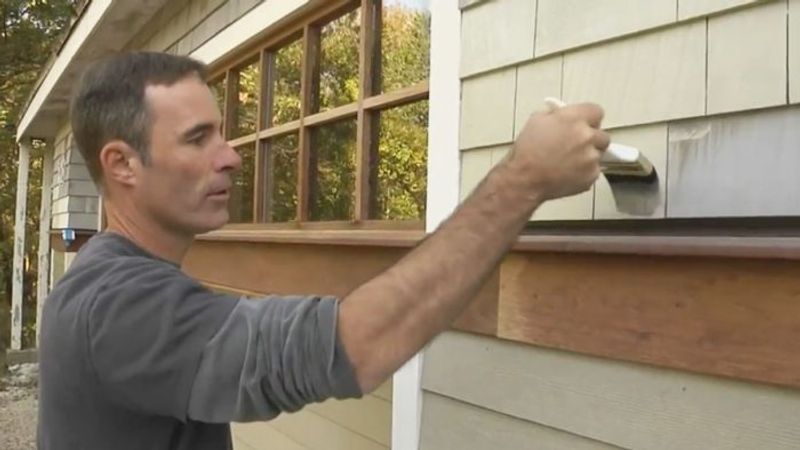
Cedar shingles are a good, long-lasting, traditional siding, but the tannins in the cedar can lead to staining down the road. So, how do you deal with this problem? We called Jim Lacey, a pro painter from Bethel, CT to show us how to get the job done right.
Jim’s offered these tips for a great priming job:
– Use a high quality, quick dry, stain blocking oil based primer
– Tint the primer to match your finish coat
– Work from top to bottom
– Use a metal paint pot
– Don’t overload your brush with paint
– Smooth out drips with a dry brush
– Don’t spot prime; prime the entire surface
– Caulk after priming
More painting tips and techniques from Jim Lacey:
Drop Cloths: Plastic, canvas, or alternative products

View Comments
As a professional painter out in the Pacific Northwest with over forty years of experience, several things caught my eye. I noticed that Mr. Lacey did not attempt to get the primer into the spaces between individual shingles. Though it certainly adds time and effort to the job, I make the commitment to get a coat of primer into those spaces as well so that the inside edges are also covered. Depending on the shingles themselves (trimmed, rough-cut, etc.) and how they've been nailed up, the spaces between shingles can vary. Sometimes there is little spacing (you see that in this video) and getting primer into those areas is much more difficult. Nevertheless, I still try to get at least some primer into those spaces as well. Also, I make sure to work the primer into the underside edge of each shingle because it is far more porous than the surface and usually requires more primer.
Finally, I noticed that the wood trim around the windows as well as the belly board under the windows did not get masked off? Unless that wood was also going to get an eventual coat of paint, some masking, at least, would be necessary to avoid splatters. Those with little to no experience might not think to cover these vulnerable areas since no mention was made in the video to do so.
Otherwise, a good, short introduction to priming wood shingles.
For years, when priming new or very dry existing shingles and cedar siding, I used Cabot's solid hide oil based stain as the primer, After a few days of drying, due to the high oil content, I would follow up with a matching color coat of Cabot's solid hide acrylioc stain. The advantage of acrylic stain is that it is much more color stable than oil stains. It will not become splotchy looking after a year or two.
Using oil stain as primer is also better because it has less "build" and will not cover the texture nor cause beads to form between the narrow edges. As the previous post suggests, it is important to try to coat the edges. This is easier with the stain. Discloser: Cabot's calls for an oil primer under its stain, not stain. However, I have used this meathod for decades with very good results. As I had a repeat customer base, I got to see my work periodically.
One final comment: when brushing anything, the bristles should be filled with paint/stain at least 3/4 their length!Why? Because there is a small wooden spacer in any good brush which forms a resevoir internally for the paint. If you do not fill that resevoir, you will be constantly dipping your brush. This is a very common mistake that amateurs make, thinking they will not make such a mess. In reality, the additional dipping means you will probably flip more paint!