Concordia University in Montreal got a nice pre-holiday gift last month with the launch of a solar energy research laboratory and the inauguration of a national net-zero-energy research initiative that will be headquartered at the university.
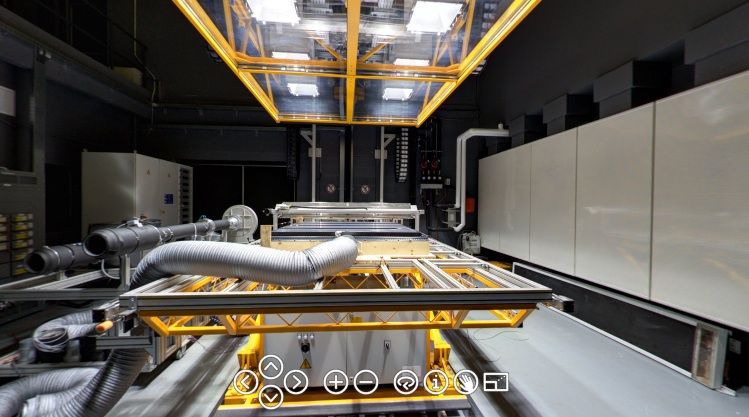
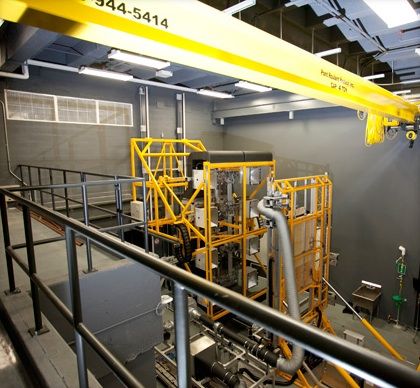
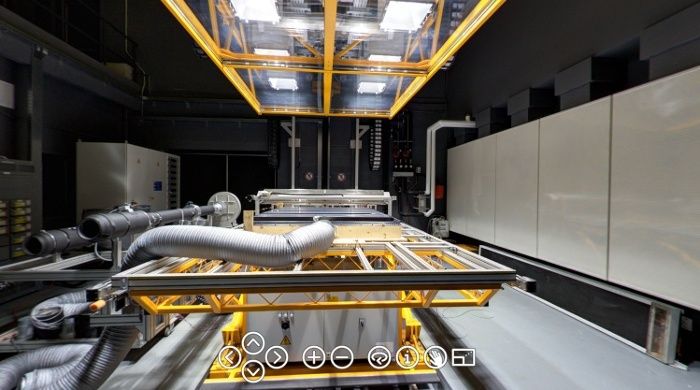
Formally dubbed the Solar Simulator – Environmental Chamber, the lab is a $4.6 million (about $4.46 million U.S.) facility designed to test solar systems with simulated full sun. Its main purpose is to measure the performance of solar energy applications and structural envelopes, and analyze their prospects for use in net-zero-energy buildings. Another major goal for the lab is to help develop systems that are relatively low-cost.
Reaching that goal, Concordia explains on its website, requires testing a wide range of systems and materials, including air and water collectors, photovoltaic systems, window coatings, and advanced components such as semitransparent photovoltaics that generate electricity while eliminating ultraviolet and infrared radiation.
Replicating temperature and humidity conditions
Touting the lab as the only facility of its kind in the world, and one of only five that can test solar systems under standard conditions with simulated full sun, Concordia notes that the Solar Simulator chamber is equipped with eight special lamps and an “artificial sky” system that removes infrared heat from the lamps. The facility also can mimic the movement of the sun: windows on one side of the chamber admit light from a six-lamp mobile solar simulator.
Simulated conditions can range from Arctic to desert, with simulated temperatures accurate to 1°C and humidity produced at levels ranging from 2% to 95%, depending on the temperature. The test chamber accommodates curtain walls as large as 4.5 by 7 meters and test huts as large as 3.5 by 6 by 6 meters.
The quest for NZE
The NZE research initiative, known as the Natural Sciences and Engineering Research Council of Canada (NSERC) Smart Net-Zero Energy Buildings Strategic Network, will receive $5 million ($4.85 million U.S.) in federal funds over five years to lead research on the most effective – and cost-effective – ways to achieve zero annual average energy consumption at both building and neighborhood levels.
Funding for the solar simulator comes from Industry Canada and Quebec’s Minister of Economic Development, Innovation and Export Trade, under the government’s Knowledge Infrastructure Program, which is a component of Canada’s Economic Action Plan announced three years ago to provide infrastructure enhancements to colleges and universities.
-
The test chamber of the Solar Simulator – Environmental Chamber, at Concordia University in Montreal.
-
The Solar Simulator-Environmental Chamber was built with $4.6 million in funding (about $4.46 million U.S.) from Industry Canada and Quebec's Minister of Economic Development, Innovation and Export Trade, under the government's Knowledge Infrastructure Program. The program is a component of Canada’s Economic Action Plan announced three years ago to provide infrastructure enhancements to colleges and universities.