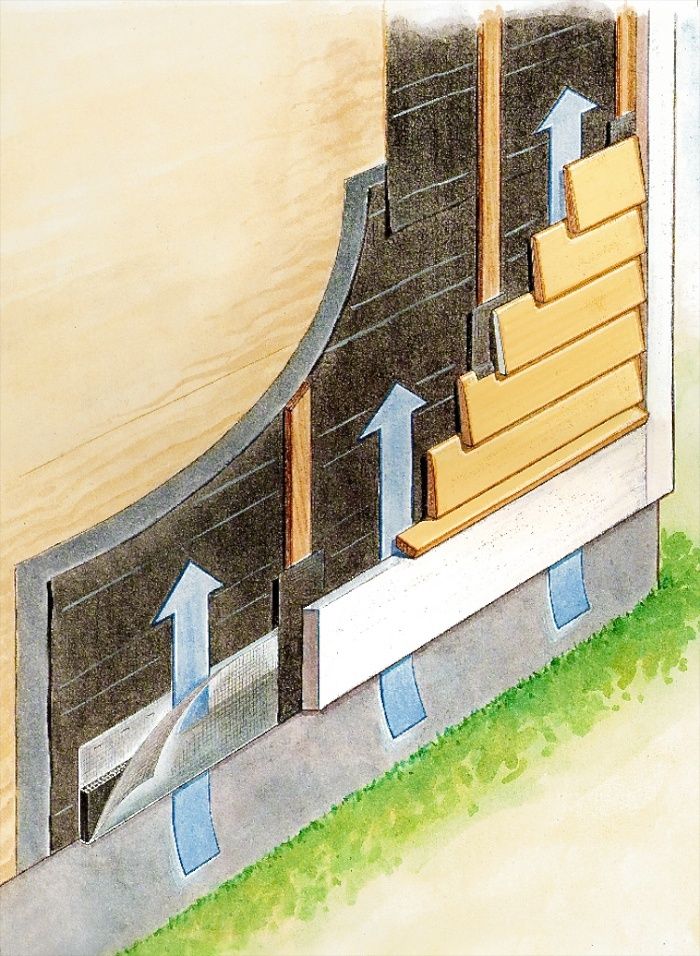
Aaron Vander Meulen’s new house will include cellulose insulation, a layer of rigid foam insulation and furring strips that separate the cladding from the foam. This building detail, called a rainscreen, allows air to circulate behind the cladding, allowing it to dry out thoroughly.
More from greenbuildingadvisor.com
VIDEO: Vented Rain Screen Siding Assemblies
Fastening Furring Strips to a Foam-Sheathed Wall
Calculating the Minimum Thickness of Rigid Foam Sheathing
Avoiding the Global Warming Impact of Insulation
Although the furring is usually applied vertically, creating uninterrupted ventilation channels behind the siding, Meulen wants to put it up horizontally, as he explains in a Q&A post at GreenBuildingAdvisor. The reason? Mostly it has to do with the panel-type siding he wants to use. Horizontal furring strips will make it easier to hang.
What he wonders is whether this will create problems by reducing the ventilation behind the siding.
He gets answers both ways: some suggesting that horizontal furring will, in effect, negate the usefulness of the rainscreen, others, including GreenBuildingAdvisor senior editor Martin Holladay, saying it won’t pose any problems at all.
Read the whole article at Green Building Advisor.
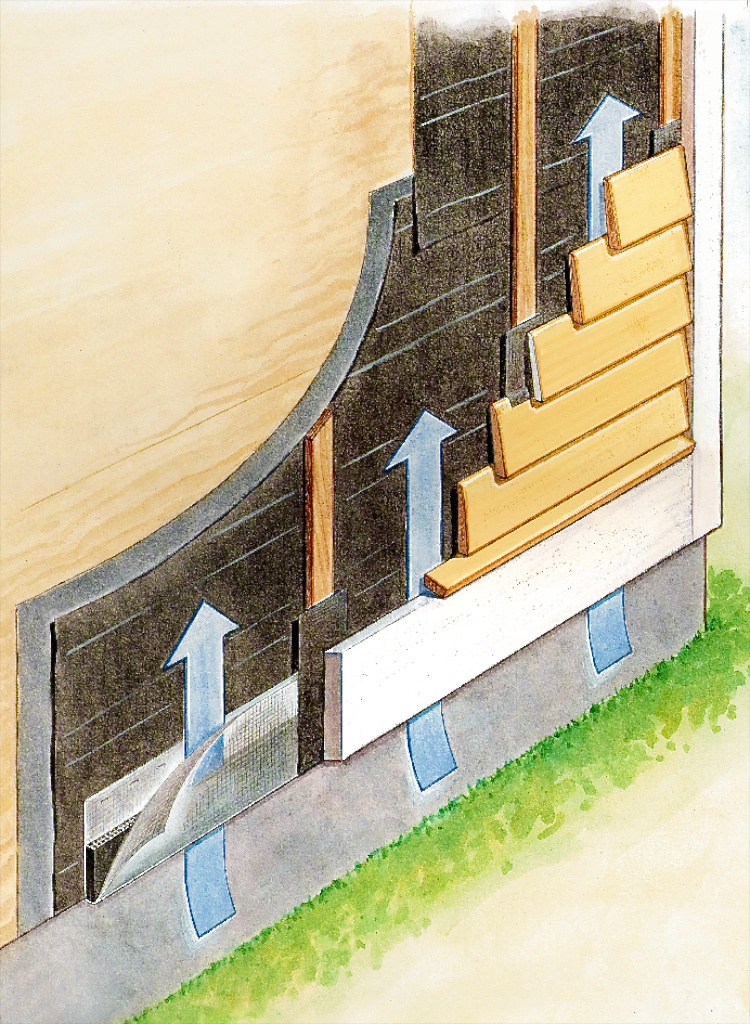
Planning a rainscreen A rainscreen, designed to encourage air circulation behind the siding, typically includes furring strips applied vertically. A builder wonders whether he'd get the same benefits by applying furring horizontally.











View Comments
The horizontal furring strips will effectively work as a rain screen if they at sloped at a slight angle and include gaps between each piece. That will allow the water to run down the furring until getting to a gap and going down to the ground or the next furring in line.