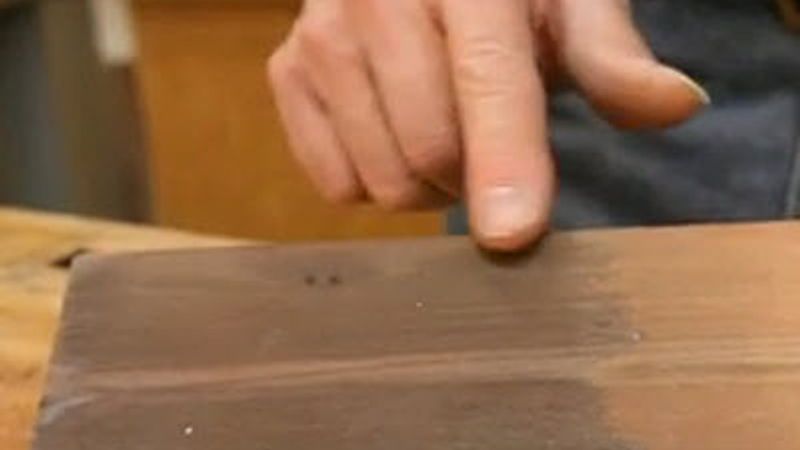
If you’ve got weathered-wood siding to repair or replace, you could put up fresh wood and wait for it to weather in and look natural, but there’s a better way.
I’d like to attribute this tip, but it’s anonymous. I heard somebody talking about this in a lumber yard on the West Coast twenty years ago. The idea was that you take baking soda, mix it with water, and paint it onto the kind of wood you would use outside–something with a lot of tannins in it. Watch the video to see if it works.














View Comments
I hadn't heard the baking soda trick for this, but I have used a modification of an approach that I learned about from George Frank, either in one of his books or in one of his Fine Woodworking articles years ago. For ebonizing wood, he used a mixture he called "Liquid Nightmare", which he made by adding iron scraps to vinegar and letting them dissolve. Several applications are painted on the wood and allowed to dry. To speed up the process, we used steel wool; the fine threads dissolve faster. When we made up our first test samples, we experimented to determine how many applications were necessary to get the real ebonized look. That's when we discovered that one or two applications led to a nice grey "weathered" look. Like the baking soda mixture, this material, iron acetate, reacts with the tannin in the wood, so high tannin woods work best. We've actually used the same process with lower tannin woods, like pine, by pre-treating them with a tannin acid solution (several application of strong tea) before using the "liquid nightmare".
I am trying to duplicate Cabots bleaching oil color. Will this approach look like aged bleaching oil?
Tks
Ken