Should Builders Provide Free Estimates?
Estimate, quote, or proposal? It depends on the scope of the job.
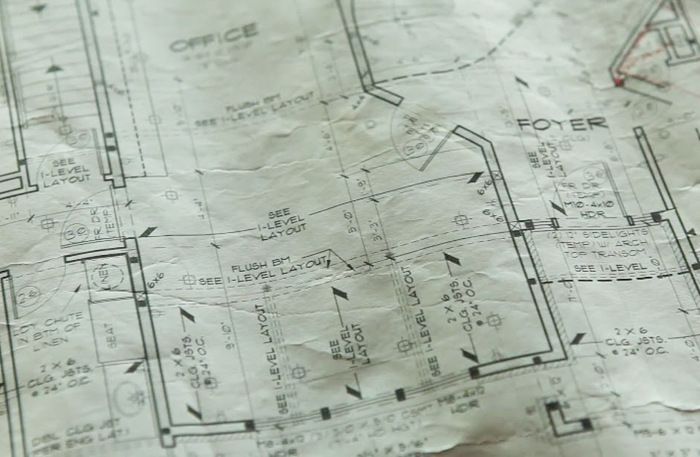
Providing “free estimates” has long been part of the building trades, covering everything from paving a driveway to replacing a roof. A customer calls, the contractor responds. Whatever time the contractor invests in coming up with the estimate is considered part of the cost of doing business.
Or is it? An online poster called “Ccmorical” isn’t so sure the practice makes much sense.
“Why does the remodeling industry believe it must offer free estimates?” Ccmorical asks in a post in the Breaktime Business forum. “When I do a call for an addition, I probably spend at least a day making the call, working with the owner on design issues, measuring, sketching, researching, estimating, proposing, and presenting. All with the hope they use me instead of taking my hard work and giving it to some other company. It probably cost me a few hundred bucks. What do you think? We need to start charging for our services.”
Charge a fee for providing an estimate
Mike Smith is one builder who isn’t enamored with providing free estimates.
“I qualify the leads and inquiries over the phone,” he writes. “Most of the time I will meet with the propsect, listen to their needs … explain what we can do. Since we’re ‘design/build,’ I offer to do the design for a fee. If they already have a plan and specs, I offer to prepare a proposal … for a fee. If they pay the fee, they will probably hire us to do the work. If they don’t pay the fee, that’s my out to move on.”
“Anything that requires estimating, pricing and written proposals has a fee attached,” he adds. “It sure eliminates the tire kickers.”
Another way of approaching it, Mike Smith says, is to stop calling them “estimates” and start calling them “proposals.”
“Guesses are FREE,” he writes. “Tell them if they want a PROPOSAL you have to charge to prepare it. A proposal means you’re going to bet the ranch … there are only three possible results when you offer a proposal if they accept it … you will make money, you will lose money or you’ll break even … the last two are not why you’re in business.”
CCmorical sometimes meets four or five people in a day, he tells Mike, and he needs a way of discovering early in the process whether a potential client is worth the time and effort that will go into preparing an estimate.
“This is not being rude,” he adds. “It’s just good sales strategy. The only thing that really pays the bills is finding a way to get paid for what you do.”
If Ccmorical is meeting that many people in a day, DavidMeiland wonders whether he’s doing enough to screen potential clients.
“Meeting with four or five people per day, you’re not doing enough on the phone to figure out who is actually going to hire you, and who just wants a free consultation,” davidmeiland writes. “Do you ask them what their budget is? Do you ask them who else they are talking to? Do you ask them how they got your name? Where are these leads all coming from?”
It depends on the scope of the job
Tokyotank would take the middle ground, providing free estimates for small jobs but charging for big ones.
“It really depends on what the job is,” he writes. “If it is something like go out measure a roof, or install a new front door, or something minor as such we do not charge. However, if it is an addition and we are involved from its inception, well then you have much more time and people dedicated to only bidding that job, then yes you must be paid for your time.”
A major kitchen remodel or an addition could mean billing at least 40 hours, Tokyotank adds, to cover the time it takes to deal with sub-contractors, estimate materials, and deal with an architect or designer.
“I see no issue with charging for an estimate as these things don’t just magically come together by themselves,” he says. “Your time is your livelihood and you must be paid for it.”
Cfbrew2 agrees. An estimate that takes only a little bit of time should be free. When a builder takes several hours or even days to develop an estimate, a customer “can only expect a good estimate if you are compensated for your time.”
Providing estimates is part of the business
Tim, however, isn’t buying any of it, no matter how long it takes to come up with a price. Tim works as an engineer, not a contractor. But he says he also buys, sells and renovates residential property, so he’s used to working with a lot of contractors.
“Is there ANY industry where you can expect to get paid to propose your services?” he asks. “… An architect or an engineer or a design/build contractor, at least in this area (the Midwest) who would expect to get paid to spend their time to develop a proposal? Either a megalomaniac or a complete idiot. Finding, scoping and bidding jobs that you hope to win is part of the business. Most understand this is overhead.”
Tim would “never consider” paying someone for a bid. “If their time is so valuable (or if they are so inefficient or inexperienced) that I must pay them to market their company and capabilities to me, that would be a giant red flag. As a customer of contractors, there are far too many hungry competitors out there to consider paying for a bid/proposal.
“It would be a great way to develop some more free time,” he adds. “Maybe get some fishing done or work on that short game.”
Tim’s remarks have got Calvin seeing red.
“I’d never work for you,” Calvin writes. “I know I’m out of market to expect a customer to be overjoyed paying for such a thing. However, to develop a cost study for their benefit free of charge is not going to happen. My time is as valuable figuring as it is doing. I’m still here 40 years since I started. I offer a good service at a higher than usual for this area price.”
There are some sharp words, but Tim isn’t budging.
“Any professional contractors out there that would be surprised that bidding work to homeowners could be frustrating? Time consuming? Really? No one ever dealt with a developer using your number just to beat down the price of a ‘prefered’ provider?” Tim adds.
“It IS the nature of this industry and every other one where services are sold face to face and products are bid on a competitive basis. The time spend buying materials, commuting to the job site, bidding the jobs, creating the invoices, paying the invoices, managing employees, paying taxes, insurance and facilities, marketing, advertising, entertainment and meals, vehicle insurance and maintenance, legal and accouting fees, vacations, medical insurance and benefits, recruiting AND actual material/labor costs are all part of the mix that any successful business owner has to accommodate in their business model. If that includes time spent playing around here, good for them.
“I have yet to deal with a quality contractor of any trade that expected to paid for a proposal.”
Should you decide whether or not to give a free estimate based on the size of the job








View Comments
I actually take a slightly different approach for some of my smaller jobs. I will show the customer why a particular project needs to be done a certain way and how the job will be performed. I will also tell them how others bidding the job will likely cut corners to either lower costs or maximize profit - and what the end results will likely be. I tell them the cost of materials and the cost of associated labor to perform the job. I will explain what I would expect to make (profit) on the job as well as how any potential unforeseen problems will be addressed.
Here is the slightly different part - I will tell the customer that I only want to be paid on the VALUE I provide to them. This means that PROFIT is variable. It is up to the customer to decide how much profit to pay, based upon the value they received. If the customer believes I failed to bring value to the job, then they pay little (or nothing) and we part as friends. If I provide great value, then the customer knows up front what I expect to make and why.
To date, I have never had a customer "stiff" me on profit. In fact, most will pay a little more profit for a job well done once they see firsthand what constituted that value. Rather than perceiving that I am only there to separate a customer from their money, the customer becomes part of the process.
I usually provide a free "guesstimate" for my clients.
If it is a new client, and they want a material take-off and scope of work, I tell them that I have to charge them a fee for doing research, etc.
I generally work on old buildings in the French Quarter in New Orleans, and we never know what is going to be behind the walls or ceilings. Usually, water & termite damage are the norm, so you end up doing five things before you set out to do the one thing that you were contracted for.
Hey, Time is money.I've presented elaborate take-offs & bids , only to see someone else get the job & use the fruits of my labor.
I usually provide a free "guesstimate" for my clients.
If it is a new client, and they want a material take-off and scope of work, I tell them that I have to charge them a fee for doing research, etc.
I generally work on old buildings in the French Quarter in New Orleans, and we never know what is going to be behind the walls or ceilings. Usually, water & termite damage are the norm, so you end up doing five things before you set out to do the one thing that you were contracted for.
Hey, Time is money.I've presented elaborate take-offs & bids , only to see someone else get the job & use the fruits of my labor.
I have hired, and will continue to hire, contractors to work on my own home and on the rental properties I buy. While we consider references to be the most important factor, Tim would get my work, definitely not Calvin who comes off as bitter and combative! You want my business? Then spend some time with me and give me an estimate, with the caveat that it doesn't cover unexpected work caused by something that couldn't be detected as part of the inspection process. But charging for estimates up front is a big red flag for me. Makes me think the guy doesn't have enough work to be successful and gives me the impression that he will nickel and dime me all throughout the project.
As a natural builder (strawbale, adobe, natural plasters, local mill lumber package, regional materials, etc.)I find that every job in my rural area is different in scope, source of material, logistics, etc. This is especially true as I have not worked close to home for several years, and my work keeps me traveling. Also, I spend extra time tweaking and improving upon "the way its always been done" attitudes of subs and the local hired help, all in efforts of providing a better end product.
I suppose the bettering of the craft and the execution thereof, in my situation, has me spending much more time on estimating than someone who works from a home base, same subs, same area, same stores, etc. I would say that every job, client, builder, situation is a little different from the other, and the custom builders out there ought to consider some financial compensation for the time spent, if it seems like it is right for you. I know it would be for me. If a client is not interested in paying you a nominal (read:not average bill rate) fee for your whole house estimate, a fee that would go as deposit towards their job if they use you, then bill them, and know you have educated the homeowners in your process and cost.
I am not a professional in the "trades". As a consumer if I have to get "charged" to have a proposal/quote/estimate from someone I would question his "expertise" in the industry and most likely not use their business (and I bet a LOT of consumers would feel the same way). I feel if you ~REALLY~ know your business you could give a proposal and if there were concerns and caveats in the project that they could be written down before hand in the contract.
I will always give out free estimates. I just feel its "good business." Taking my time to drive out to a clients home, crunch numbers, etc is part of doing business. If the client is willing to take the time to call me, rearrange their schedule, and show an interest in my company, they deserve a face to face meeting, and an honest and free estimate. If they trust me after the first meeting, feel the estimate is fair and resonable, I will more than likely get hired to do the project. The intial meeting with the customer is beneficial for both parties.
Every few years this topic comes around and I laugh at the guys like "Mike Smith." It is part of the business, the expense of preparing the bid can be expensed into the bid if you get it or it can be written off as a loss in one's tax filings if you do not get the job. It's not rocket science. Let "Mike" charge for a bid, I'll be walking in the door behind him and taking the job because he just shot himself in the foot.
What about getting paid for the design work necessary to provide a bid? I always work on projects where there is no architect involved and there are no plans or drawings. The homeowners try to describe what they want but they don't really know how to describe what they want. If I'm lucky, they'll provide clues in the form of some pictures from magazines. Sure, I know they want a room addition or kitchen remodel but they don't have the background to be able to accurately convey their ideas. I usually have to draw a plan to show what I am going to build. Many times a potential customer will then give my drawing to another builder who then gives a lower price than me. Or, I will spend a few hours at the site brainstorming ideas with the customer for their remodel. Often, I'll come up with a great idea or cost saving solution, they take that idea to another builder and I lose out. I'd like to stop leaving money and ideas on the table. Jim 1956
Yes I think that they should definitely give free estimates! I can remember when we had to get fire damage restoration in our basement and it was so awful that we decided to just leave our home and move somewhere new. They didn't give us a free estimate on this brand new house and i think we actually got it a lot less than we should have. It's easier if they'd tell us how much we were looking at from the very beginning.