
Sanded vs. Unsanded Grout
Which of these two common styles of grout you use on your tile job is typically based on the width of the joints between tiles.
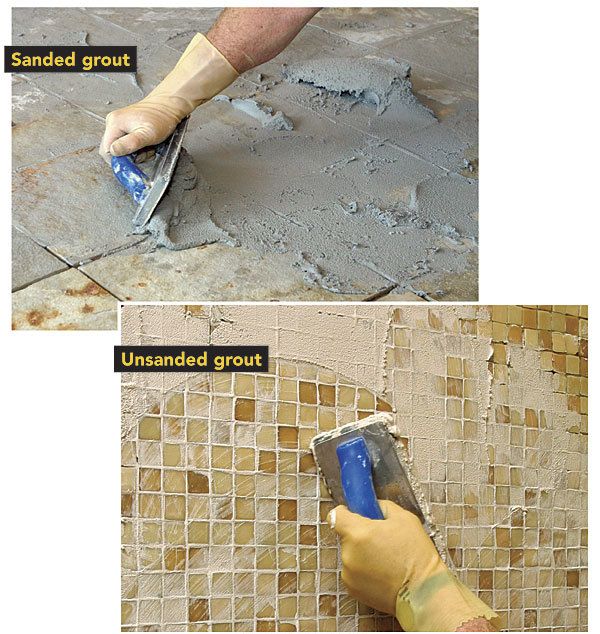
Although it’s available in more than 100 colors, only two types of cement-based grout are used to fill the gaps between tiles: sanded and unsanded. The choice is determined mostly by the width of the joint between tiles. When durability is key, epoxy grout might be a better choice, but remember that applying the grout can be just as important as choosing the right type.
Unsanded grout is preferred for joints that are less than 1⁄8 in. wide. This smooth-textured grout is most common in ceramic-tile installations and clings firmly to vertical surfaces. It’s also recommended for any floor or wall tile installation with narrow joints. Unsanded grout also is a good choice for highly polished stone such as marble; sanded grout may scratch the tile.
Sanded grout contains an aggregate of silica sand for strength. It has a coarser texture and is a bit harder to clean, but it’s the best choice for tile joints wider than 1⁄8 in. because it resists cracks from shrinkage. It’s possible to use sanded grout in thinner joints, but it can be difficult to force the sandy mixture into tight joints, and pinholes in the finished grout lines are a common problem.
In order to maintain even spacing between the tiles, you can use commercially made tile spacers. But because tile spacers are small and somewhat hard to handle, some people prefer Popsicle sticks, which are sold as “craft sticks” at arts and crafts stores.
Photo: Roe A. Osborn and Charles Bickford
