
Ground-Fault Circuit Interrupters (GFCIs)
Electrician Brian Walo explains the pros and cons of using GFCI receptacles vs. GFCI breakers.
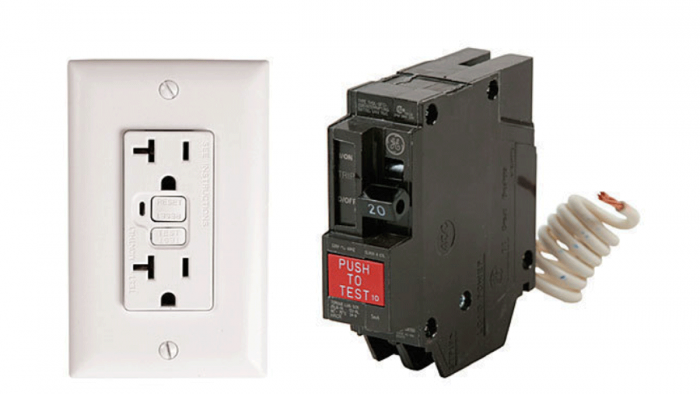
By constantly metering the flow of electricity between the hot and neutral conductors, a GFCI protects you from shocks by assuming that even a minor difference between the two conductors indicates a problem, triggering the device to shut off power. For this reason, GFCI protection is typically a code requirement for potentially wet areas such as bathrooms, kitchens, and outdoor areas, where the chances of electrocution are heightened. The two most common GFCI categories are receptacles and circuit breakers.
Receptacle
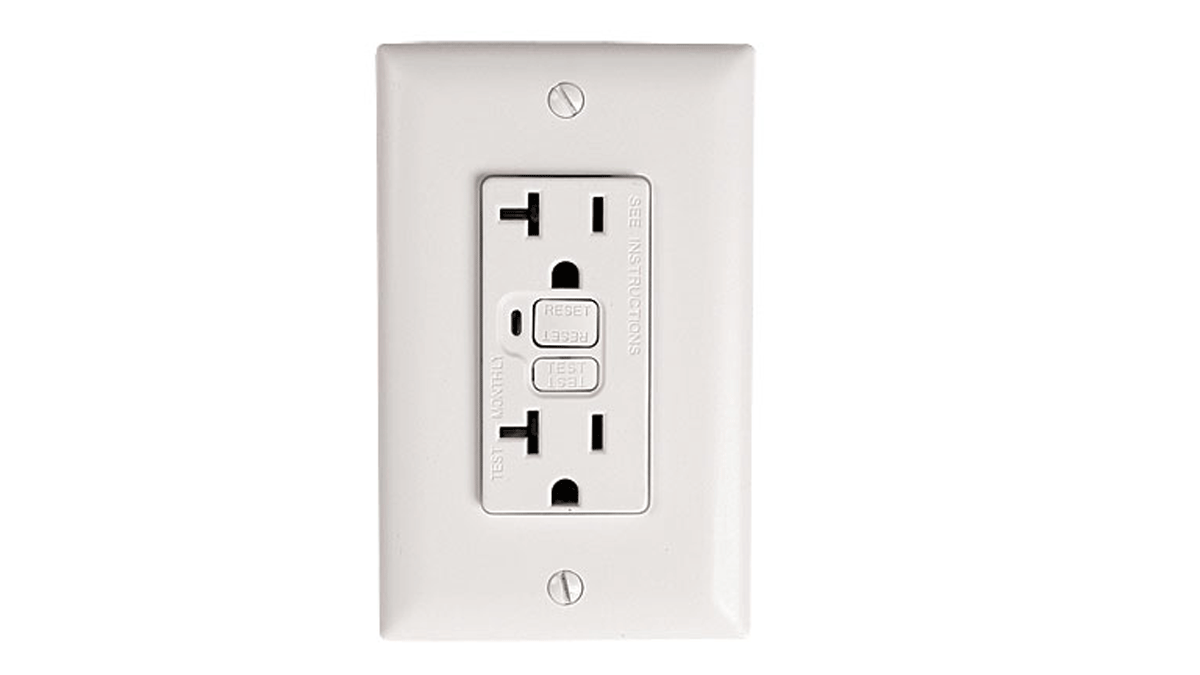
Oftentimes, a GFCI receptacle makes much more sense than a breaker. If you need GFCI protection for only one receptacle, say a new outlet on your porch, a $15 to $20 GFCI receptacle saves you money. And if you do need to protect several outlets, electrical codes allow for a GFCI receptacle to protect every downstream receptacle connected to it.
However, with shock or electrocution, time is the enemy. For instance, when a hair dryer plugged into a GFCI receptacle falls into a sink full of water, the disruption in the line has to travel only a short distance before being sensed by the device and cutting the power. Now consider the same scenario, but with 100 ft. of wiring between the problem and the device. Time may not be on your side.
Breaker
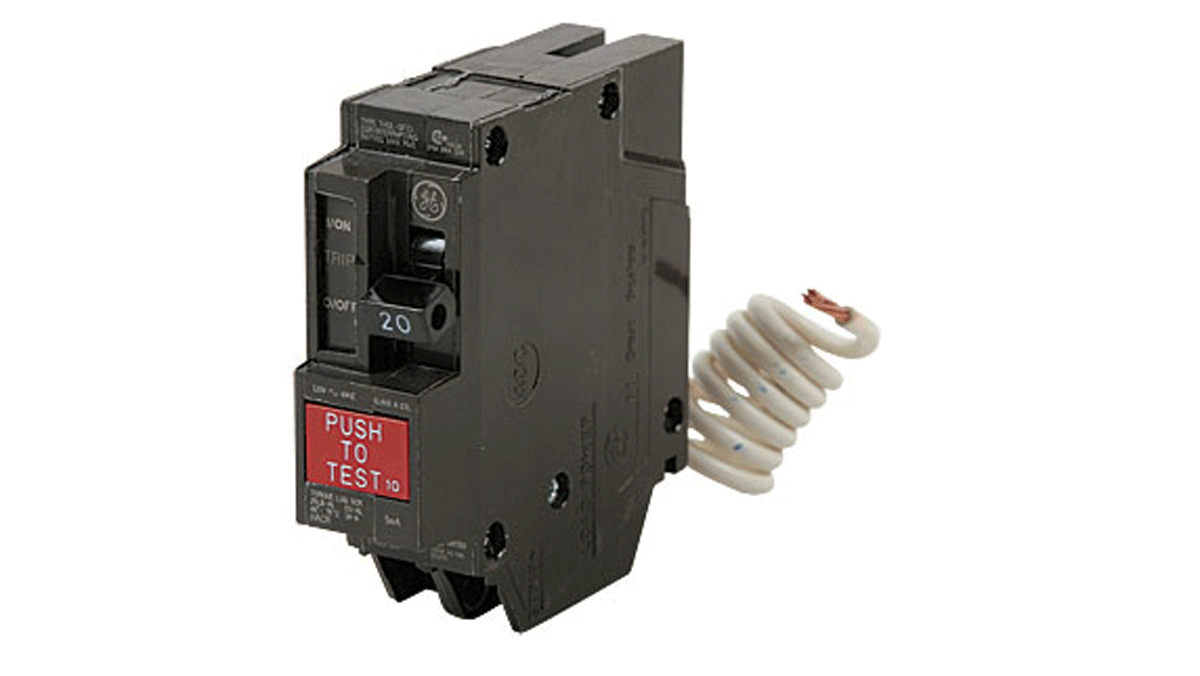
GFCI breakers connect to the circuit at its source and, therefore, protect the entire circuit. This can be good and bad. The good is that you can protect an entire circuit’s worth of receptacles with one $30 to $50 breaker, so the potential cost savings over individual GFCI receptacles is great. The bad is that GFCI breakers have a higher tendency to “nuisance” trip—due to poor power conditions, lower-quality wire insulation, or other non-ground-fault type situations—which means a trip to the electrical panel to reset the breaker.
From Fine Homebuilding #218
