Although hardwood floors are sometimes installed with an adhesive or even as floating floors, most are secured to the subfloor with fasteners.
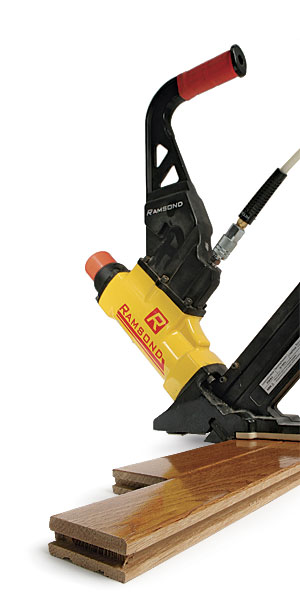
If you want to use a manual flooring nailer, you have one option: cleat nails. If you prefer pneumatic flooring nailers, you have your choice of a tool compatible with either cleats or staples. If you already own a nailer or stapler, you’ll probably want to stick with what you have. If you don’t, consider the differences between these fasteners in holding strength, tendency to split wood, and cost before you make a decision.
It’s also worth mentioning that even though the spacing recommendations for cleats and staples are similar, the two types shouldn’t be used on the same installation due to differences in holding strength and allowance for seasonal movement.
Cleats
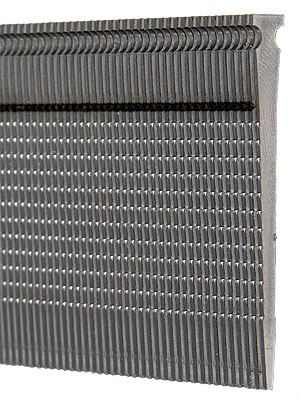
Steel cleat nails are commonly sold with either L- or T-shaped heads, depending on the brand of nailer being used. Both types have a series of ribs that run at least two-thirds of the way down both sides of the nail shank, which grips the subfloor. The remaining part of the nail is smooth, which allows the finished flooring to expand and contract with seasonal changes in temperature and humidity. Most cleat nails are 16 ga. or 18 ga., but thinner 20-ga. nails are available for installing engineered flooring. The big drawback with cleat nails is their cost, which at $65 to $85 per 5000, is about twice the price of staples.
Staples
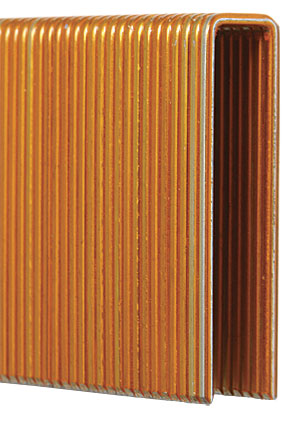
Because each staple grips the wood with two prongs, staples provide a tighter initial grip than cleat nails. However, flooring staples are more likely to back out as wood expands and contracts, loosening the hold and increasing the risk of squeaks. Staples are also more likely to split the tongue of the flooring, especially flooring less than 3⁄4 in. thick. Like nails, they are made from steel (typically 15-1⁄2 ga.), but their simpler design results in a less complicated manufacturing process, which allows them to be sold for a relatively low cost of $30 to $40 per 5000.