
What’s the Difference: More Moisture-Resistant Drywall
Discover the differences between treated-paper drywall and fiberglass-faced drywall for use in moisture-resistant situations.
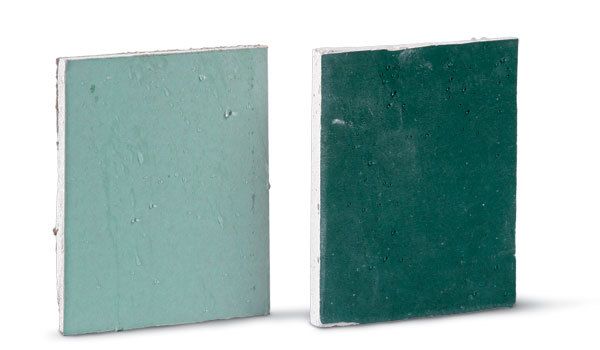
When it comes to choosing drywall for the moist areas of your house, two moisture- and mold-resistant products are made to fit the bill: treated paper-faced and fiberglass-faced drywall.
Manufacturers claim that each type offers superior performance and mold resistance over regular, untreated paper-faced drywall.
To sort out the differences in working with each product, I tapped the knowledge of drywall contractor and frequent Fine Homebuilding contributor Myron R. Ferguson.
Paper
The major difference between this drywall and ordinary drywall is that it’s treated with a mold inhibitor such as sodium pyrthione.
Myron’s Feedback: I install this drywall just like ordinary drywall, except I use fiberglass tape on the seams because paper tape is mold food. I also use setting-type compound, which is more difficult to work with, but more moisture resistant. The big issue is skim-coating. This drywall fuzzes up after sanding, so it needs to be skim-coated to achieve a high-level finish.
Cost of 4×8 Sheet: Roughly $9
Fiberglass
This drywall has an inorganic facing of fiberglass, which is less likely to promote mold growth.
Myron’s Feedback: I also tape this drywall’s seams with fiberglass mesh and setting-type compound, which is less water soluble. Early products were really coarse, which posed a finishing problem, but newer versions are a lot smoother. I skim-coat only if I need a high-level finish. Airborne fiberglass is an issue, so I wear long sleeves, gloves, and a respirator when installing these panels.
Cost of 4×8 Sheet: Roughly $18
Photo: Rodney Diaz
