
What’s the Difference: Titanium Hammers vs. Steel Hammers
It turns out that the hype surrounding titanium has value.
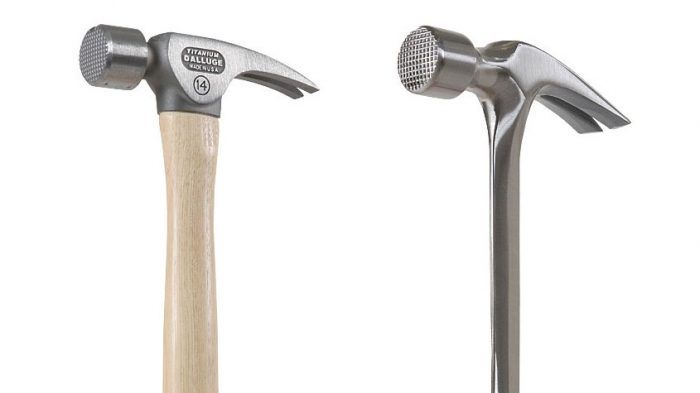
A few years ago, I worked on a framing crew run by a boss who took everything he did to the limit—building houses, racing dirt bikes, even buying tools. The day I walked onto the job, he handed me a leather Occidental tool bag that held a 16-oz. titanium Stiletto hammer. I strapped on the belt and, to his surprise, replaced the hammer with a 22-oz. steel Estwing. At the time, I didn’t get the hype surrounding titanium. After much persuasion, though, I switched. I quickly fell in love with that Stiletto, but never understood why.
The hammer felt great, but how much could titanium really affect the tool? I wasn’t sure if I loved that hammer for the way it performed or if I was just a sucker for savvy marketing. It turns out that the hype has value.
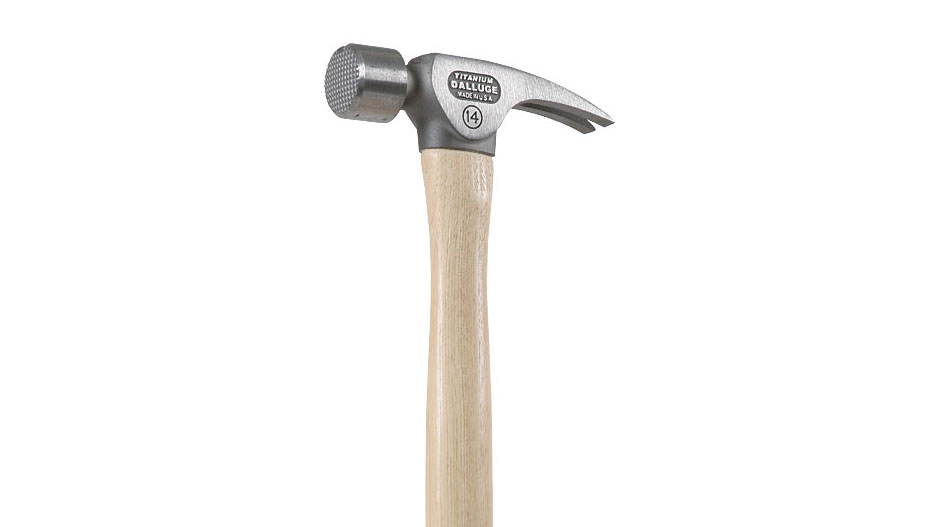
Titanium transfers energy efficiently
Brandon Miller, the product marketing coordinator for Stiletto tools, sold me on titanium in two sentences. A titanium hammer transfers 97% of your energy from swinging the hammer to the nail, while a steel hammer transfers only 70% of your energy to the nail. That means titanium drives the nail more efficiently and that there is less recoil energy to travel back into your arm (3% vs. roughly 30% with steel). This clarifies the claims that titanium is roughly 45% lighter than steel but hits just as hard, and that titanium can help to save your elbow from the shock of hammering.
The chief complaint with these hammers is their expense. In its raw form, titanium is roughly five times more expensive than steel. The higher cost to produce the tool contributes to a price tag of $80 to $250, depending on the hammer.
Titanium hammers
Dalluge Tools- www.dallugetools.com
Stiletto Tools- www.stiletto.com
Martinez Tools- martineztools.com
Vaughan- www.vaughanmfg.com
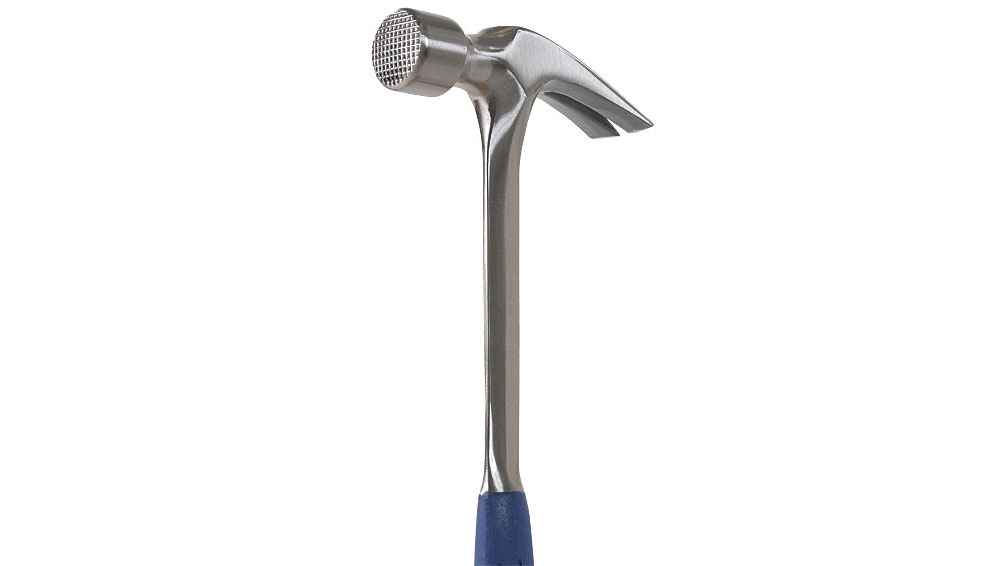
Steel is a deal and still packs a punch
Although a titanium hammer might be more efficient at driving nails, some users prefer steel hammers for their knockdown power. Because steel is much heavier than titanium, it’s more useful when it comes to pounding a beam into place, moving a wall into its proper position, or doing demolition work.
A steel hammer’s most alluring quality, though, is that it’s considerably less expensive than a titanium hammer. At around $20 to $30, it’s the most economical choice for those who don’t swing a hammer for a living and are not as susceptible to the physical damage that can occur from years of job-site abuse.
Steel hammers
Dead On Tools- www.deadontools.com
Estwing- www.estwing.com
Stanley Tools- www.stanleytools.com
Photos by: Rodney Diaz
From Fine Homebuilding #205
