What’s the Difference: Torches
Discover the difference between propane vs. propylene gas torches for homebuilders, remodelers and plumbers
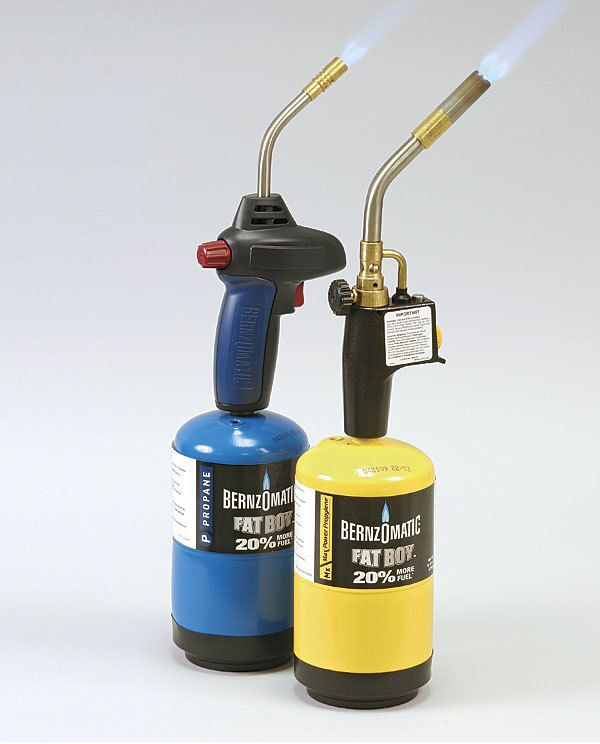
There are three primary fuel options for torches used to solder or braze metal: propane, propylene, and acetylene.
Acetylene is expensive, burns extremely hot, and is available only in large, refillable tanks. It’s best suited for professional plumbers and those who solder and braze thousands of joints a year.
For homebuilders and remodelers who are in only occasional need of a torch, propane- or propylene-fueled units might be a better option.
Propane
With a flame temperature in air of roughly 3450°F, propane burns cooler than propylene. This can be a weakness or a strength, depending on the experience of the person using the torch.
Pros
• Inexpensive
• Less likely to overheat a joint or ignite surrounding materials
• Suitable for soldering pipe 1/8 in. to 1 in. in dia., making it an economical option for basic plumbing jobs
• Considered a forgiving torch for less skilled tradesmen and apprentices
Cons
• Takes longer to get metal hot enough to melt solder
• Does not burn hot enough to braze, which creates much stronger connections
• Can’t be used to solder large pipe and fittings
• Might not be possible to solder pipe that still contains some water, which steals heat
Cost
$3 per 16.92-oz. cylinder
Propylene
Manufacturers that once supplied MAPP gas, which has been discontinued, are now pushing propylene fuel. It has many of the same attributes as MAPP gas, including a higher price tag. However, that cost buys you greater performance.
Pros
• Has a flame temperature in air of roughly 3600°F, so it can be used to braze metal
• Burns hot enough to overcome the thermal effects of small amounts of water in plumbing lines, making it great for remodeling tasks
• Heats pipe and fittings 20% to 24% faster than propane, decreasing overall labor time
• Suitable for soldering or brazing pipe 1/8 in. to 3 in. in dia.
Cons
• Expensive
• Less forgiving than propane in terms of safety and technique
Cost
$9 per 16.92-oz. cylinder
Photo: Rodney Diaz