Mandatory lead-safety certification coming in 2010
In less than 2 years, any contractors looking to disturb lead-based paint in homes will need to obtain EPA certification
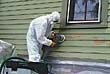
Plan to repair or renovate a house that was built before 1978? If so, you’ll need to follow some new rules from the Environmental Protection Agency (EPA). Beginning in April 2010, all contractors performing work that disturbs lead-based paint in homes will have to become EPA-certified renovators.
The federal regulation requires certification for renovation or repair work that disturbs 6 sq. ft. inside or 20 sq. ft. outside a home where children younger than 6 years old live or visit regularly.
Child-care facilities and schools also fall under this new regulation. In addition to following specific work practices, contractors must provide homeowners with lead-hazard information pamphlets.
To earn certification, contractors will need to complete an EPA-accredited training course. Some contractors who are already certified to work with lead-based paint will have to take only a refresher course.
The EPA is rolling out the new rules in phases. Training courses don’t exist yet and won’t be available until after April 22, 2009.
If requested by the contracting party, certified renovators will be required to use an acceptable test kit to determine whether lead-based paint is present in work areas. They’ll also have to train crew members and be at the work site during key stages of a renovation.
Beginning in December 2008, contractors will need to provide homeowners with a pamphlet titled Renovate Right: Important Lead Hazard Information for Families, Child Care Providers and Schools. Until then, the pamphlet, along with additional information about the regulation, can be found at www.epa.gov/lead.
Facts on lead
Lead is a serious health hazard
• Ingestion of dust contaminated by lead paint is the most-common cause of lead poisoning in children.
• In children, low levels of lead poisoning cause intelligence deficiencies, learning disabilities, reduced attention span, and behavior problems.
• In adults, lead poisoning can cause hypertension and can harm reproductive, nerve, and brain function.
Lead testing is easy
• Simple swab-based kits can be used to test for lead that might be leaching through layers of lead-free paint. They cost about $10 and provide results in minutes (www.leadcheck.com).
• Other kits that test for lead dust are also available. They cost $10 to $30 and typically require lab testing, so results take time (www.amazon.com, www.leadinspector.com).
Work smart around lead paint
• Seal vents in the work area, and use heavy plastic sheeting to protect floors, furniture, appliances, plants, and other surfaces from lead dust and debris.
• Isolate the work area from the rest of the house with plastic sheeting. See the Fine Homebuilding article “Dust Control.”
• If you have to cut, sand, or drill into lead-based paint, mist the area first to keep down dust. Use power tools with dust-collection shrouds, and hook them up to a shop vacuum equipped with a HEPA filter.
• Make sure workers wear disposable coveralls and HEPA respirators. Clean the work area with a HEPA-filtered vacuum and a damp mop. For more-comprehensive safety guidelines for working with lead-based paint, see “Lead-Paint Safety, at Home and on the Job.”
Photo by: Tom O’Brien
Fine Homebuilding Recommended Products
Heat-Shrink Tubing
8067 All-Weather Flashing Tape

Affordable IR Camera

Reliable Crimp Connectors