The 7 Essentials of Remodeling
Architect Matthew Schoenherr shares seven guiding principles to successfully transforming a home into something altogether new in this excerpt from his book, Remodel.
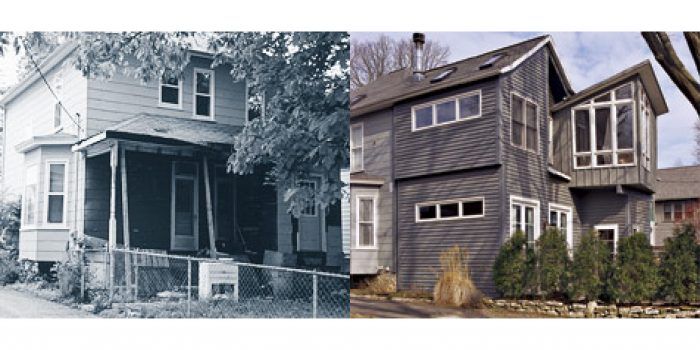
Can a house shed its coat and emerge as something new? Can something as large as a house be transformed? Can one place become another? Yes. As stout and permanent as they may seem, houses are malleable—capable of change—proficient at flexing and shifting, stretching and growing, just like people.
Many of us live in houses we’re not really happy with. The rooms are too small, the ceilings too low, the exterior lacks character, and the appliances, the fixtures, the tile, the hardware—you name it—are outdated, worn out, beyond repair. You’ve talked to your spouse, your friends, you’ve even called in carpenters and general contractors. “Replace the siding with maintenance-free vinyl,” offers one. “It’ll feel like a new home.” “Tear it down and start over…it’ll be easier than renovating,” says another. You know that a new siding job won’t solve your space limitations in the kitchen. And completely rebuilding your home, well, that seems overwhelming.
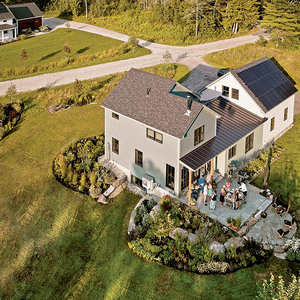
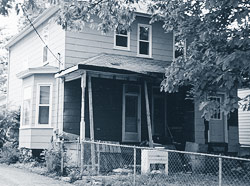 The original house was in poor condition and lacked the space and jazzy outward appearance the homeowners wanted.
 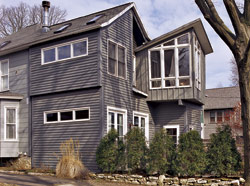 Rather than flee to another neighborhood with larger homes, they adapted their home with an expressive addition that solves the problem of their architectural squeeze.
But what about another approach? What about transforming your home into something altogether new? OK, I can hear you say, that sounds like rebuilding. Well, that’s partly true, but completely rebuilding is at one extreme end of the transformation spectrum. Through many years of practicing architecture and helping others remodel their dark or cramped homes, I’ve found that just as there seems to be an endless amount of home types and styles, there are just as many ways to change these homes.
At the friendlier end of the spectrum, a successful transformation will involve the logical, practical adjustment of the floor plan: opening walls between rooms to create shared space, creating better walking paths through the house and eliminating “dead-end” spaces, or even finding new uses for rooms that are seldom used. Another level of house transformation involves rethinking how windows bring light into the interior of the home, and where exterior doors are positioned to allow uninhibited movement to the outdoors.
But this is just the beginning. The character of your home can be transformed as well through the use of new materials and by thoughtfully creating exterior details that are expressive of the type of home you desire.
The Blueprint for the Transformed Home
Because each house is as unique as its owner and the plot of land it sits on, no one book can tell you exactly how your home should be constructed or modified. Thankfully, there are some basic design guidelines that can help everyone from the first-timer to the veteran home renovator produce the best results possible. Whenever I embark on any new design project, I always refer to my own checklist of seven essential items that should never be overlooked (I call them the “7 Knows”). These elements of designing the transformed home that every homeowner should know are listed below.
The 7 Essentials of Remodeling
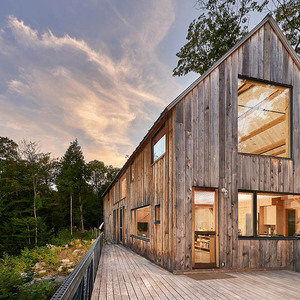
1. Know Your Place: Acknowledge your region, town, or city
There’s an importance to understanding the established fabric of a region that is often taken for granted. Recognizing and respecting the distinct character of your community and incorporating local patterns of building into your new design strengthens the framework of the regional context and contributes to the overall sense of a unique place.
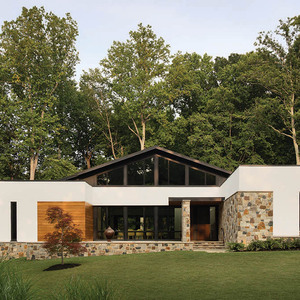
2. Know Your Property: Respond to your site
The transformation of your home will be most successful when the design responds to the favorable features and climate conditions of your site—and addresses the negative factors as well by blocking an unwanted view or creating a barrier for privacy.
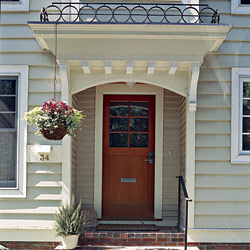 Know Your Place
  Know Your Property
3. Know Your House: Understand how to design compatibly
This doesn’t mean simply matching the design of new construction with old. To truly transform a house—and to do it with distinction—you must logically combine new and old planning patterns, forms, and infrastructure.
4. Know Your Structure: Understand how to design safely
Design your home or addition so that it conforms to the requirements of the building code enforced in your region. Explore structural solutions, whether they are daring or reserved, to the point that doesn’t exceed the capabilities of your construction team.
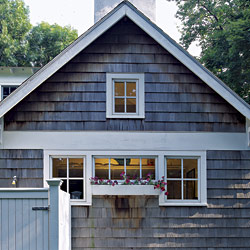 Know Your House
 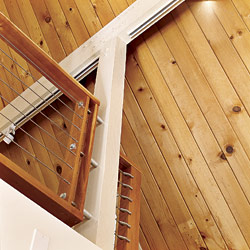 Know Your Structure
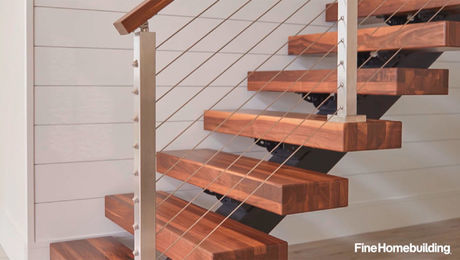
5. Know Your Palette: Select materials that withstand the test of time
The construction materials that protect our families from frosty winters and boiling summers have to perform agreeably in their respective tasks. Additionally, textures, patterns, and colors of roofing, siding, cabinets, and floors express an architectural identity that can become a visual clamor unless selected with care.
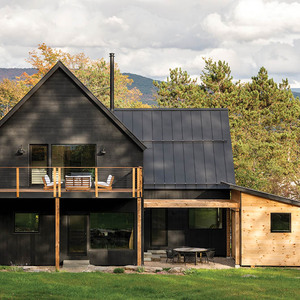
6. Know Your Lifestyle: Work to create a design that supports the way you live
Family activities and rituals have their own particular spatial needs: public rooms for gathering and entertaining, a quiet place for reading, and private areas for guests, working at home, and sleeping.
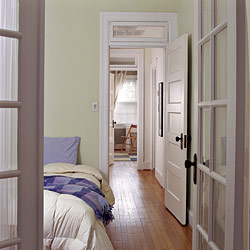 Know Your Palette
 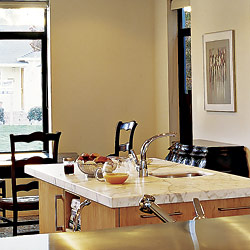 Know Your Lifestyle
7. Know Your Passions: Design to evoke emotion
Be honest about your own desires and incorporate the things into your home that matter the most and reward the senses. It’s OK to give your home, and yourself, a couple of extra feet in a hallway, or to get rid of an attic space and create a tall ceiling—all for sheer drama or whimsy. Make your home your own and try not to think too much about resale or what the neighbors are doing.
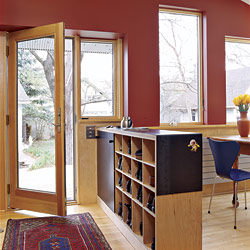 Know Your Passions
Matthew Schoenherr, AIA is the principal of the firm Z:Architecture in Branford, Connecticut. He has completed more than 200 additions, renovations and new homes. Photos by: Rob Karosis