Sizing an Electrical Service
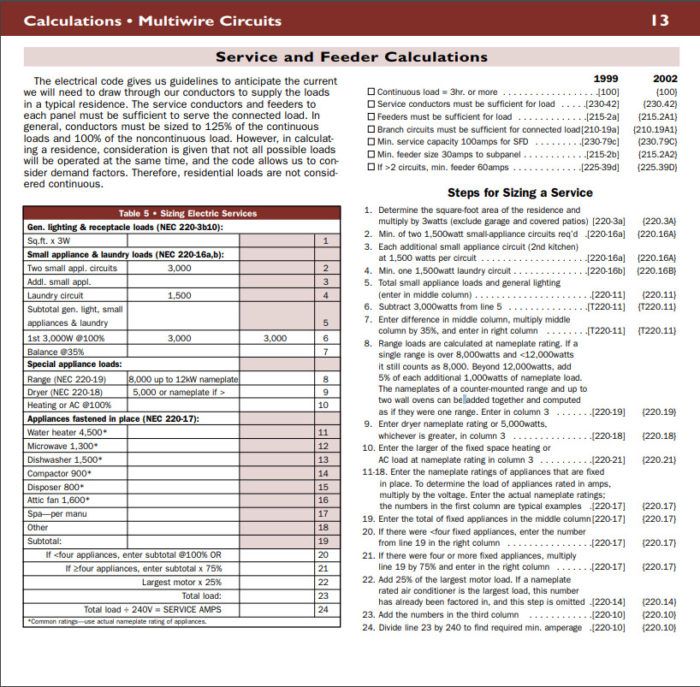
Although a 200-amp service is adequate for most residences, calculating the actual load is a good idea. This chart from Code Check Electrical can help you with your calculations.
In most jurisdictions, homeowners can install their own electrical service as long as they do the homework, pull the permit, and collaborate with the inspector and the utility company. Calculating the load of your electrical service is a key step in the process, particularly if you have a larger home or one likely to have high electrical demands, such as electric heat.
Use this chart from Code Check Electrical, by Redwood Kardon, Douglas Hansen, and Michael Casey, to help you figure the actual load of your service.
For more information on this topic, see the article Installing an Electrical Service in Fine Homebuilding Issue #150 (Oct/Nov 2002), pp.78-85 .
Clifford A. Popejoy wires houses for Habitat for Humanity in Sacramento, California. Redwood Kardon, Douglas Hansen, and Michael Casey are the authors of Code Check Electrical. Paddy Morrissey is the series illustrator.
To view this electrical chart, click the View PDF button below.