Mandate passive survivability in building codes
Passive survivability is a life-safety issue. How long could you live in your house without power or fuel?

BuildingGreen
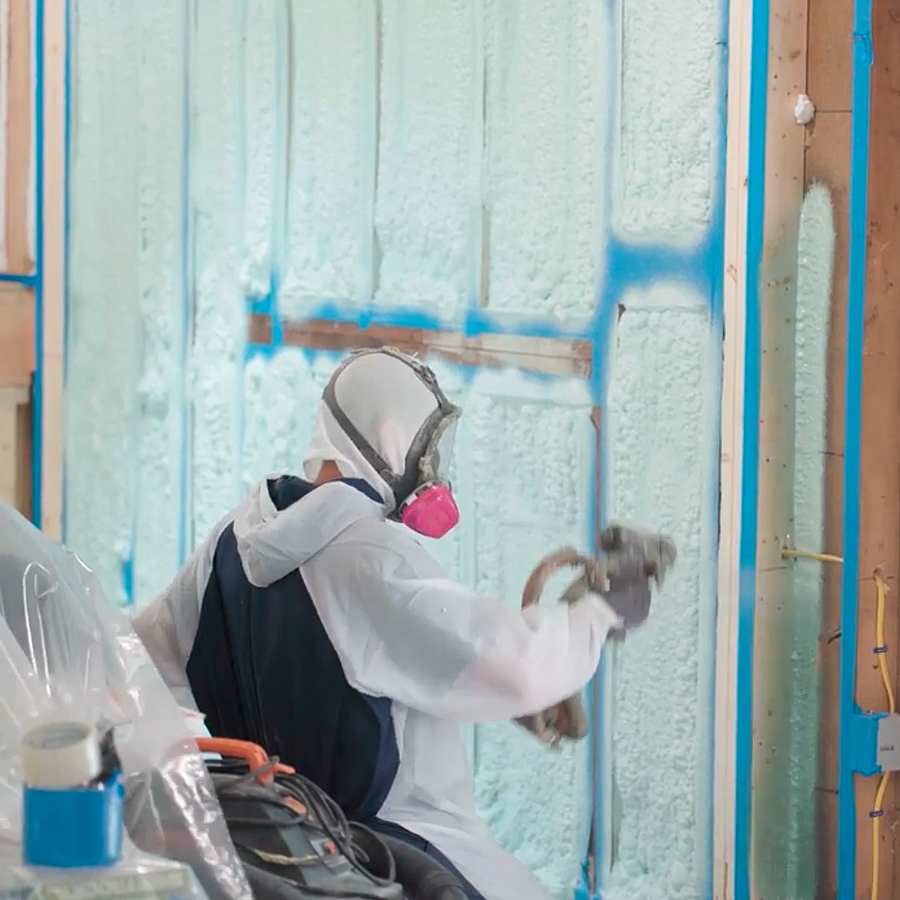
A real-estate agent recently told me that the high cost of building materials was leading some builders in her part of the country to shift from 2×6 construction to less-energy-efficient 2×4 construction. These builders tell her that many homebuyers don’t know enough to ask how much insulation is in their walls, and they won’t own the houses long enough to care. What these builders and homeowners don’t realize is that poorly insulated homes leave them unnecessarily vulnerable to utility interruptions.
At one time, I argued for incorporating a voluntary design strategy aimed at passive survivability, which would allow a building to maintain livable conditions in the event of extended power outages or loss of heating fuel. This quality can be achieved with such features as a highly insulated building envelope, passive-solar design, and natural ventilation. I thought of it then as a smart design criterion that could provide another motivation for creating energy-efficient, environmentally responsible buildings.
The reality is that the future portends more-intense storms that could cause extended power outages, an ever-present risk of terrorism that could target energy-distribution networks, and higher energy costs along with fuel and water shortages. It makes sense to design passively survivable homes and apartment buildings—along with schools and community centers—with those possibilities in mind.
“Under normal operating conditions, a passively survivable building will use little energy for heating and cooling, which will end up being a big benefit in reducing carbon emissions.”
I now believe that passive survivability is a life-safety issue and should be mandated into residential building codes (similar arguments also apply to commercial building codes). Passively survivable residences will protect the lives and well-being of residents. With loss of electricity or heating fuel in winter, a passively survivable home will never drop below a temperature deemed adequate to keep the house livable. The residents will remain safe, and pipes won’t freeze. Furthermore, when such an energy-efficient home is without power or heating fuel, it can be maintained at more-comfortable conditions with just a small amount of heat from a kerosene heater or a woodstove.
Similarly, in summer months, a passively survivable house or apartment won’t become so hot that residents are at risk of heat stroke or hyperthermia. Overhangs block the hottest sunlight, and windows provide natural ventilation, as our vernacular designs did before the advent of air-conditioning. With multifamily buildings and apartment complexes, the design challenges in achieving passive survivability are greater, but so too is the investment in architectural design. If we mandated such performance, design firms would gain the expertise needed to achieve it.
Widespread adoption of passive survivability would, as a major side benefit, reduce greenhouse-gas emissions. Under normal operating conditions, a passively survivable building will use little energy for heating and cooling, which will end up being a big benefit in reducing carbon emissions.
“We need to convince code authorities and government leaders that interruptions in the electricity and heating-fuel supply present a significant-enough life-safety risk that we should incorporate passive survivability into all new houses.”
We need a multipronged effort to incorporate passive survivability into building codes. We need to determine what constitutes “livable conditions” and how that varies regionally; we need to agree on an assumed duration of outages for the purposes of survivability; we need to identify a building-performance metric, such as a score close to zero on the Home Energy Rating System (HERS) scale; and we need to convince code authorities and government leaders that interruptions in the electricity and heating-fuel supply present a significant-enough life-safety risk that we should incorporate passive survivability into all new houses.
Voluntary green-builder programs go a long way toward encouraging passive survivability, but these programs are not propagating fast enough to protect the public. We might need to mandate minimum levels of energy performance. Global climate change is already making our homes more vulnerable, and fuel shortages are likely to become a reality well within the life span of the houses we are building today. We have a responsibility to ensure that houses keep their occupants safe and protected from the elements, just as we have a responsibility to ensure that they are resistant to fires, hurricanes, and earthquakes. Let’s take that responsibility seriously and mandate that our houses keep us safe, even without power or supplemental heat. Let’s not wait for the tragedy of a major summertime heat wave or wintertime cold spell that coincides with an extended power outage or fuel shortage before we act.
Photo: Courtesy of Building Green