Refurbishing Old Double-Hung Windows – Part One
Windows built 50 to 100 years ago often were constructed from fine-grained, rot-resistant fir, cypress, or redwood, woods that are no longer available. For that reason alone, it makes sense to refurbish rather than replace them when they get tired and don’t work so well.
Refurbishing double-hung windows can be complex, so we’ll divide the topic into two postings. In this first installment, we’ll focus on correctly sizing sash weights, replacing sash cords, and lubricating pulleys. In Part Two we will see what to do if sashes are swollen or out of square, lack weatherstripping or have built-up paint.
The photos above show how the pros at Wooden Window refurbish double-hungs, so we’ll let them do the talking. To undertake this task, however, here are a few common sense suggestions to supplement the techniques shown in the photo sequence.
Dress for the job
Sturdy gloves with rubberized palms are essential to avoid cuts and to provide a secure grip on heavy window sashes. Safety glasses with wraparound lenses will protect your eyes from glass shards, irritating dust and dangerous projectiles should a power tool strike a hidden nail or screw. As older windows often contain lead-based paint, a HEPA-rated respirator and a HEPA vacuum to capture dust are must-haves.
Be methodical
It might make sense, say, to remove and repair all sashes at the same time, but only if you’ve carefully noted the location of all trim pieces and sashes beforehand. Also, if there are people in residence, move cutting and sanding operations outside whenever possible, lay tarps to protect finish floors and vacuum periodically to minimize dust indoors.
Finally, three tips
First, for operable sashes (as opposed to ones that don’t move), there should be a 3/16 in. space between the sash and jamb on each side–3/8 in. total–so there’s room for weatherstripping as well as movement.
Second, refurbish jambs, too. Pull any old nails or screws sticking out, sand jambs smooth, prime all bare wood and then, when the paint’s dry, rub paraffin–a candle stub will do–along the jambs to allow windows to move easily. Do the same with the sides of refurbished sashes. If you must remove casing to get at sash weights, pulling finish nails through the casing causes less damage than pulling nails from the front.
Third, ace restoration carpenter Mike Davis in New Orleans recommends coating jamb channels with Dupont’s Corlar and Imlar products for a slick surface, though they are available only through industrial suppliers. A high-gloss marine enamel works almost as well. Davis also recommends www.conservationtechnology.com if you’re looking for a wide choice of airtight seals for old windows.
Thanks to Wooden Window, Inc. of Oakland, CA, for allowing me to photograph its crews on the job. This posting is excerpted from Renovation 4th Edition, just published by Taunton Press. R4’s 614 pages include thousands of field-tested tips and techniques, 250+ technical illustrations, roughly 1,000 photos selected from the 40,000 I have taken over the years, and lifetimes of experience that builders have shared with me. I hope you find Renovation 4th Edition useful on your next project. — Mike
© Michael Litchfield 2012
-
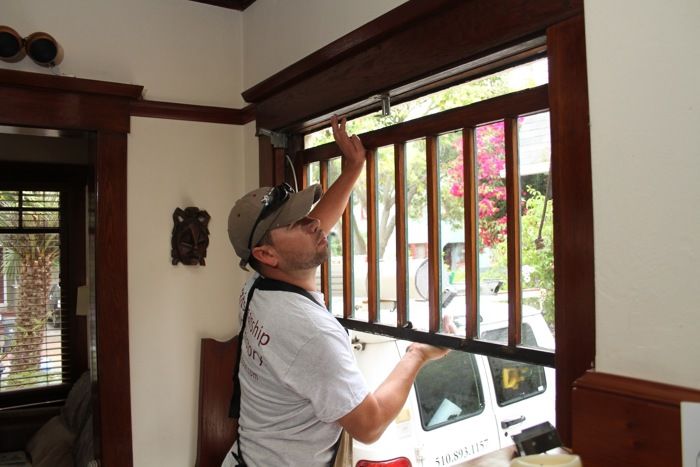
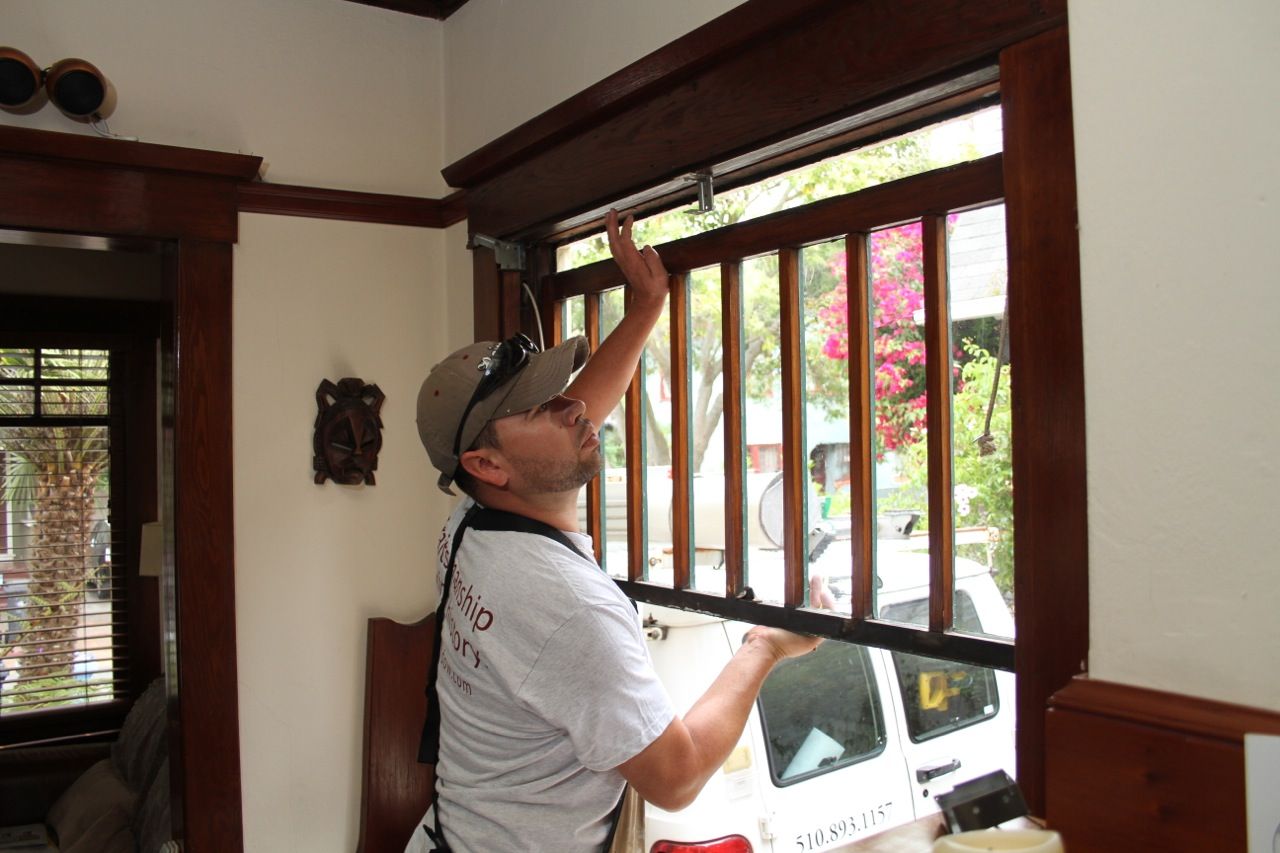
1. Refurbishing starts with detective work. Note what's working and what's not and figure out why. After removing the parting stops and the bottom sash of a double-hung, move the upper sash to see why it's sticking. Often, the sash will have swollen and become too wide for the frame.
-
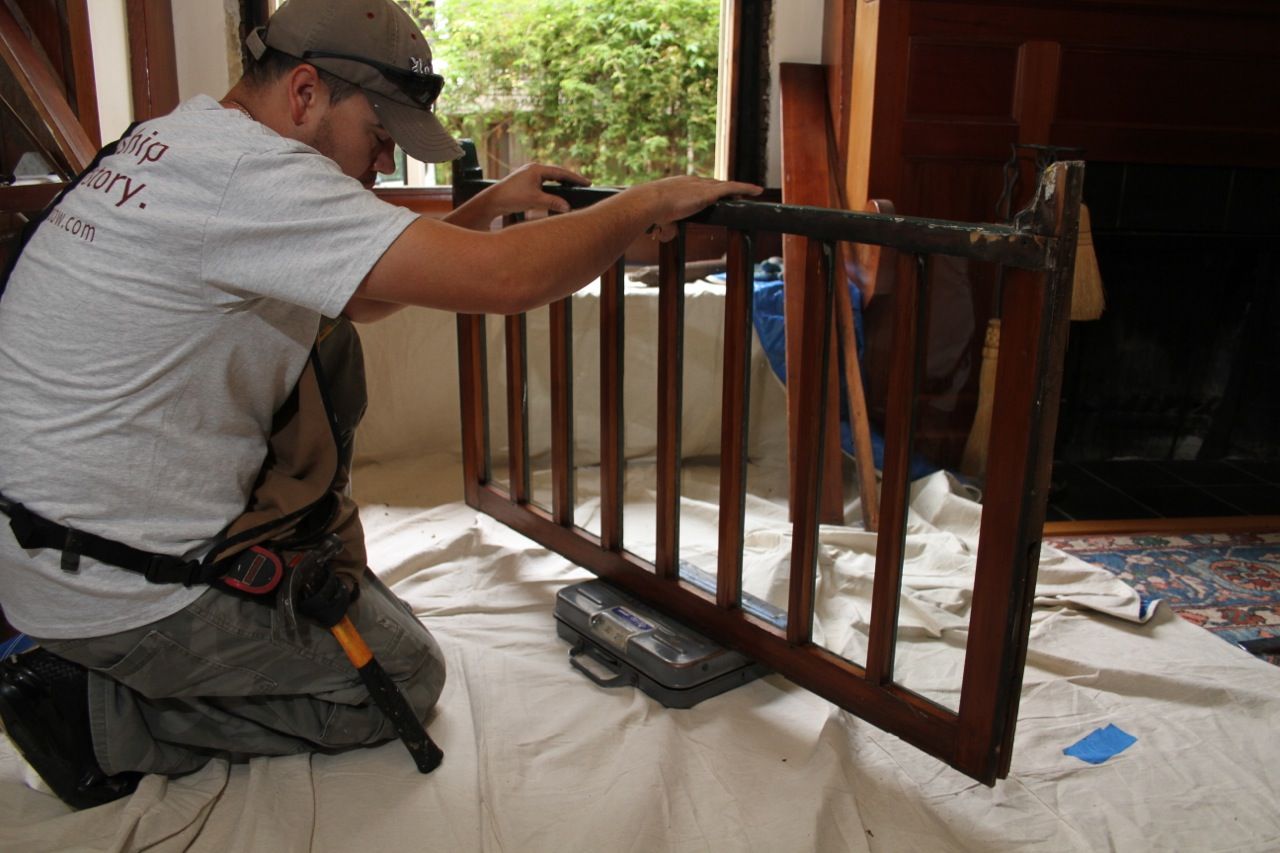
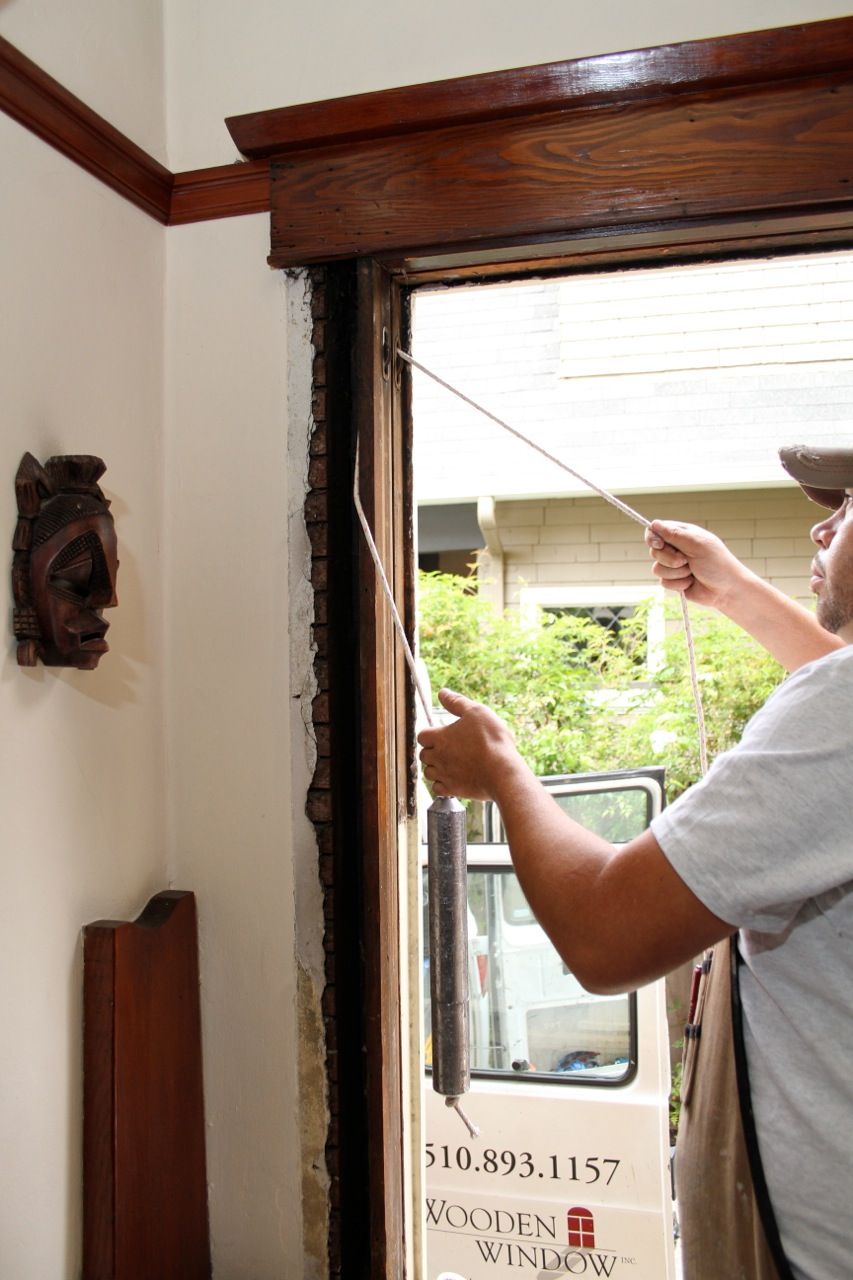
2. The pros weigh sashes to ascertain how much weight is needed to offset them. Ideally, weights should weigh about the same as the sash they counterbalance so that the sash will stay at the height you set it.
-
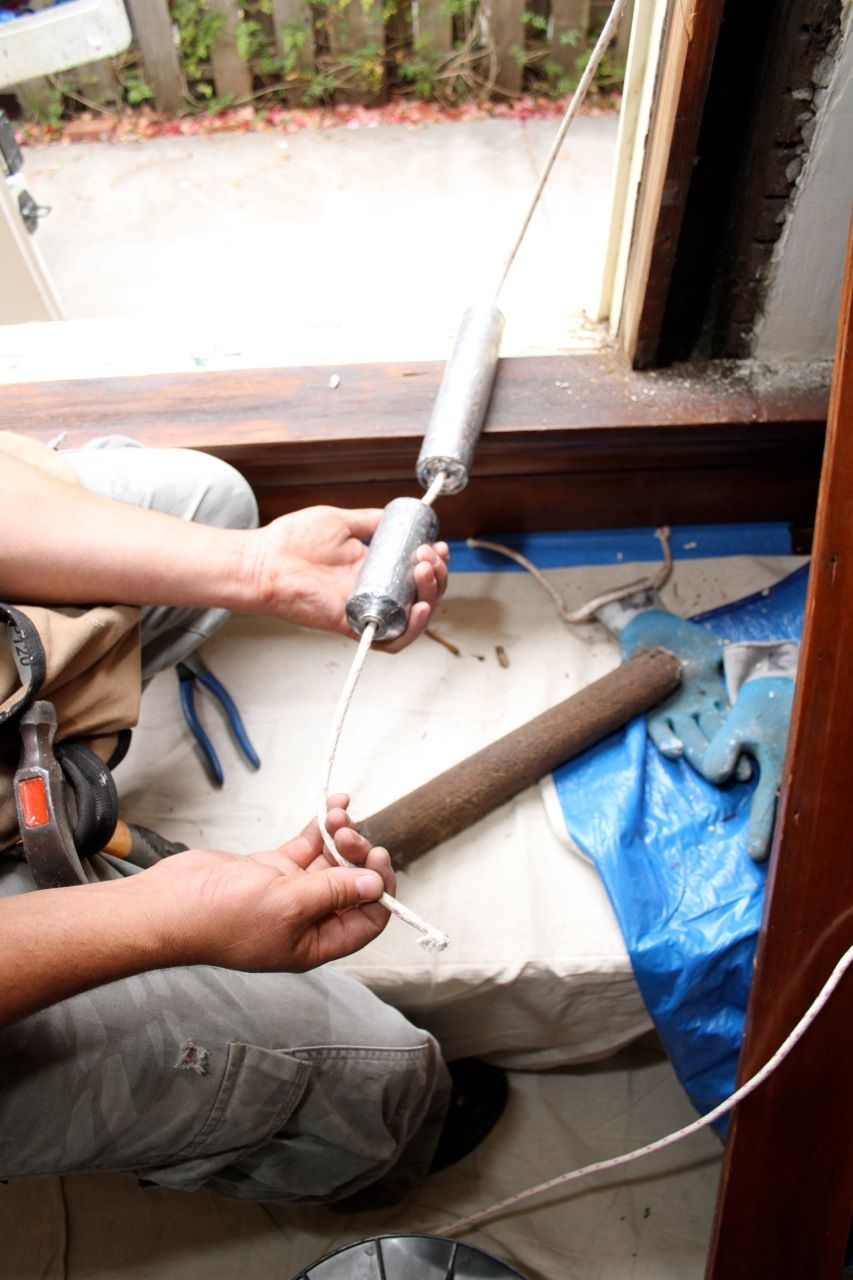
3. Today's sash weights come in varying sizes, so you can combine them to approximate the weight of the sash. In the old days, oversized weights often lead to sashes that slammed into place--or jammed.
-
4. Sash cords should be long enough to knot at both ends--one knot around the sash weight, the other inserted into the side of the sash--yet short enough to keep the weight from touching the bottom of the cavity. Weights that hit bottom can jam.
-
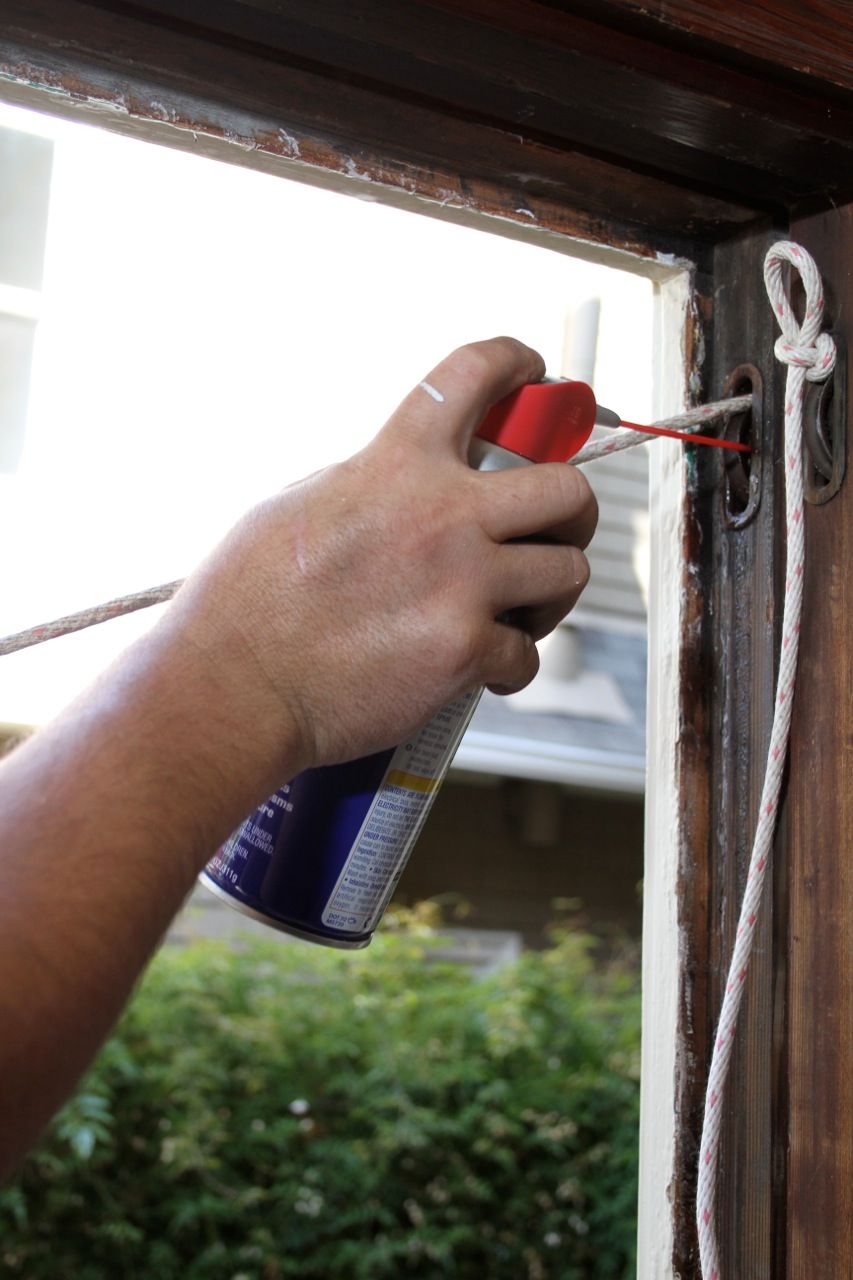
5. Before reattaching sash cords, lubricate pulley wheels so they won't squeal.
-
Renovation 4th Edition contains the collective wisdom of hundreds of master builders and tradespeople across North America.













View Comments
I'm glad that someone is writing about and putting a positive spin on restoring historic windows. I operate a window restoration business in the Tampa Bay area and communicate regularly with a bunch of other window business owners via social media. That's how I came across this article. We also use, and have recommended products from conservationtechnology.com, but we use them sparingly. I look forward to reading the next article. I must say though that while I am happy to see this topic in a positive light, I would much rather see a discussion of methods that an ordinary person could use, rather than hard to obtain products and methods that are impractical for a typical homeowner. For example, how to effectively restore windows one or two at a time without breaking the bank and with tools and products available to most everyone.
The majority of our customers are DIY homeowners and Window Restorationists. Our core product is the low heat, Speedheater Infrared (IR) Paint Remover, the only IR tool that is UL-listed. Their choice is because the low heat is safe for preventing glass breakage, heating the glazing for smooth removal, and softening the lead-based paint without releasing toxic lead fumes. The present sale price is $499 and includes scrapers. Most folks also pair the Kit with our Window Tools ($99) with the Rolling Chisel, Putty Scraper, and Boomerang Scraper with small rounded points for crevices.
Catherine Brooks
Eco-Strip LLC
eco-strip.com
Steve,
Id doesn't cost a fortune to refurbish a double hung window. If you participated in a workshop to go over a typical rehab, it should take about six hours to take apart a window set, install weather stripping and reinstall the sash and stops. That would include re-stringing both sashes. The materials cost would be negligable, less than $20.00. All you need is a router, slot cuttter, about 20 feet of vinyl weather stripping and a shank of sash cord. And the knowledge of how to use them of course.
If you put in the extra time to do a full restoration, you need to add about 20 hours to the total. If you have the time, you have the savings.
Guys, you might be interested in checking out fine luxury homes by Brejnik Fine Homes (www.brejnik.ca). They build fine luxury houses. Brejnik team consists of qualified and trusted: Architects, Interior Designers, Appraisers / Lenders, Trades & Suppliers, Geo-technical engineers, Structural Engineers, Arborists, Landscape Architects, Pool & Water Feature Specialists.
Nice idea would be to create a detailed manual on repairing/constructing a proper wooden double hung window with a list of resources. Or a compilation of all your articles regarding this subject. Keep up the fine work. You're in a class by itself.
If you have a installed in complex and you want to have good ventilation, make double hung windows your first choice. They offer good ventilation. It is best idea to installed double hung windows.
Read More : http://thermo-bilt-windows.com/
You share great piece of information about refurbishing old double hung windows. SRS HARDWARE company also providing brass window hardware products,Which is made of cast material.
You share great piece of information about refurbishing old double hung windows. SRS HARDWARE company also providing brass window hardware products,Which is made up of cast iron material.