Water Heaters: Tank or Tankless?
Learn how tank and tankless water heaters work, how to choose and size one to suit your needs, and how to save money and energy in the process
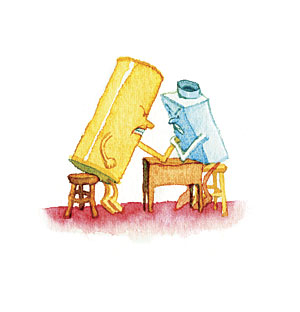
According to the U.S. Department of energy, water heaters consume 14% to 25% of a home’s annual energy use. with whirlpool tubs, multiple showerheads, and dual dishwashers on the fast track to becoming standard features in today’s homes, those percentages are likely on the conservative side. But even in the most-modest homes, heating water is a constant assault on your wallet. Choosing the best water heater for your home has become more challenging in recent years as new designs have swept the industry and rising energy costs have raised consumers’ eyebrows. in spite of the promise of the high-tech water heaters of the future, most folks in need of a water heater today still find themselves facing the same decision: tank or tankless?
Unfortunately for consumers, that choice is not easy to make. Costs and efficiencies vary widely, and the least-expensive water heater might be the one that puts the biggest drain on your savings account over time. Here are some answers to common questions about the differences between tank and tankless water heaters, including information about how each type works and how to size one accurately to meet your needs.

Q: Why shouldn’t I buy the least-expensive water heater available?
A: Everyone wants a bargain, but purchase price is only a portion of the money you’ll invest in a water heater. life-cycle costs include installation, operation, maintenance, and eventually replacement of your water heater.
Most important, you’re going to spend more money on the fuel consumed by your new water heater than on anything else. fuel type and efficiency should be weighed carefully. Common fuels for water heaters include electricity, gas, and oil. fuel costs and availability vary, so it is a good idea to check prices in your area before making a purchase. with these costs in mind, you can choose the most cost-effective model.
TANK: Low Up-Front Costs, Straightforward to Install
HOW IT WORKS The burner (or heating element in electric models) in a tank-style water heater is controlled by a thermostat. When the water stored in the tank falls below a set temperature, the burner fires. When a hot-water valve is opened at a fixture, water is drawn from the top of the tank and is replaced at the bottom of the tank with cold incoming water through the dip tube. Insulation minimizes standby heat loss, and an anode rod prevents corrosion of the tank.
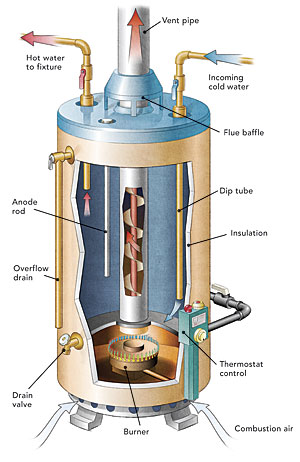
The most common type of water heater in homes today, tank-style models keep hot water ready for use in 30- to 120-gal. storage tanks. Fuels include electricity, gas, and oil, but tank-style water heaters also can be paired with solar power, heat-pump desuperheaters, and other hybrid arrangements.
Properly sized, a tank-style water heater can supply plenty of hot water even for a large family. If the tank is too small, hot water is depleted quickly. If the tank is too large, energy is wasted maintaining the temperature of unneeded hot water. In fact, standby heat loss is the greatest drawback of tank-style heaters. If hot water is used only for taking a couple of showers in the morning and for washing dishes at night, a lot of energy is wasted keeping water hot while you’re at work or sleeping. For this reason, tank-style water heaters must be well insulated. Fortunately, mandatory insulation requirements have reduced standby heat loss considerably. You can increase a tank’s performance by adding an external insulating jacket.
Pros
• Lowest up-front costs
• Easiest installation and replacement
• Some models don’t require electricity to operate
• Uses a wide variety of available fuels
• Can be located anywhere in a home
• Works well with recirculating systems
Cons
• Standby heat loss
• Can run out of hot water
• Tanks are large and heavy
• Higher life-cycle costs
• Temperature control might not be precise

Q: Will switching to a tankless water heater really save 50% on my utility bills as some manufacturers’ advertising suggests?
A: You might save, but likely not 50%. Let’s say your existing tankstyle water heater and the tankless model you’re considering both have an 82% operating efficiency. When their burners are on and heating water, there’s no difference in fuel consumption. The savings come into play when the burners are not operating. Your tank-style water heater has two drawbacks. Unless it is electric, it vents into the chimney, where there’s a constant draft drawing wasted heat up the flue. Although the tank is insulated, there is a small but constant amount of heat loss to the surrounding air. These factors can lower the overall efficiency, or energy factor, around 19%, which is likely how much you can save by switching to a tankless water heater.
TANKLESS: Continuous Hot Water with Long-term Savings
HOW IT WORKS Tankless water heaters (also called flash or instant water heaters) turn cold water hot almost as quickly as it can flow through the unit. When a hot-water valve is opened at a fixture and water begins to flow through the heater, the flow sensor fires the burner (or heating element in electric models). Water lines coil around the heat exchanger, heating water to the desired temperature. When the valve is closed, the flow sensor turns off the burner.
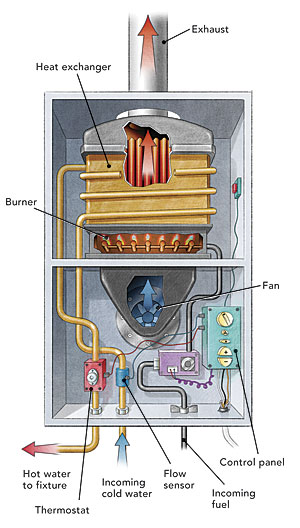
Tankless or on-demand water heaters don’t keep a supply of hot water on hand; they heat water only as needed. Tankless models used as a home’s primary hot-water source typically are fueled by gas, but some electric models are available. although they minimize standby heat loss and consume less energy than tank-style models, tankless water heaters have drawbacks of their own.
On the one hand, they require a specific demand for hot water before they turn on (at least 1/2 gal. per minute), which makes them tricky to use with low-volume recirculating systems. On the other hand, too much demand for hot water at one time (two or more people showering at once, for example) can test a tankless heater’s capacity. The temperature of incoming water can affect the heater’s performance and must be considered when choosing the right size. also, endless hot water can be abused, diminishing or eliminating energy savings. Finally, retrofitting a tankless water heater can be an expensive proposition.
Pros
• Lower life-cycle costs
• Endless hot water
• Runs only when needed, offering the potential to save energy
• Accurate temperature control
• Small and space-saving; typically wall-hung
Cons
• Higher up-front costs
• Complicated installation; larger fuel lines often required
• Electricity required for most models to operate
• Untreated water can lead to scaling and reduce or halt flow
• Can suffer freeze damage if improperly installed
• Minimum hot-water flow required
• Recirculation is more difficult, with potential to compromise warranty
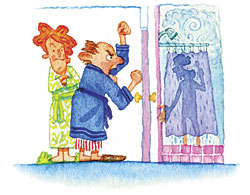
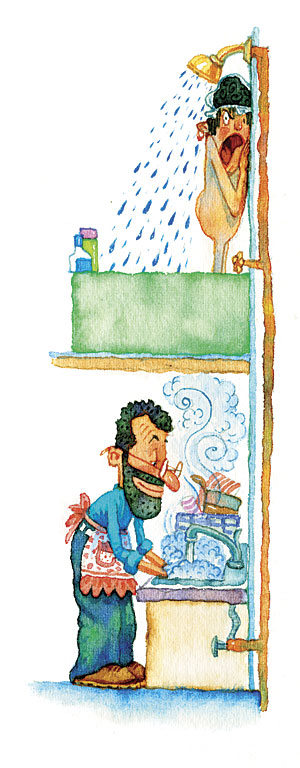
Q: Our teenagers stay in the shower until there’s no hot water left for my husband and me. What can we do?
A: You can install a tankless water heater and never run out of hot water again. But endless hot water comes at a cost. Once there’s no more concern about running out of hot water, your teenagers probably will stay in the shower longer. You, too, might linger. the increased usage might not be noticeable until your utility bill arrives and the savings you expected are nowhere to be found. in fact, i’ve seen bills increase for just this reason.
What’s a Btu anyway?
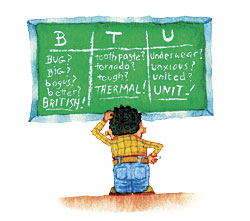
A British thermal unit is the quantity of energy necessary to raise the temperature of 1 lb. of water by 1°f. gas- and oil-fired water heaters provide Btu-per-hour ratings. for electric water heaters, multiply the watt rating by 3.4128 to get the equivalent Btu input per hour.
Ratings to Consider: Operating Efficiency and the Energy Factor
Once you decide whether to install a tank-style or a tankless water heater, you’ll need to choose a model. Beyond the operating efficiency and the energy factor (sidebar right), you should consider tank capacity and recovery rate for tank-style water heaters, and flow rates and Btu input for tankless models. a tank-style heater’s recovery rate is the amount of hot water it can produce in one hour (raising water temperature 90°F in these examples). Add the tank capacity to the recovery rate, and you get the first hour rating, or the amount of hot water available in the morning when the entire family is getting ready to face the day. For a tankless water heater, the Btu input determines the maximum flow rate. But remember, manufacturers tend to base flow rates on ideal conditions, and it is a good idea to determine the specific condition for your situation before choosing a tankless model. Here are some examples of what’s available in each style.
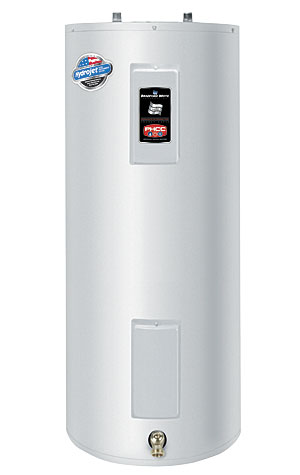
Fuel: electric, 4500w
Tank capacity: 50 gal.
Recovery rate: 21 gph at 90°F
Operating efficiency: 100%
Energy factor: 0.90
Venting: N/ACourtesy of the manufacturer
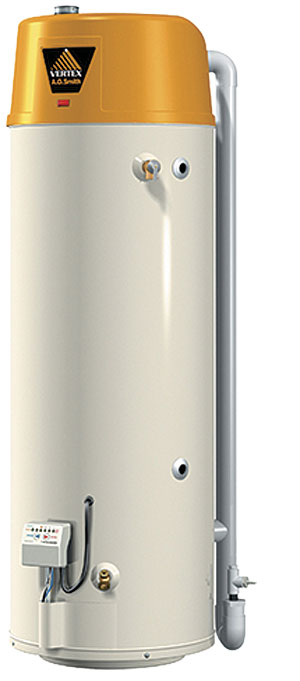
Fuel: natural gas, 76,000 Btu
Tank capacity: 50 gal.
Recovery rate: 92 gph at 90°F
Operating efficiency: 90%
Energy factor: 0.80
Venting: power ventCourtesy of the manufacturer
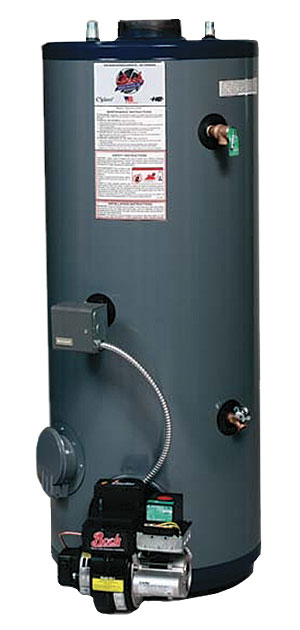
Fuel: oil, 104,000 Btu
Tank capacity: 32 gal.
Recovery rate: 114 gph at 90°F
Operating efficiency: 80%
Energy factor: 0.66
Venting: atmosphericCourtesy of the manufacturer
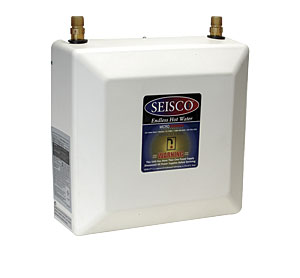
Fuel: electric, 95,564 Btu
Maximum flow: 3.8 gpm (50°F rise)
Operating efficiency: 99.3%
Energy factor: not rated
Venting: N/ACourtesy of the manufacturer
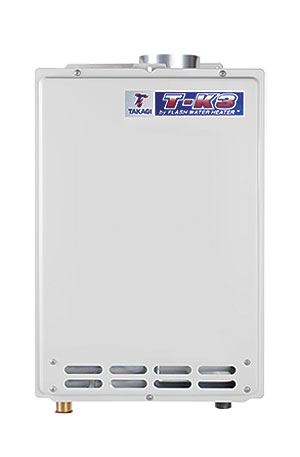
Fuel: natural gas/liquid propane, 11,000 to 199,000 Btu
Maximum flow: 7 gpm (60°F rise)
Operating efficiency: 83% (ng), 85% (lp)
Energy factor: 0.86
Venting: indirect/direct (or outdoor installation)Courtesy of the manufacturer
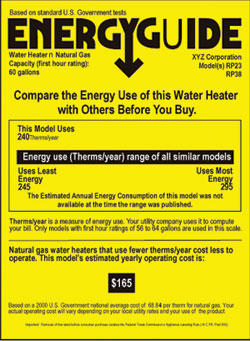
When you set out shopping for a water heater, you might be overwhelmed by the amount of statistics manufacturers provide for each model. Found on all water heaters, the Energyguide is a quick way to compare two like models, but it isn’t as valuable when comparing tank to tankless, or two different fuel types. If you’re interested in energy efficiency, it is important to look for and understand two numbers: operating efficiency and energy factor.
Operating efficiency, sometimes called thermal efficiency, is the percentage of energy that a water heater turns directly into hot water. any energy loss during operation (when the burner or heating element is on) lowers this percentage. a more important figure is the energy factor: the water heater’s average efficiency over a 24-hour period, which incorporates all types of energy loss. This number is expressed as a decimal but translates directly into a percentage for comparison’s sake.
Although manufacturers provide these ratings, they are often buried deep in the product literature. They’re both worth digging for, as one can be misleading without the other, particularly for tank-style water heaters.
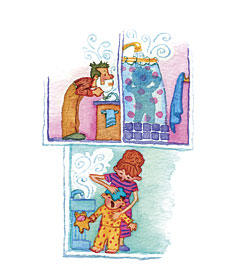
Q: Our tankless water heater works great, except in the morning when we’re all getting ready and the water isn’t hot enough. What’s wrong?
A: Tankless heaters are often undersize. Here’s why. let’s assume that the coldest incoming water in your home is 40°f. to deliver 120°f water, your tankless heater has to raise the temperature 80°f; almost 667 Btu per gallon are needed to meet that goal. if your shower uses 2-1/2 gal. of hot water per minute, or 150 gal. per hour, your tankless water heater needs to have a net input of at least 100,050 Btu per hour. if the heater has an 82% operating efficiency, the gross input must be at least 122,000 Btu per hour for one shower at a time. as soon as another family member jumps in the shower or turns on the dishwasher, your hot shower turns warm. You need a bigger water heater.

Q: Can I save some money by installing a water heater myself?
A: If you’re handy, you can tackle the installation of a tank-style water heater, but i think tankless installations are best left to pros. for starters, it can be tricky to find an appropriate place to install a tankless water heater. they must be sidewall-mounted, which always requires penetrating the house and sometimes means drilling into concrete, block, or brick walls. a bunch of clearance concerns exist: exhaust must be kept a safe distance from doors and windows, air conditioners, outlets, gas meters, and snow, among other things. if this location is far from your existing water heater, you’ll need to calculate the size of cold- and hot-water lines to make sure there is enough flow to feed all the fixtures. if the lines end up undersize, performance will suffer. tankless water heaters require greater Btu input than tank-style heaters, so you’ll likely need larger fuel lines, too. add wiring to the list, and there’s a lot to do right. even if you feel confident despite all these concerns, most professionals offer a one-year warranty on labor and materials, which i think is well worth the cost of installation.
Size Matters: Get it Right, Do the Math
Below, you’ll find some guidelines for determining the right-size water heater for common situations. But really, there are no common situations, and determining the most appropriate size of tank or tankless water heater depends as much on personal habits as it does on flow rates. so we also included an example that shows why a small family ended up with cold showers.
Mom, Dad, and Junior have a 50-gal., gas-fired tank-style water heater with an operating efficiency of 82% and a 50,000-Btu input. Occasionally, they run out of hot water and want to know why. I explained that it requires 666.4 Btu to raise 1 gallon of water from 40°F to 120°F (the lowest common temperature for incoming water to the average temperature setting for a water heater). But before I get to the math, let’s look at the family’s hot-water usage habits.
Every morning, mom showers for eight minutes; Dad follows for 12 minutes; and Junior begins a 15-minute shower when Dad is midway through his. Dad then shaves with the faucet running hot water for three minutes during Junior’s shower. Let’s assume that showering consumes 2-1/2 gal. per minute (gpm), at 110°F, for a total of 35 minutes. That’s a 70°F temperature rise, or 1475.75 Btu per minute (88,545 Btu per hour). Divide by 666.4, and we determine that 2.19 gpm will need to come from the water heater for each shower. add 4-1/2 gal. for shaving, and the family needs a little over 81 gal. of hot water in 38 minutes.
Why do they occasionally run out of hot water? Their tank has 50 gal. of hot water on standby, but as soon as they start using hot water, they lose 5 gal. as incoming cold water mixes into the tank. When operating, their water heater can produce 1.25 gal. per minute: 50,000 Btu input x 0.82 operating efficiency = 41,000 net energy input ÷ 666.4 = 61.5 gph or 1.25 gpm. So they start with 45 gal stored, and the heater produces 471/2 gal. during their 38-minute showering time. That’s a total of 921/2 gal. available for their morning routine. If anyone stays in the shower for a few extra minutes or turns on the dishwasher, their hot water turns cold. To keep from running out of hot water with another tank-style water heater, it needs to have a larger tank capacity, a higher recovery rate, or both.
To size a tankless water heater for the family, we start with the peak per-minute hot-water demand. In the case of mom, Dad, and Junior, two overlapping showers consume 4.38 gpm of hot water: 4.38 x 666.4 Btu per gallon = 2918.83 Btu per minute or 175,130 Btu per hour. That’s net Btu. We divide by the operating efficiency (0.82) to get 213,573 minimum gross input to meet peak demand. Dad’s hot-water use while shaving can be ignored unless there are other concurrent uses, such as dish washing and/or clothes washing.
1-bath home for 1 or 2 people: a 30-gal. tank might work, but a 40-gal. tank-style water heater is less expensive to purchase. A tankless unit should have a 140,000-Btu input if the energy factor is 0.82 or greater.
2-bath home for 2 to 3 people: A 40- to 50-gal. tank should be sufficient, depending on lifestyle. Tankless models should have a 190,000-Btu input if the energy factor is 0.82 or greater.
3-bath home for 3 to 5 people: One 80-gal. tank-style water heater or two 50-gal. tanks with one dedicated to the master suite are the best option. Twin tankless water heaters located close to points of use might be the best value (one large tankless model for two baths, and one smaller unit for the third bath). However, one large tankless unit could also be sufficient (minimum 190,000-Btu input, if flow rates remain within boundaries).
Home with 4+ baths: A large-volume single tank (120 gal. or larger) is most likely needed to meet peak demand. Separate smaller water heaters assigned to individual or small groups of bathrooms, or a bank of tank or tankless water heaters, might be required. This would be treated more like a commercial application than a residential setting.

Q: Our neighbors have both a tank and a tankless water heater in their house. Is that wasteful?
A: Not necessarily. There are a few reasons to have both. the water heaters might serve different parts of the house. I’ve been known to install a tankless water heater to serve the master suite and a small tank-style water heater for the kids’ baths. This way, the kids can’t abuse “endless” hot water. Having two is not wasteful if the heaters are properly sized for the fixtures they serve. Adding a hot-water recirculation loop to a tank-style heater is easy. But adding a recirculation loop to a tankless model is more complicated, and doing so might void or shorten its warranty. this is another case where both types may be a smart solution.
Venting: A Life-and-Death Consideration
One advantage of an electric water heater is that it doesn’t require venting. This bonus comes at a cost, though, as electricity is typically the most-expensive energy. If you’re looking to save money by heating water with gas or oil, you need to vent exhaust outside the house. Both tank and tankless water heaters can be vented safely a few different ways. Keep in mind that carbon monoxide is a killer, and you must do more than just read this sidebar. Follow manufacturer instructions and all codes. If you have any questions about venting, consult a professional.
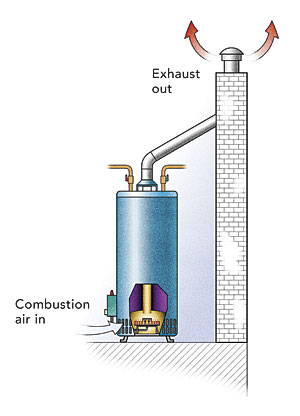
If your house has a chimney, most tank-style water heaters can be vented atmospherically, which simply means that combustion gases go up the chimney unassisted. Combustion air is drawn from inside the house, and exhaust is vented from the water heater through galvanized pipes into the chimney.
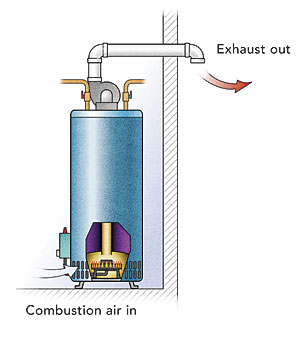
Power venting is done through a sidewall for both tank and tankless water heaters. Because the horizontal exhaust pipes do not create a natural draft, power-vented water heaters use a small electric blower to exhaust combustion by-products forcibly. Combustion air is still drawn from inside the home.
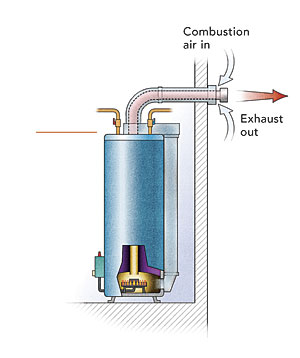
If you live in a tight house with controlled ventilation, you might not want to draw combustion air from inside. Direct venting is an option. Pipes for incoming combustion air and outgoing exhaust are incorporated into one system that penetrates a sidewall or a roof.
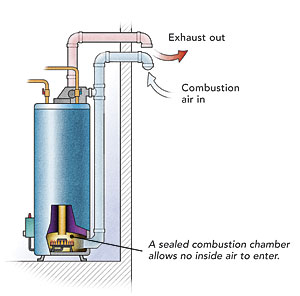
A setup similar to direct venting, sealed combustion is an option in situations where the water heater might be installed near flammable or corrosive products. A sealed chamber eliminates the chance of any inside air being drawn into the water heater in this system.
Q: It sounds as if you’re leading us toward choosing a tankless water heater. Is a tank-style water heater ever a better choice?
A: I like tankless water heaters; they’re energy-efficient and can save money. But they’re not always the best choice. For starters, high purchase and installation costs are sometimes unaffordable, especially if you won’t live in the house long enough to realize the savings. Tankless water heaters also have usage problems that some folks can’t get used to, particularly the “cold-water slug.” This bubble of cold water can surprise you when you’re running hot water at a low flow rate (usually under 3/4 gal. per minute—when rinsing dishes, for example). Finally, almost all tankless water heaters require electricity to operate. You might prefer the assurance of having a large tank of hot water on hand during a power outage.
Manufacturers
American (Gas and electric; tank)
A. O. Smith (Gas and electric; tank and tankless)
Bock (Gas and oil; tank)
Bosch (Gas and electric; tankless)
Bradford White (Gas, oil, and electric; tank and tankless)
Noritz (Gas; tankless)
Paloma (Gas; tankless)
Rheem (Gas and electric; tank and tankless)
Rinnai (Gas; tankless)
Seisco (Electric; tankless)
Takagi (Gas; tankless)
U.S. Craftmaster (Gas and electric; tank)
Dave Yates owns and operates F.W. Behler Inc., a mechanical-contracting firm in York, Pa. Technical drawings by John Hartman; illustrations by Jackie Rogers.