Q:
I’d like to swap an electric tank-style water heater in favor of a gas-fired tankless model. I use propane for cooking, but I suspect that adding a water heater to my gas system will require a larger propane tank. I don’t want to look at a big white cylinder in the side yard every day. Can I safely bury a propane tank?
Ernie Clark, Potomac, MT
A:
James Saladin of Ferrell Gas in Overland Park, Kan., replies: Yes, you can safely bury a propane tank. Underground propane tanks have been used for decades and have a proven safety record. While parts of the process can be tackled by a do-it-yourselfer (excavation, purchase of fill, backfill, and landscaping), other parts of the process should be managed only by a professional (tank installation, cathodic protection, gas piping, safety check, and placing the system into service).
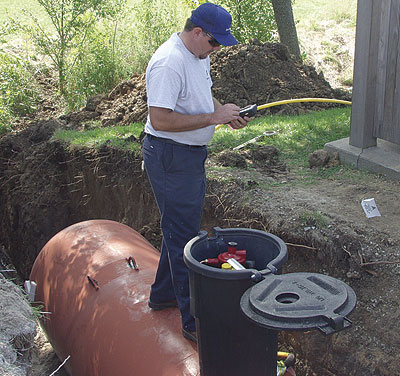
Underground tanks typically installed at residences range from 120 gal. to 1000 gal., with the most common being 500 gal. National codes dictate distance requirements from buildings to the tank. Tanks must be installed 10 ft. from any building, property line, or potential ignition source (such as an air-conditioning unit). They also shouldn’t be farther than 100 ft. from a driveway or access road so that the delivery truck’s hose can reach.
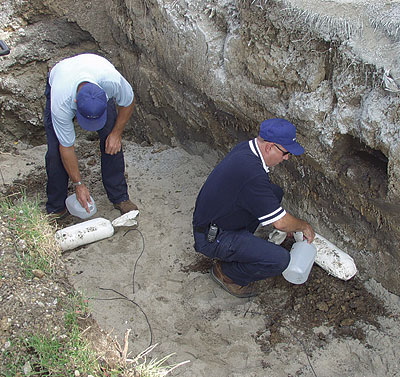
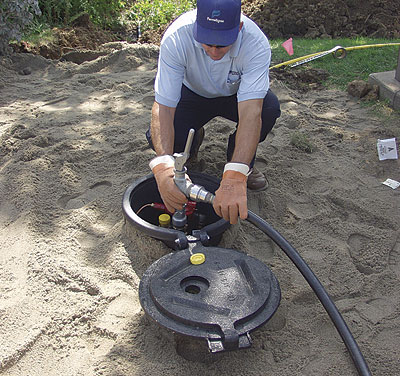
To bury a 500-gal. tank, you need a hole approximately 5 ft. deep, 5 ft. wide, and 12 ft. long. The tank should be bedded in sand for drainage and backfilled with sand or clean fill to prevent damage to the tank coating from rocks and debris. The upper few inches of the dome should be exposed to allow service access to valves and regulators. Slope the ground away from the dome to keep water out of it. Landscaping can be done around the tank to hide this area even further; just make sure to leave a clear path for delivery people.
In addition to special coatings that help to prevent corrosion, all underground tanks need to be installed with cathodic protection. Typically, sacrificial anodes (magnesium or zinc ingots encased in bags of special material) are attached to the tank. The metal in the anodes wastes away, preventing the steel tank from corroding. Periodic testing will show if the anodes are protecting the tank properly. They ought to last 50 years and can be replaced.
Work closely with your propane dealer to find the best location for your tank. Choose a propane dealer with a proven track record and an excellent reputation for safety. Specifically, ask about training, insurance, and customer support because some smaller companies provide only a minimum standard for any of the three. To find a dealer near you, visit www.ferrellgas.com or www.usepropane.com.
Photos: Courtesy of Ferrell Gas