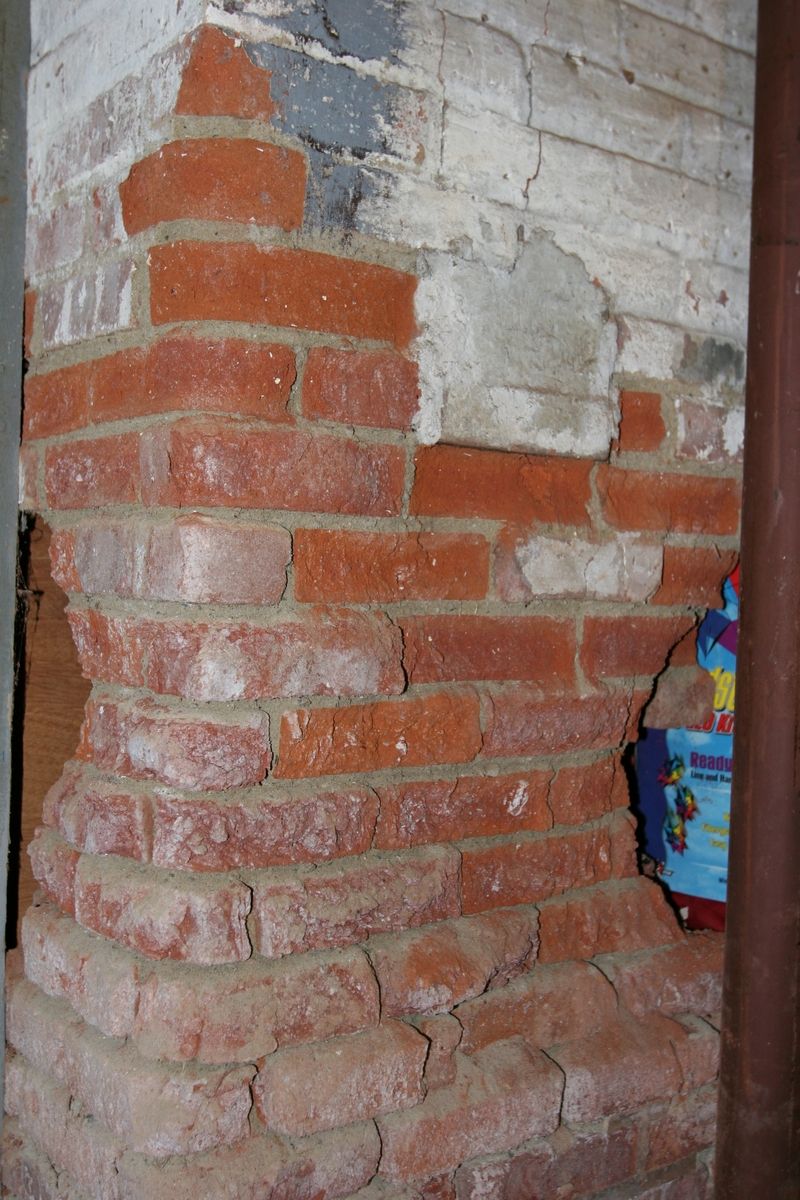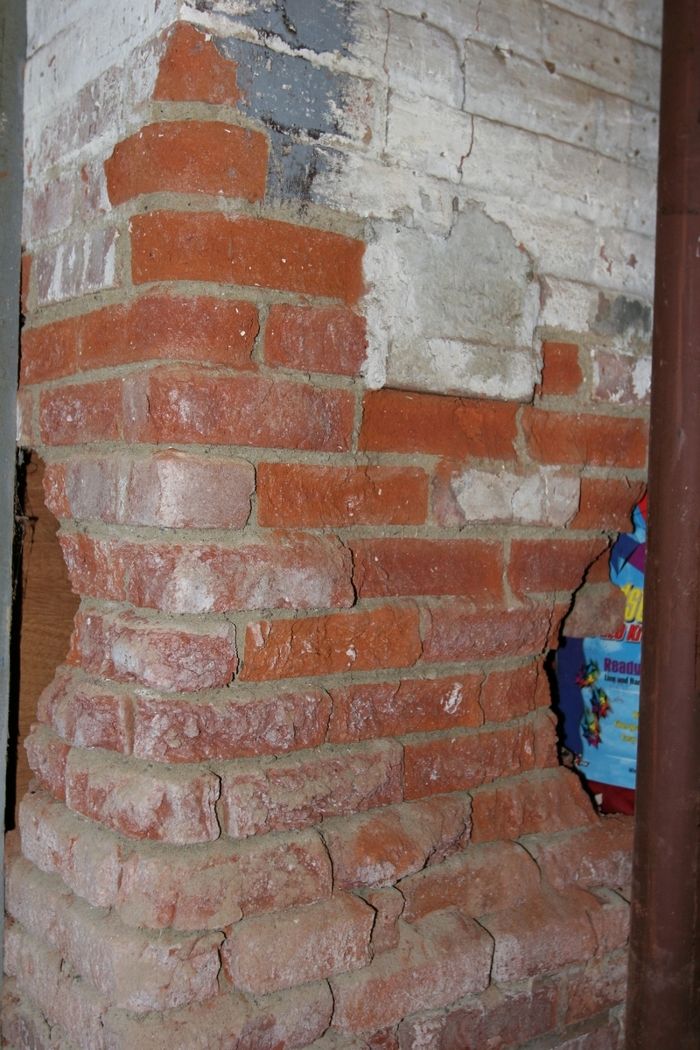
This photo shows a section about 3 ft. up from the ground of a brick column in the middle of the basement of my 1870s home.
The column is part of the base of an old chimney which was removed long ago. This section is all that’s left. It sits on a concrete floor and runs up to the bottoms of the floor joists. It looks as if at one time it supported a girder that catches the floor joists at midspan. But lolly columns carry that load now so the brick doesn’t seem to be doing any structural work.
I could remove it, but first I’d like to understand what’s causing the brick to deteriorate. The basement is damp so I definitely need to address moisture issues around the foundation walls. But this section of brick is in the middle of the footprint of the house so it’s not getting wet at all.
I posted this photo on GreenBuildingAdvisor.com hoping to get an answer to the mysterious question: What’s causing this brick to deteriorate?
Thanks to Michael Maines, Robert Riversong, Michael Chandler, James Morgan, and GBA I have my answer.
It turns out that this is the result of something called ‘rising damp’. The brick is wicking moisture from below and dissolving minerals in the masonry. As these folks pointed out, using a lime-based whitewash or thicker parge coat as a sacrificial coating is one way to protect the brick.
At this point I’ll probably just remove this section…eventually.
For a more in-depth answer, be sure to visit our friends at Green Building Advisor.
-
This photo shows a section about 3 ft. up from the ground of a brick column in the middle of the basement of my 1870s home.
-
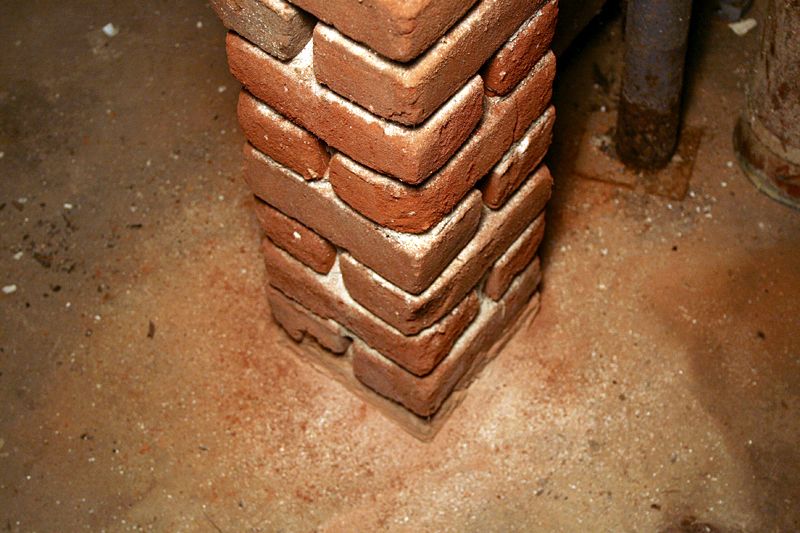
Yet another example of disappearing brick. Notice the piles of red dust at the base of this column.