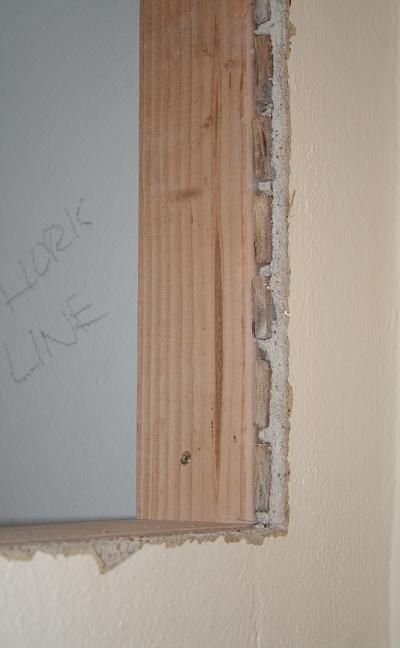
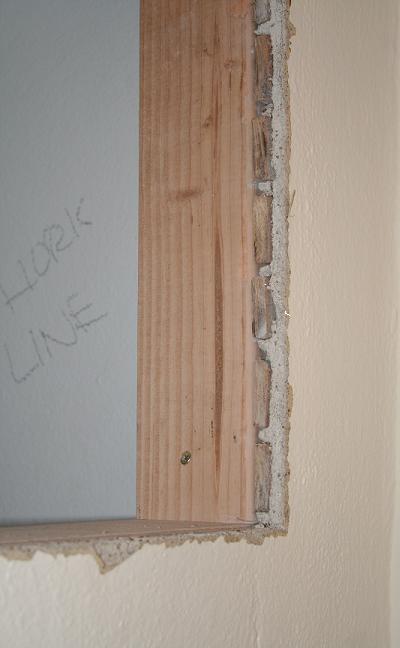
As a remodeler nearly all of our work is in homes that have lath and plaster walls and the biggest challenge is making new openings in old lath and plaster walls. Unlike sheetrock, plaster cannot be scored and snapped along neat lines. As any remodeler who works on old homes knows, vibration and shock are the biggest enemy of lath and plaster walls. We’ve tried many methods over the years but by far the best method is to use a Fein Tool with a spent wood blade, preferably a fine toothed blade. The speed of the tool should be set at its’ highest setting. This cutting method reduces dust and prevents the surrounding plaster from cracking and fissuring. The result is a very clean, unfractured cut line. After the perimeter cut lines have been finished down to the lath. The plaster can either be lifted off the lath in a single piece or using a 12 oz. finish hammer, lightly tap over the surface, fracturing it into smaller pieces that can then be lifted of the lath. The force of the tapping should be such that the lath below is not dislodged from the surrounding finished lath and plaster assembly. Once the plaster has been removed, the lath below the opening can be cut out with a new course or fine toothed blade. Although this is probably more time consuming than simply bashing a hole and letting the taper fix up the edges and the painter match the color, we have found that the time spent on this process outweighs the expense of other trades time and materials. Further, we’ve maximized the life and usefulness of the very expensive Fein Tool blades.












View Comments
This is a great solution. I do it all the time as well with the same type of equipment. If you need a clean line through lath and plaster the Fein Multimaster is the way to go.