Can McMansions Help Solve Our Housing Crisis?
“Moderation is a fatal thing. Nothing succeeds like excess.”
–Oscar Wilde
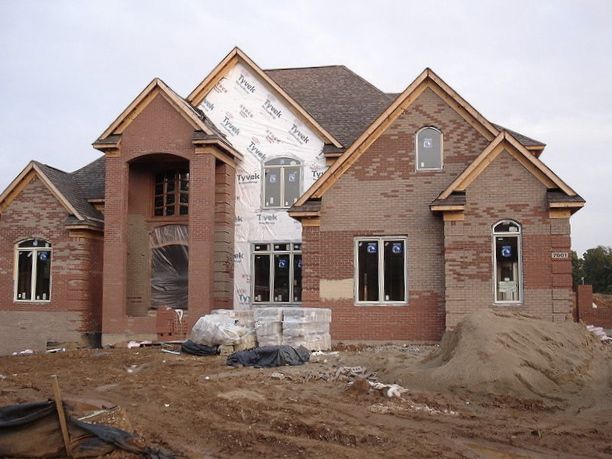
Poor McM’s. They were the source of such ownerly pride when HOUSING with a big H was in flower, and now you can’t give them away. Very likely, there is a disproportionate number of Big Boxes among the 18.8 million housing units now standing empty. And among green-thinking folks, let us admit, there is more than a whiff of “I told you so.”
But now that so many sit empty, what should we do-raze them? In a time of stubbornly high rents and massive homelessness, that would be even more wasteful than building them in the first place. As a retired contractor buddy of mine puts it, “There is no housing shortage in America; what we have is a housing distribution problem.”
Carve out a second home
So here’s what I’d propose as one element of a national housing solution. When buildings beyond a certain size come up for sale-especially foreclosed or distressed sales-allow the new owners to create a second unit.
The trigger size for such a contingency could be tailored to each city or region but let’s say, for sake of argument, any house larger than 2500 sq.ft. A house that size would allow a new owner to carve out a primary residence of 1750 sq.ft. and a 750-sq.ft. second unit-the maximum in-law footprint in many towns. (To those who say that a primary residence of 1750 sq.ft. is too small: In 1950 , the average single-family home for 3.4 people was roughly 1100 sq.ft.)
Three reasons to believe
My suggestion is going to drive a lot of people nuts, especially stringent zoning adherents, but properly done, second units could do a whole lot of good.
First, in-laws are one way to provide affordable housing for many working people who are priced out of the towns they serve: teachers, firefighters, clerks and the like.
Second, creating a second dwelling is a great use of under-utilized properties. I don’t think I need to spell out the virtues of infill to regular Green Building Advisor readers. In short, a slightly greater density enables municipalities to more cost-effectively maintain their infrastructures.
Third, especially in hard-hit areas, the additional income from an in-law unit might make it possible for a buyer to afford a property-and thus help slow the decline of a neighborhood.
Liberals and libertarians in bed together?
I could list benefits till the cows come home. But blogs are best brief, so let me speak to a few objections that some of my more conservative friends sometimes raise.
“Riff-raff will move in and my property values will tank.” OK, then let’s do what many thoughtful communities have done: Require that owners live on the property if they’ve got an in-law unit. Live-in owners take care selecting tenants and keep up their property.
“I don’t want a backyard cottage looking into my yard.” If a lot is big enough, there are many ways to achieve privacy. But since we’re talking about houses with a lot of room, the municipality could stipulate that an in-law unit had to be within the existing footprint of the house-or contiguous to it. That would enable an owner to convert an attic or basement, or carve-out an in-law unit entirely within the house footprint. Or allow a modest bump-out. There are plenty of ways to make it work if there’s a will. Moreover, most of these in-law configurations are cost-effective because they require fewer materials than a stand-alone unit. In fact, one could make the case that creating an in-law unit is the greenest way to provide an additional dwelling unit.
“I don’t want my tax dollars, etc. etc.” This is perhaps the clincher in a time when cities and states are strapped for cash, yet must provide a certain number of affordable housing units. Because homeowners are paying for the remodel, they’re creating affordable housing without costing taxpayers a dime. Verily, it’s a situation where, politically anyhow, the lamb can lie down with the lion-and the libertarian with the liberal.
The whole enchilada
The final piece needed to encourage the creation of second units-reforming the patchwork of zoning codes-we’ll leave for a future blog. The AARP, for one, has done some ground-breaking research in this area because more enlightened zoning laws would be a great help to seniors who want to better use the equity in their homes-to stay in their homes, deal with medical bills and so on.
So what’s your take?
Create Your Own In-Law!
If you’re interested in second units, please check out my recent book, Outlaws and Granny Flats: Your Guide to Turning One House into Two Homes. The Library Journal named it one of the 10 Best Design Books for 2011. You can get an e-book version on Apple’s iTunes Store, or on the Taunton Press Store. You can also sample In-laws, Outlaws‘ lush color photos at www.cozydigz.com
If you will be renovating a home, there’s no better companion than Renovation 4th Edition, (November, 2012). Its 614 pages, 1,000 photos and 250 detailed illustrations cover home renovation from start to finish and contains lifetimes of practical, field-tested techniques that professional builders shared with me over a 40-year period.
© Michael Litchfield 2012
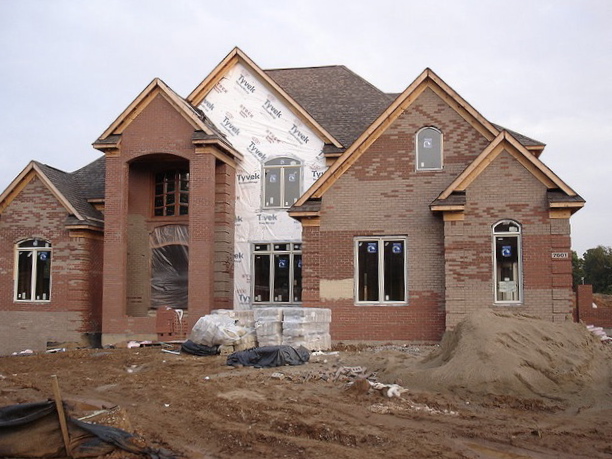
Will there be a second act for McMansions?









View Comments
I guess I thought that every homeowner always had the option to divide off part of their own home as a rented room or in-law suite. I mean, people have been doing it for centuries. Until the mid-50's it was very common for homeowners to rent rooms to bachelors and bachelorettes of the town (hence the term "bachelor apartment" AKA "efficiency").
I think you have a good idea with great implications, namely the reversal of the nuclear family back to the extended family living situation that is all but lost from our society (when I growing up in the 80's people people who lived with their grandparents were considered freaks and weirdos). But now with so many jobless young adults moving back in with their parents and retirement communities that are filling up fast, the consideration of a dedicated separated living unit within a home begins to make sense again.
However, the actual probability of such a plan becoming the norm is slim to none. As I said, homeowners already have the ability to have live-in guests and (with some permitting) can construct dedicated space to rent. But they don't. It will be a long time coming to change the current American notion towards "private homeownership" with that "private" being the focus.
I would rather see a swing away from the popular idea of buying new speculative homes to existing home customization and renovation. That was the evil behind mcmansions anyway right? Their lifelessness. The large size and cookie cutter design combined with a lack of design sense and muddled period details led designers to hate the idea of them and owners to hate the feel of them. I look to designers/authors like Sarah Susanka for finally making an impact towards the idea that bigger isn't always better when it comes making a house a home.
As an aside, for awhile now I have touted the proposal to legislate that LEED certification be mandatory and additionally to make all new buildings supply a minimal 10% of their own electricity and further to mandate all building contractors to be degreed instead of licenced (as in have an actual Master of Buiding to be considered a Master Builder). With the glut of homes on the market, such plans would cause builidng prices to rise again by making the act of building construction to be more expensive thus more valuable. Say if the cost of a constructing a new home doubled then the value of an existing home would raise by 25% or more. Also while the idea of forcing building owners to provide some of their own energy could cause the cost of electricity to rise, it could stimulate the alternative energy market enough to actually lower the price of those products, while at the same time growing the "green" market that seems to be booming in America and providing new (US based) manufacturing positions.
That's just my idea though. Of course, Libertarians hate it.
DC
Adding a granny flat to McMs is reminiscent of stately urban homes being converted into MF housing during periods of decline like Haight-Ashbury in the '60s, many areas of DC, Baltimore, [Add your city here.] Planners may clarify the chicken-first/egg-first question.
A big non-green issue here is transportation. Many McMs if not most are built on multi-acre lots at a good distance from the service infrastructure.
Maybe we have an opportunity to convert empty big boxes (marts, theaters, showrooms, etc,) into urban MF projects, dormitories, and barracks instead of churches for a change.
Mike,
I recently did some concept planning for a client that featured an In-Law Apartment above the garage. Turns out the city zoning ordinance would not allow it. My own little town also does not allow In-Law apartments. They consider it a "multi-family" dwelling which is not allowed in a single family district. Aargh!
Looks like we need to work on zoning ordinances.
I think Mike has a lot of good ideas here. Many of these places look like they were condos when they were built. Plenty of room for two families. Plus the extra income would, in many cases, allow for property upkeep. Clearly things need to change. I especially like the idea that the homeowner would have to live on the property.
A lot of effort will be required to get many town building depts. to buy into this.
Tom Holland Mass
Love this idea. Sounds like there will need to be LOTS of work on the zoning side of things. Meanwhile, I already know people who are renting rooms in their large houses either because they need the money, or they know someone who needs a lower rent.
While folks are working on zoning, can we allow food stores and other businesses so that people don't have to use cars for basic supplies?
You _told us so_? That is rich and revisionist, Mr. Green-Minded.
Manipulations of the market _by our government_ to keep housing prices low (and employment high in the building trades) caused this glut and now your answer is: more government manipulations.
Well-intentioned folks thought they could get a free lunch by "tweaking the rules" so that more and more, poorer and poorer people could move into newly-built homes. Their good intentions, however, have now crashed around all of us.
Please remember that when you try to "tweak the rules" to encourage more greenness in building, energy markets, et cetera.
Markets aren't perfect; they're just smarter than _every other thing we've got_. Give people freedom and stop looking for a free lunch.
That said, I certainly favor ditching the zoning laws and replacing them with covenants. While we're at it, let's eliminate some of your green mandates (like low-flow showers).
Agreed: plenty of room in a typical McMansion-type home for a 2nd unit, if not 3 or more. One drawback, as already commented, most McMansions are built far out of the urban center and away from any form of mass transportation, so local suburban traffic would likely be adversely impacted.
Portland (OREGON) allows nearly all single-family dwellings within the jurisdiction to construct accessory dwelling units (ADUs) http://www.portlandonline.com/bds/index.cfm?c=36676 with the express goal of building up density. This is being encouraged by a current waiver of system development charges, which can save thousands in fees that would otherwise be paid to the city.
But while the codes are being revisited, how about provisions for other options such as co-housing, with shared common spaces, more mixed-use options (again, as already commented -- food co-ops, home-based business, alternative care facilities), and with enough options we may find it possible to drive our cars less to the big box malls.
I'm sorry, but this idea is so convoluted and complex it will never ever fly. Some people think this sort of idea demonstrates "out of the box" thinking - to me it simply ignores reality and applies faulty fallacy laden logic and ignore or brush aside so many complex social and economic factors. The potential incentives and benefits are fuzzy and seem only supported by green jargon.
We are learning that many of the people buying these foreclosed properties lead a trail right back to.... drum roll... Bank of America! Isn't that wonderful? Why don't we try and fix that part of things first.
Several years ago my family was changing. My mother had died and my dad was alone in the house that our family of five had grown up in. My grandmother, an aunt, my brother’s widow, my son, and I were all living alone in separate situations, miles apart. What a waste of space, and what a cost to do this. And some of us could have used a little close support too.
At the same time, down the street from where I was living then, there was an immigrant family with at least three generations, and maybe some cousins living in a large home. A McMansion by today’s definition. There was lots of activity, but no real problems. They were good people and with the means to live separately, but chose to live together. I think they did run into a zoning conflict, but resolved that.
Who’s the smarter or by today’s measure, who would be the greener?
A few years ago, I remember a bachelor doctor friend of mine telling about his mother from the East Coast visiting him for the first time. He picked her up at the airport late at night, and brought her to his new suburban monstrosity, stepping down into the two-story, sunken great room with doors to various rooms all around – she asked “which room is yours?”
Razing them really does not hurt my feelings. Typically these over-engineered maintenance nightmares are also sitting on 3-5 acres of land that the new home-owners used to keep mowed to 2" or less. I am a contractor but I grew up on a farm and realize the pride that the US used to have in its farms. So instead of enjoying the 500-600 bushels or corn or the 1000 pounds of beef that could be produced there, the homeowner spends thousands in lawn care that benefits no one. Since I am a Repair and Remodeling contractor, I find that these high end homes also have failures because of craftsmanship and design about every 3 years. Complexity made for many disconnects in these homes. I wish early on we as a nation would have taken Fannie Mae and Freddie Mac and had people trade down into homes they could afford. That would have solved 75-80% of the problem. That would have left us with just these homes as a problem. My final comment is that we have reached the crest here in the US like most of europe. We are a country that needs to change from expansion Ideology to sustainment.
The problem with changing status quo is that few if any policy makers are smart enough to predict the long term unintended consequences. That very issue is what got us here in the first place. Although your suggestion is great for the building industry, you are adding units to an already glutted market. The result will be lower house prices. ---That is very basic economics.
Right now, in our area (one of the most hardest hit in the country), guys are barely breaking even because of rock bottom pricing. Probably the suppliers and subs are heavily discounting just to stay working. We hit bottom about a year ago. Lower prices means these guys won't have a comeback and they'll add to the already high unemployment numbers.
You say "properly done." But I would argue "slippery slope." Once you start down a path, you eventually loose the policy QA/QC checks you originally had and everything spirals downward. ---You cannot make a law that cannot be modified...its called the Constitution....
Remember what caused this....lot's of folks "moved up" in housing to MCMs around the peak and when the market went bust, just walked away from their houses because there was little penalty. My take is that is best to leave the social motivations of buying a house (people eventually get sick of renting) and let the market come back on its own without any re-engineering of the motivations.
--My thinking comes social engineer "par excellence" Jack McGovern. He wrote lots of laws to change society, but when he retired from the US Senate, he realize those very laws stifled him. He eventually wrote an editorial denouncing the very laws he sponsored.
I think the premise of this book is on target, but zoning issues will hinder the development of this idea. Stabilizing falling property values puts something in it for all of us in the trades. How do we get zoning boards to be proactive?
Sure seems those very projects got us in big trouble... so much trouble many aren't ever to recover. Wish for homes folks can actually have a little equity in.
I've lived in single family dwellings from 800 sf to 3000 sf. My pleasure in living decreased as the size increased. If you are programmed by watching TV shows where the incomes of the characters are ridiculously mis-matched to their expensive houses, then you probably just cannot understand it, but big houses suck. They are chronic maintenance problems, require constant cleaning, and so take comfort and pleasure rather than give.
As my mom used to say when six of us were very happily living in a 960 sf house: GO OUTSIDE AND PLAY.
We currently live in that 3000 sf monstrosity. I am practically rebuilding it (it was built in the '80s, need I say more?) We have built an efficiency apartment in it and are currently renting it to an unemployed friend who is helping with the work. When the house is completed, we will probably move into the efficiency apartment, rent out the rest of the house, and retire with a modest income from that and our IRAs. Smaller is liberating.
Excellent article, Mike... thanks! A few things to consider:
Check out Galina Tachieva's excellent new book: Sprawl Repair Manual (http://amzn.to/daxHvL) It's chock-full of techniques (McMansion conversion is only one of many) for fixing the mess we've made with sprawl.
We're seeing a serious move towards smaller homes. The New Urban Guild hosts Project:SmartDwelling (http://bit.ly/4mD2Z1), which is all about building smaller, smarter, and more sustainably. You can't just wedge people into smaller spaces; they won't tolerate that most of the time. But if the smaller house is also smarter, so that it lives like a house much larger, then that's not only tolerable but can be desirable.
We saw the effect of that several years ago when a number of New Urban Guild members helped start the Katrina Cottages movement in the wake of Hurricane Katrina (www.katrinacottages.com). One of the designs was built for the 2006 IBS in Orlando, and it basically stole the show.
Many of the large homes build in the late 1800's and early 1900's in my area were turned into two and three family dwellings. I have notice lately that people are buying these and turning them into single family again. This makes the carpenter's world go around...also the McMansions keep us carpenters employed.......
Nice article and great ideas. However many towns' zoning laws don't permit in-law apartments since it changes the character of single-family neighborhoods in suburbia. While the increase in people density isn't a real issue given the SF of the house, the additional vehicles that ensues is problematic. Nothing kills the character of a neighborhood faster than numerous cars in front of a house. In areas where there are alleys or "hidden" parking spaces behind the structure (such as the more urban neighborhoods built in the early and mid 1900s), there would probably be less neighborhood resistance. The visual impact needs to be addressed to protect property values.
Can you please make the font darker than middle gray? This looks like an interesting article but medium grey text is hard to read. Thanks.
I agree, and it makes so much sense that we can expect much resistance from the local government and code folks. I expect that much of the resistance will be based on "tradition" rather than the facts of the case. Having delt with local code officials, they are not of the mind to look at the possibilities, rather only what is in place today. Some risky politicians may be engaged to support this, and that is what it will take to make it happen.
We recently read your insightful article and agree totally with your message. I'd like to suggest that all interested go straight to the book, A Pattern Language from Oxford Press, and especially chapters 153 through 157. Here you'll find excellent solutions to transition these modern *McMansions* into healthy, useful living spaces. Modifications include morphing these buildings into everything from multi-family homes to multi-generational living, work space, rentals etc.
I like this idea and feel that steamlining and standardizing zoning laws can only be a positive.
To those complaining about "government interference" manipulating the housing market...how would you feel about ending the mortgage interest tax deduction?
Having started this food fight I have been struggling mightily to stay out of it, but beer3's comment broke my reserve.
Yes, it really does depend on who's ox is getting gored. Those who bellow "gummint intrusion" the loudest are often those benefiting handsomely from it. Fact is, zoning regs are created by people (aka government) and people can damned well change them when they become onerous. Shortly, in the new year, I will write a blog encapsulating efforts to change zoning re second units--there have been some mighty battles and signal successes. BTW, I am not against zoning per se, but many of the zoning regs governing second units are as foolish, futile and intrusive as Prohibition was in the 1920s and 1930s...and we know how that turned out.
If there are compelling reasons to create second units and ossified laws trying to stop them, guess which side will prevail. One measure of how compelling in-law units are is the number of illegal ones. Hence the title of my new book (sorry, gotta eat) IN-LAWS, OUTLAWS, AND GRANNY FLATS, which Taunton will publish this March.
So thanks one and all and keep the fur flying. I love reading all comments, even the ones that flay me. And BeerBeerBeer, I owe you a beer. A few months back I got into a terrible row (over beers) with tradesman who was complaining about "government intrusion" and my response wasn't as strong as it might have been. Now, thanks to you, I'll be ready next time around.
Stay tuned, amigos, and keep writing! --Mike
This book will do well. It's message is one I've wanted to be told since I left the real estate biz just as it started to tank. Parks, where I work now, are in just as much pain. There are scores of these empty McMs in greater NYC where I live, and as the fiscal crisis in NY and NJ passes adolescence, county execs are going to be your best customers.
If made legal I would look for one to accommodate my elderly in-laws in their golden years, while also allowing me to build to my liking. Such zoning changes might help rescue the fading significance of family.
Happy New Year!
As someone who has lived on both sides of the building permit counter I can appreciate the pro's and con's of secondary suites. In the early 90's the British Columbia government wrote a new section in our building codes regarding new and conversion secondary units. However it has been a slow process for local jurisdictions to allow them within their zoning bylaws. When done right with community input I believe it provides an excellent solution for a mortgage helper or allowing a relative to stay in their home or helping a son or daughter get on their feet. I do believe that the home owner should reside on the property whether in the principle home or secondary unit but again this may be difficult to regulate over the years.
Many people believe if they don’t allow it in writing then there will be no suites in their neighbourhood. This leads to many units being substandard in life safety measures and it is a difficult process to weed them out. Why not get everything out on the table and do it right particularly in new housing developments where parking and privacy issues can be easily incorporated into the subdivision and house design. One leader in increasing density is the City of Vancouver with their laneway housing Initiative http://vancouver.ca/commsvcs/lanewayhousing/index.htm
I look forward to reading your book!
Ken Kunka AScT, BCQ
Flywheel Building Solutions
http://www.flywheelbuildingsolutions.com
I'm sorry that communities weren't able to take action against the development of McMansions back while the boom was happening. My guess is that when the economy improves we will again see at least some proposals for these units in the future. I like the idea of allowing the existing units to be divided into two units but retrofiting to meet all of the access and fire safety requirements may end up being expensive. One other option would be to require that McMansions of the future be required to incorporate in the original plan, a design that would accomodate the future creation of a granny unit. This kind of a design requirement might include such things as a secondary entryway, any additional fire wall or sound insulation needed, separate plumbing lines, etc. Buyers might actually appreciate this in a new home as it allows for creative future uses.
As a librarian who did research for someone who was trying to argue that her house was legal for a second residence, I have one word for you: Parking. This California town is locally known for its McMansions and tiny bungalows turned property line to property line monsters are legion, but the city wasn't designed for multi-car households, if it was designed for cars at all.
Portland tried the "owner occupied" requirement for a while. The learned that it stifled ADU progress too much, so they bagged it.
Much buzz around bitcoin-miners.me
Press Release bitcoin-miners.me
Is it worth the money bitcoin-miners.me
bitcoin-miners.me is FANTASTIC
Is bitcoin-miners.me shipping now
Peremptory ASIC bitcoin mining ironmongery then you give confinement to meet up to the right survey .
Connections to bitcoin china ASIC market from made the figuring of the bitcoin miners acutely restraint .
Bitcoin miners made with locally toss together rational parts .
The bitcoin Miners are of greatly unreasonable calibre as you desire know.
http://bitcoin-miners.me
It's an interesting proposition and a great way for house owners to create a bit of extra storage space and some income! But I think that a number of home owners are going to want that big yard or even put in a swimming pool, so we'll just have to wait for time to tell whether this will work out..
Any updates on what happened with this case? It'd be interesting to know whether the owners eventually carved out more storage or living spaces for themselves and what happened after they decided….