Cutting into a Concrete Floor
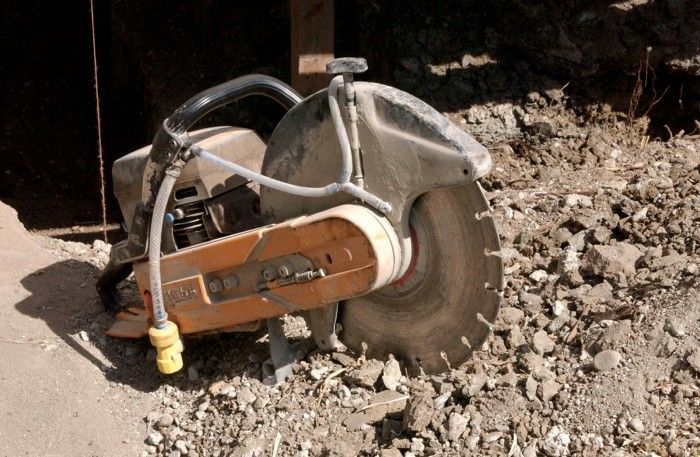
To enlarge an existing load-bearing pad or create one where none was, you may need to cut through a concrete floor. Depending on the condition and thickness of that floor, the job will range from nasty to horrible. Cutting concrete is noisy, dirty, and dangerous; and the tools are heavy and unpredictable. Wear safety glasses, gloves, hearing protectors, and a respirator mask. Adequate ventilation and lighting are a must.
If the floor was poured before the 1950s, you’ll likely find that it is only 3 in. or 4 in. thick and is without steel reinforcing. The floor may also be badly cracked. In this case, you can probably break through it with a sledge, and certainly with a jackhammer. To minimize floor patching later, however, rent an electric concrete-cutting saw with a diamond blade to score around the opening. Then finish the cut (the sawblade rarely cuts all the way through) with a hand sledge and a chisel.
Be advised, however, that an electric concrete-cutting saw cuts dry and thus throws up an extraordinary amount of dust. Therefore, you may need to seal off the basement with plastic barriers and then spend an hour vacuuming afterward. Alternatively, you can rent a gasoline-powered wet-cut saw, which keeps down the dust but fills the basement with exhaust fumes. And, if the concrete floor is a modern slab, 5 in. thick and reinforced with rebar, you can spend a day accomplishing very little. Well . . . you get the picture.
Fortunately, for a few hundred bucks you can hire a concrete-cutting subcontractor to cut out a pad opening in about an hour. (Don’t forget to allow for the thickness of the form boards when sizing the opening.) The subcontractor can also bore holes needed for drainpipes and such.
This blog is adapted from Renovation 4th Edition, which contains thousands of field-tested tips and techniques. Brand new from Taunton Press, Renovation 4th Edition‘s 614 pages include 250+ technical drawings and 1,000 photos selected from the 40,000 that I have taken over the years. I hope you find it useful. -Mike
© Michael Litchfield 2013
-
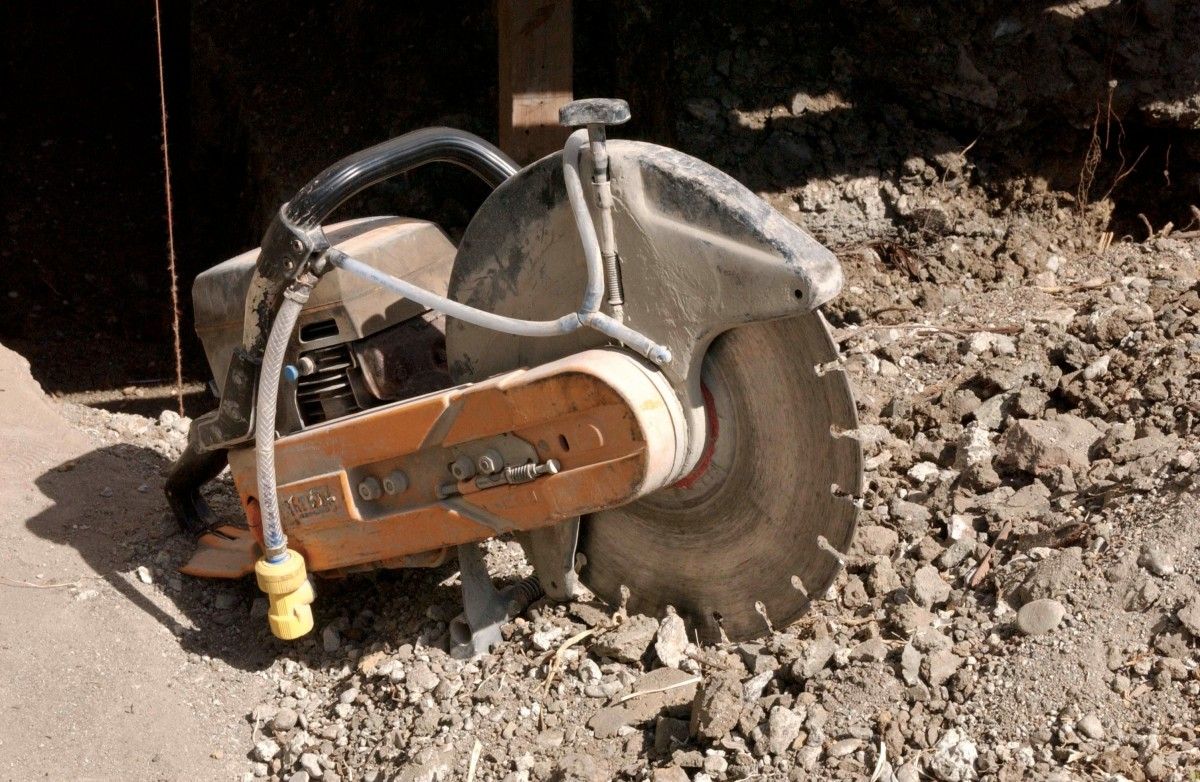
A gasoline-powered, wet-cut saw has a diamond blade and is connected to a water supply (via the yellow fitting), which reduces airborne dust when cutting concrete.
-
Renovation 4th Edition contains lifetimes of experience: thousands of field-tested tips and techniques that master builders across North America shared with Mike Litchfield, a founding editor of Fine Homebuilding.













View Comments
How dangerous is it to cut into concrete without a wet-cut saw? Is it just the breathing the dust that's unhealthy? I just can't imagine the water doing much to stop pieces of flying concrete. We might need to hire a professional for our remodeling this summer. Thiago | http://www.concretesawing.com/Home/
It's done all the time, usually with an old, beater circular saw and $45 diamond blade. But it is extraordinarily dusty, and silicosis is not fun. A wet saw probably eliminates more than 95% of the airborne dust.