Better basement insulation
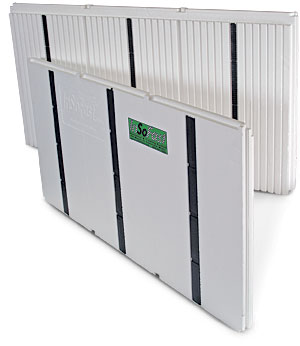
InSoFast insulation panels simplify the process of installing insulation
• Manufactured by InSoFast
• 888-501-7899; www.insofast.com
• Cost: $1.55 to $1.90 per sq. ft.
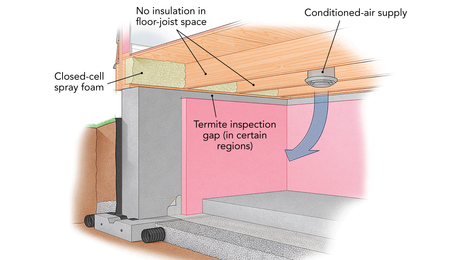
For a number of years, I’ve finished below-grade basements by installing sheets of 2-in.-thick foam on the walls, taping the joints to make the assembly airtight, then framing a stud wall on the inside to which I attached drywall. InSoFast speeds up and simplifies the process.
The back side of each 2-ft. by 4-ft. by 2-in.-thick expanded-polystyrene (EPS) panel has vertical channels for water drainage and horizontal channels so that you can snake electrical wiring after the panel is in place. The tongue-and-groove edges of each panel also interlock so that you can gang together whole wall sections flat on the floor, tilt them into place, and adhere them to the foundation walls with foam-board adhesive. Paperless drywall is then attached directly to the integral fastening strips; there’s no need to frame a stud wall. The result is a 21.2-in.-thick wall insulated to R-10.
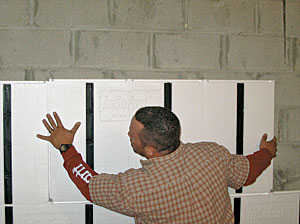
The system relies on fairly plumb and flat foundation walls, but bulges and uneven spots up to 1.2 in. can be accommodated by carving out the back of the panels or by filling voids with expanding foam after panels are erected. However, bulk-water problems should be addressed before installation.
InSoFast panels also can be used to insulate concrete slabs beneath a flooring system. Subfloor sheets can be laid atop the panels and screwed into the fastening strips to create a floating insulated base for carpet, wood, or laminate flooring.
InSoFast retails for about 30% to 40% more than the cost of the foam, studs, and plates needed to insulate and frame basement walls the way I’ve been doing it. But these panels save on labor, so the total cost of finished basement walls is either a wash or slightly less with InSoFast.










View Comments
Not just for basements... I have a 1960 brick on block ranch house and used this to insulate the first floor walls.