Contractors See Lean Times and Big Opportunities in 2010

Everyone wants a crystal ball to see what the building industry is going to do next year. While I don’t have a crystal ball, I do have something sitting on my desk that is nearly as good: my telephone.
I called four guys I know: Rick Arnold, Mike Guertin, Tucker Windover, and Scott Grice. All of them are close to the ground in the building industry, either working as contractors or working closely with contractors. Just as the US Commerce Department released new data that shows new home starts are on the upswing for the first time since 2005, I asked them for their take on what the next year will be like, and here is what they said.
First, don’t expect a big turnaround. All four prognosticators said the financial pain runs too deep.
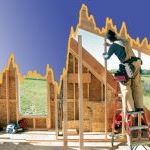
Three of the four agree that new construction is dead and is going to stay dead.
Tucker Windover, who does most of his work in new construction in the Boston area, isn’t quite so dour.
“I think I’ve seen a thinning of the herd,” Windover said recently when I spoke with him through my crystal ball. He added that “the guys who have been thrifty and focused on really adding value are, of course, the ones who carry on. For those who have survived this far, I think it will be a strong year. There really is no low-lying fruit to be had on the subcontractor side, but there are fewer people vying for it also.”
As far as growth and making more money, Windover likes opportunities in weatherization, but says he sees long-term opportunities in investing.
“For any tradesmen with some cash and good credit, I see bargains out there for small-investment property,” Windover says, adding, “A two- or three-family home has traditionally been a way for the skilled worker to leverage his ability to economic advantage. There are some real opportunities. It may be a slow drip, but positive cash flow is a good deal.”
Scott Grice, who is primarily a remodeling contractor in Portland, Ore., summed up his next year in one word: “pain.” Then he saw a more complete picture, saying, “We are still a wounded animal crawling along.”
Grice still has steady work but has had to shift to projects smaller in scope.
“I don’t really see people being confident enough to sink enough money into building their dream kitchen,” Grice said yesterday from his home office. “Even people who think they might want to do stuff have to go to the bank, and the short availability to credit is shrinking the amount of money that people have to spend.”
In the next year, Grice says that most of the projects he’s looking at are of a size that people can afford mostly out of pocket that are also value upgrades to their homes.
Mike Guertin, a builder and remodeler in New England as well as editorial adviser for Fine Homebuilding, says that new construction is dead and is going to stay dead. He also advises to prepare for a long rebound.
“We won’t see a turnaround until 2013,” he says. “It’s going to take a while for homeowners to get to the point where they will spend a big chunk of money again.” Guertin says he doesn’t see remodeling taking up the slack either. “Remodeling is going to be slow. I know guys who are swamped, but they carved out a niche years ago.” Guertin explained that “the people who have superspecialized in an area and have establish themselves at the top are all doing pretty well.”
For opportunities, Guertin is encouraged by weatherization and says that once we figure out how federal weatherization money will trickle down, there might be some opportunity for contractors who have applicable certifications.
Rick Arnold, who specializes in weatherization and energy-efficient upgrades through his contracting business, is even more optimistic, saying that “if [contractors] can adapt, there is a whole new industry for the local contractor. All they have to do is use their existing skills and apply it to the knowledge of weatherization.”
But he also said the opportunity will primarily benefit those contractors who make the effort to get certified. Organizations such as the Building Performance Institute “have really improved in training and accountability. [Weatherization] is the hottest training and certification program out there right now.”
As for my prediction, I am spending any bonus I get on weatherization upgrades.
What do you think? Take our poll and let us know.









View Comments
Enough! Stop the forecasts for yet another grim construction year. With the overabundance of media outlets(such as this) people are being beaten over the head with negetivity and fear. We're all aware by now that it's hard out there, but having our potential clients constantly being told that now is a bad time to improve their house and their quality of living is not helping. How about a little optimism fellas,not fuel for the fire."Wounded animal crawling along?"Please,we're American construction workers,we don't crawl.
I agree with the contributors. We are going to scuttle along the bottom for the foreseeable future. This recession and associated job-loss really shook people up fiscally and emotionally. Plus, when we skated out of the last recession--at least the way I remember it--stuff like the consumer use of the internet was just starting. People still faxed. Venture capital flowed like water (hello Pets.com...good-bye Pets.com). I lived in Virginia during these days (not far from AOL) and no joke, the region saw a vast influx of millionaires all the time because of that (and other organizations). Virginia wasn't the only place, either. That kind of wealth-generation potential--millionaire janitor kind of stuff--just isn't in the cards on this climb back. Other stuff is: weatherization, green, etc. Again, I agree with the team: the certification paper-chase is the best way to sink your teeth into those dollars. Or, you could invent the next internet thingie...just sayin'...
You're all nuts! Sure the economy stinks! Most certainly the building & construction industry is one of the most hard hit. But, if 20% of the nation is unemployed that means that 80% have a job. And think about it many of them have darn good jobs working for the government, working as teachers, doctors, nurses, bankers, working in healthcare, for insurance companies - - - it goes on and on. And now more than ever in the past more people are electing to live in single occupant househoolds which increases the need for housing as compared to two people only consuming one house. Add to that Older people looking to downsize into someting smaller, less costly yo maintain and perhaps more efficient.
There's opportunity out there in spades you just need to build a product that addresses that need. The big builders will wait till things change, (I don't think they will) but the rest of us need to look at what makes sense in the new world economy. Sure the 5,000 sq ft granite ladened home may become a relic but who said you couldn't build a FINE smaller home that was just right for the new world.
Hmm maybe you are not as hard hit as others today I had my work van towed because I was unable to make payments for the past two months. I will be able to get it back but it is not a good feeling and I do not know for how long I can continue. I have had work but not enough and not big enough jobs.
I have a small claim and lean on a jobs I am not getting paid for my credit with my suppliers is maxed out and I am about to fall behind on my mortgage another month. And never mind Christmas.
So sure I am trying to stay positive but when your income is cut in half and your expenses stay the same or some went up (fuel costs) something has to give.
Of course we will survive people in the depression who lost everything and were reduced to hobos hopping freight trains to go out and look for work survived and many latter found work and started over and eventually rebuilt their lives. What does not kill you makes you stronger but it still hurts.
Freal must live in DC where there is no sense of reality! I agree with Axip but frankly it is not us spreading the doom and gloom it is the news media and the economists that get to do a lot of damage very quickly on the news and talk shows. Has anyone seen anything positive on the tube, radio or internet??? There is a starter home development here in Chester County PA of about 45 homes in the $145K market and the folks trying to buy are getting slammed by Banks claiming that "government backed mortgage providers" have changed the requirements so much that folks can't buy in without 30% in the Bank!
In these leaner times I think it is important to look for what people realy need as apposed to the granite countertops etc. People will spend money on there health as we have seen in the organic food market, vitamins, bottled water etc, even in a tough economy.It stands to reason that indoor air quality may be as good for us and cheaper than a shelf full of vitamins. For as much as I read and hear about it relativly speaking from my point of view average consumers are not getting many of the benefits from the products and services that should be available to them. I think we may be trying to sell services that are dated because that is what we know about and adjusting seems to costly in time and energy.For my way of thinking the one good thing that comes out of these downturns in the economy is that inovation seems to thrive. Sometimes we need to push through fears, the same way the people that came before us did.
The economy is no where near the bottom. Americans are not spending because they don't have the money. Money talks BS walks so forget warm and fuzzy optimism. Look at the facts. The debt that has been incurred by our government can only be paid by printing money (hyperinflation) and raising taxes. Our prime lenders such as China have had enough and will no longer fund our excesses. We refuse to use our own natural resources (oil, natural gas, coal). We won't build more refineries and nuclear power plants preferring instead to count on technologies that don't meet return on investment and will not do so for many years from now if ever. The insane bailouts and takeover by the government of private enterprise banks, auto industry and now the healthcare industry will cost many more jobs and take dollars from the private sector where wealth is created. The Global Warming scam is the worst of all of this madness; Cap and Tax will further drive the nail in our respective coffins. The only hope is that the voters will throw out the politicians of both parties who have created this mess. Unfortunately that won't occur until late 2010 and 2012. In the meantime, barring Devine Intervention, you best tighten your belts.
I agree with most other people, and that is the fact that the US Economy has'nt hit rock bottom yet. People are'nt going out spending alot of money because so many of us are laid off or have had our jobs phased out completely, such as I have. Alot of new homes are being built throughout the Country these days, but nothing like they were 5 years ago.
I have tried and tried to be more optimistic about the state of affairs at hand, but now I'm more pessimestic because there are no jobs out there to be had by a 50 year old man. The big Corporations will only hire younger people, people that they claim will make a career out of the fields they were hired in to. Also, being a veteran from the Military does'nt even help out these days. I think the trend for the construction industry should lean more towards going green,
however, and that people need to rely on the wind and sun for power these days. Stop paying those ungodly high power
rates...generate your own power for next to nothing. Before long, everyone will jump on board and the Power Companies will be begging Obama to bail them out too, so that the big executives can get their bonuses.
Based upon this last year's economic downturn it will be t least 2-3 years before the small businesses even start to get back on track as far as subcontracts go. Not until the larger contractors start back to doing remodels and upgrades to present homes let alone new construction, will the one man specialty cabinet & woodworking shops even start to see any sort recovery. We all got burnt during the last market collapse due the failure of the housing market and it's sub business. To begin any sort of recovery, those of us that were effected had to do other work such as independent consulting (Safety)to make a go of it, which probably means that when the recovery will start to need our previous services, we just may not want to go back and start again due to the volatility of the housing industry. I still do some custom private work for a select group of people that I know well, but not for any others. I have seen this scenario develop more and more around this area because the craftsman are just not willing to take any further chances.
Freal seems to be carring the banner that everyone can work for the government or offer goods and services that are not real, but are on paper. That didn't work in the Soviet Union, Cuba, Venezuela, North Korea, or any other place it has or is being tried. Including Washington DC. taxes cost money to collect and manage, thus shrinking the economy. If you study, in your all too abundant free time, our economic history you will find our beloved elected officials (both D and R) are dragging us down the same path we took in the 1930s. And we were not then saddled with the level of indebitedness we are now. Do you understand hyperinflation?This may take a long time to correct.
I believe the sooner one can wean his business from the strictures of the government, the sooner he will be free to be creative in exploring ways to survive the times. Too tax funded programs that look good, but have a hook embeded in them.
the greed in the U.S.mfg.housing industry will keep it from being a broad based option for a long time...the threat of having foreign based factories paying slave wages...and polluting the planet...are real... but also a long way off...retrofitting existing homes...especially in the urban cores are much more viable and suited to the professions left from the economic carnage of unregulated growth....and as long as fine craftsmanship is unreconized by the general public we are all in for a long hard climb out of this mess...ken t tampa,fl
If you haven't figured it out yet - the only people guaranteed any income at this stage of the game are government agents and those who are putting out these "certifications" that are now "required".
We now have not only blatant "government" theft of our wealth, but whole "boards" and certifying "agencies" and "committees", made up of individuals who set themselves up to make $$ off other people's labor. Another scam for those who do nothing to take what they can claim for themselves from those who actually do the producing. This country is so "layered" with bureaucracy, it's a wonder anyone has any $$ to take home after paying off everyone's hand stuck in their wallets!!!
It's reached the point of absurdity.
It really has.
The way I see it, all these certifying "groups", "boards" and "agencies" will "certify" themselves out of jobs as the economy collapses - and hopefully we'll have a few government agencies disappear, too. The only people who will survive the coming financial meltdown of the U.S. $$ are those who have set up their own networks and good reputation within their local communities.
The $$ is going to die, people. Better get yourselves ready - psychologically. The real "builders" will always do OK. It's the bureaucrats in the industry that will suffer the most - and rightfully so, since most of them don't even know how to use a hammer and I never have yet seen a computer actually build anything livable yet. Similar to the AMA in health care. It's made up of medical bureaucrats who don't actually practice medicine. Yet they think they can speak for and dictate to the millions of real health care practitioners. Well, a lot of those practitioners are bucking the AMA, and rightfully so. I expect all industries will be getting rid of the elitist bureaucrats who do nothing but take what they can get for themselves from others while putting the squeeze on them. As times get more lean, the fat will be lopped off. America's economic meltdown will be a great opportunity to trim the excess waste and fat out of all segments of society.
The truly skilled and honorable will survive. The rest will suffer and either get their act together and actually be of real benefit to humanity, or die. It's all part of the cyclical "cleansing" of Life.
Construction has always been based upon traditions that have for the most part been passed down by generations. Housing styles have changed, but the means of putting those buildings together will always require construction know how. True buildings and building components may move to off-site fabrication facilities, but the finish work will always require on-site skilled trades.
What is changing is the advent of fossil fuel price volatility and the demands of climate change. We are in an age of transition that will create new ways of living that will originate from local markets rather than national trends. Future homeowners want to have a greater say in what is being built rather than just consuming what the market creates for them. Builders and homeowners will need to develop a mutually beneficial relationship to create the transitional market.
We also need to be more aware of using locally produced materials in our projects. Oil based materials will have the greatest price volatility in the future. Energy efficiency, e.g. super insulated designs, will become standard requirements for new homes as well as the retrofit market. Most importantly, we need to rediscover what is enough.
For me, I am seeing more signs of life at this point than for the past two years. Doesn't mean that we are returning to Fat City, but there is improvement.
In general one thing that is usually missed - including by FHB articles I've seen - is jsut how localized the construction and real estate markets are. If I am in the stock market by owning shares of GE it really doesn't matter if I live in Minnesota or Madagscar. If I am in the real estate market by owning [or building] a home it makes a huge difference where it is. Northern Minnesota, where I live, has not been as hard hit as Florida or Arizona because we never wandered so far into the LooneyTunes wilderness in 2001-2005.
One of the advantages of having almost 40 years experience [gawd could that be true??...it is true] is that I've been thru some tough downturns before. This might be the worst one, but 1973 and 1982-84 were pretty ugly. And the way we build was changed by those recessions so expect longlasting changes from this one too.
Anyway, things aren't good but I've been operating on the model that you can't throw something at me that I won't do and so I have not run out of work. Also, if you are bidding and pricing like nothing has changed you are kidding yourself. Is the sky falling like some of the guys here are talking? Probably not - don't know if that will disappoint them or not.